

National Science Week Newsletter: Celebrating STEM at School
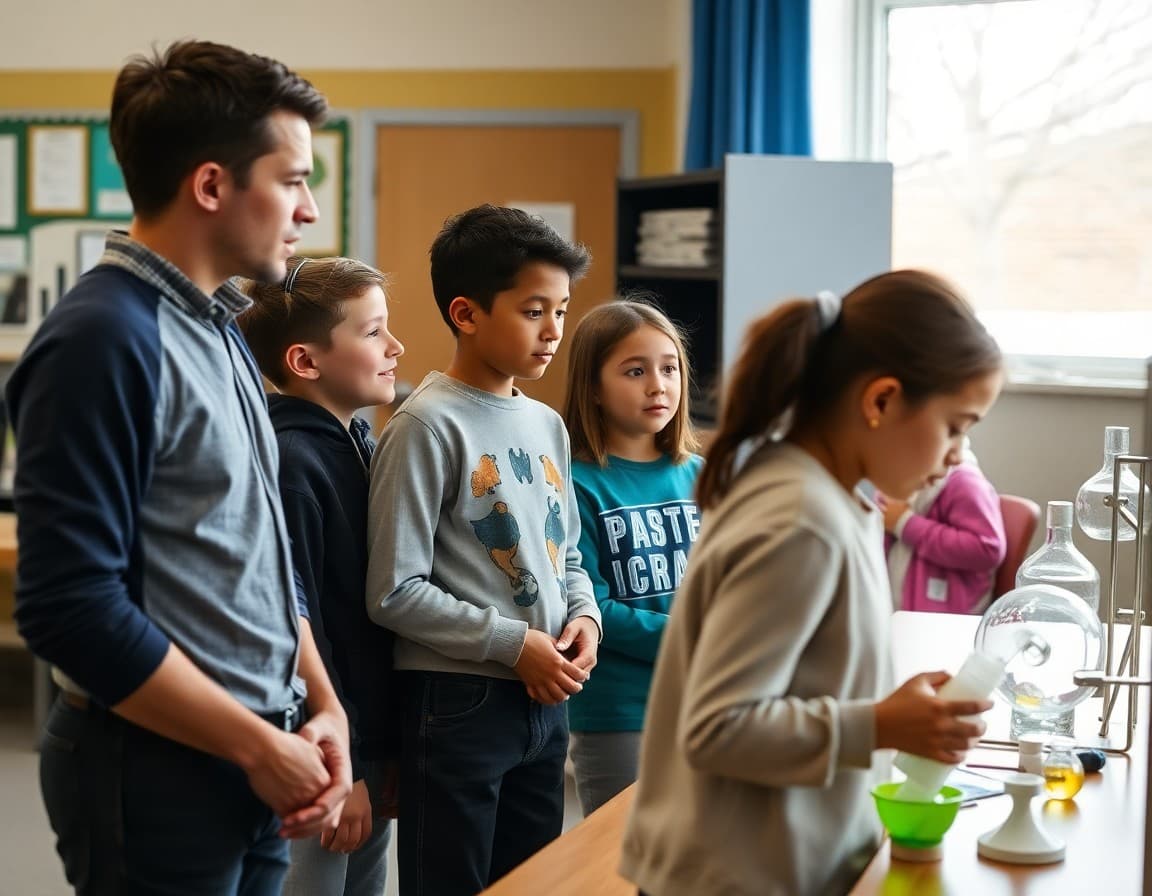
National Science Week newsletters have one job before the week starts: get families to show up. After the week, they have a second job: document what happened well enough that families who missed it wish they had come, and families who came feel proud. Both jobs require specificity.
Announce the week's schedule with specific times and locations
A Science Week newsletter that says "exciting science activities all week" generates no attendance. One that lists every event with a time, a location, and a one-sentence description of what families will experience generates significantly more. Give families what they need to put the events in their calendar.
"Monday 8 AM: Science assembly, main gym. Tuesday through Friday: classroom STEM challenges, in-class. Wednesday 5:30 PM: Family Science Night, cafeteria, hands-on stations for all ages, ends by 7 PM. Thursday: Guest scientist Dr. Rivera from the state university geology department, visiting grades 4 through 8. Friday 2 PM: Student science showcase, gymnasium, families welcome."
Describe the Family Science Night experience specifically
Family Science Night is typically the flagship event of Science Week. Families who know exactly what to expect at the door are more likely to come and more likely to stay. Describe the station format, the time commitment, and what they will do with their child.
"Family Science Night has ten experiment stations. Families spend about four minutes at each station completing a hands-on activity with their child. This year's stations include building a simple electric circuit, making a polymer slime, measuring the density of common household liquids, examining soil samples under microscopes, and testing the tensile strength of different types of fiber. No prior science knowledge required."
Introduce the guest scientist or speaker with enough context
When a working scientist visits your school, families benefit from knowing who that person is and what they study before the visit. A brief biography in the newsletter, written for a general audience rather than a scientific one, prepares families to talk with their child about the visit.
"Dr. Rivera studies how glaciers move and how their movement has changed over the last 100 years. Her work involves drilling ice cores, analyzing satellite data, and building computer models of ice sheet behavior. She will bring ice core samples to the school for students to examine and will show satellite images of glaciers photographed 40 years apart."
Report what happened in the classroom STEM challenges
If every classroom is running a STEM challenge during Science Week, the post-week newsletter should report results across the school. A leaderboard or a collection of highlights from different grade levels shows families the breadth of the week and gives students across the building a shared experience to talk about.
"Grade 3: paper airplane distance challenge. Farthest throw: 11.2 meters. Grade 5: egg drop from the second floor. 4 of 12 eggs survived. Grade 7: water rocket altitude challenge. Highest measured: 38 meters. Grade 9: chemistry mystery: 8 of 10 groups correctly identified all four unknown substances."
Sample newsletter template excerpt
Science Week starts Monday. Here is everything your family needs to know:
The biggest event of the week is Family Science Night on Wednesday, November 9th, from 5:30 to 7:00 PM in the main cafeteria. Students will be running the experiment stations alongside their families. We need students to arrive by 5:15 PM to set up their station. Families arrive at 5:30 PM and work through the stations at their own pace. All ages welcome. Younger siblings are encouraged to attend.
Connect the week to ongoing STEM programs
Science Week is an excellent moment to announce or highlight STEM programs families may not know about. Include a brief paragraph about the robotics team, the science fair, the maker space, and any after-school STEM clubs. Families who learn about multiple programs during Science Week are more likely to get their child involved year-round.
Celebrate after the week with specific photos and outcomes
The post-event newsletter should feel like a victory lap. Report attendance numbers, highlight specific student moments, share photos from Family Science Night, and thank the families who volunteered or attended. A well-documented Science Week newsletter serves as institutional memory for the following year and builds anticipation for the next one.
Get one newsletter idea every week.
Free. For teachers. No spam.
Frequently asked questions
When is National Science Week and how do schools participate?
National Science Week in the United States does not have a single fixed date, but many schools tie their science celebration to events like National STEM Day on November 8th, Earth Science Week in October (sponsored by the American Geosciences Institute), World Science Day for Peace and Development on November 10th, or their own locally declared science week at a convenient point in the academic calendar. Schools participate through science fairs, family science nights, demonstrations, career speaker series, and cross-curricular science activities that take place in every classroom during the week.
What activities work best for a school-wide Science Week?
The most successful Science Week activities balance between showcasing what students are already working on and introducing new experiences. Student-led demonstrations work well because they require students to explain their work to a general audience. Family science nights with hands-on stations that parents and children complete together consistently produce the highest family attendance and satisfaction. Scientist-in-residence visits where a working scientist spends a day moving between classrooms create memorable experiences. Lab open houses where families can see the actual equipment their child uses are also highly effective.
How do you write a Science Week newsletter that generates family attendance?
Newsletters that generate family attendance for Science Week are specific about what families will actually experience, not just general about the week. Instead of 'join us for Science Week activities,' write 'on Thursday at 6 PM, students will run ten hands-on experiment stations in the gymnasium, and families will spend 45 minutes completing as many stations as they can with their child.' Specificity about the experience, the time commitment, and what families and students will do together drives attendance far better than general enthusiasm.
How can a Science Week newsletter build year-round STEM engagement?
A Science Week newsletter becomes a year-round tool when it connects the week's celebrations to the ongoing programs that families can engage with throughout the year. Use Science Week to introduce or highlight the robotics club, the STEM challenge program, the science fair, and after-school maker space hours. Families who attend Science Week and learn about three other ways to engage are significantly more likely to show up for those programs throughout the year.
How does Daystage help schools communicate about Science Week events?
Daystage lets school coordinators send Science Week newsletters with photos from previous years' events, clickable RSVP buttons for family science nights, and event schedules that families can reference throughout the week. When families receive a single well-organized Daystage newsletter three to five days before Science Week begins, attendance and engagement go up compared to posting flyers on bulletin boards that families may never see.

Adi Ackerman
Author
Adi Ackerman is a former classroom teacher and curriculum writer with 8 years in K-8 schools. She writes about school communication, parent engagement, and what actually works in real classrooms.
More for STEM
Ready to send your first newsletter?
3 newsletters free. No credit card. First one ready in under 5 minutes.
Get started free