
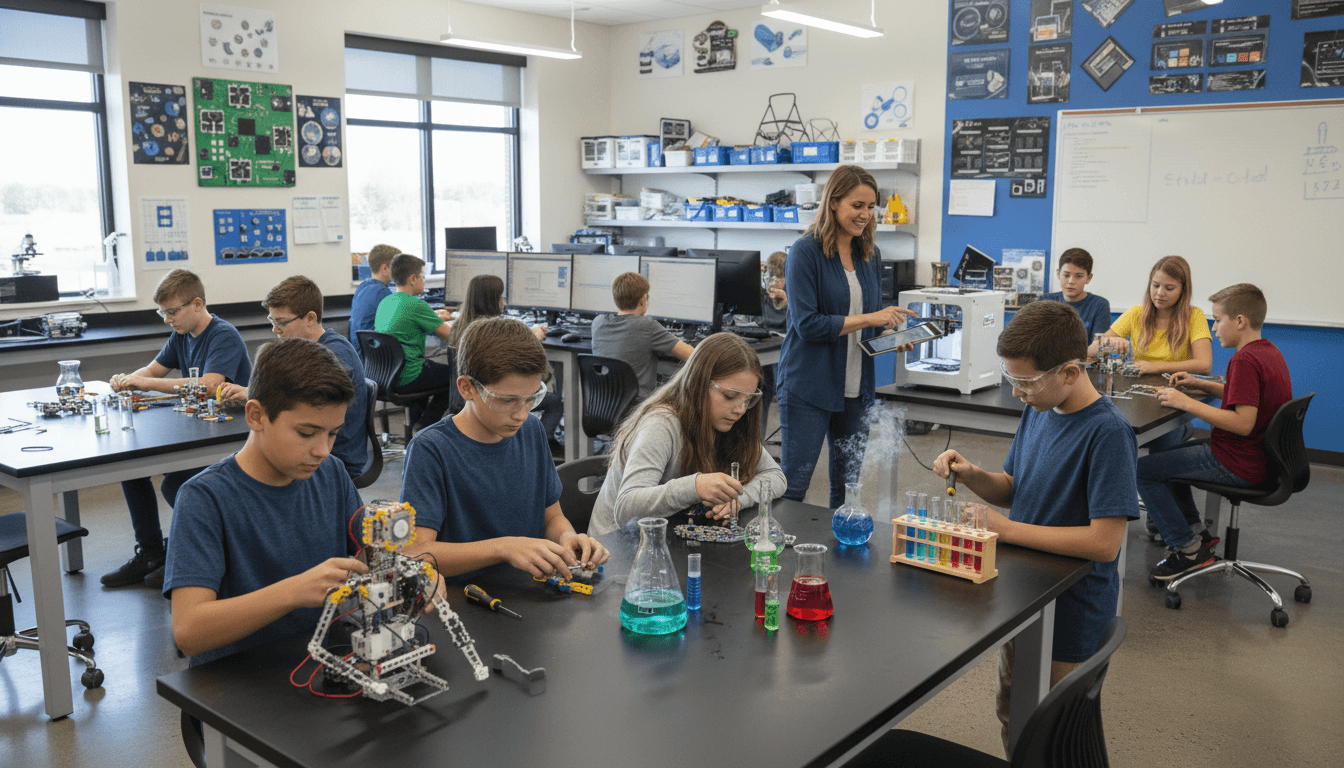
STEM Instructional Coaching Newsletter for School Communities
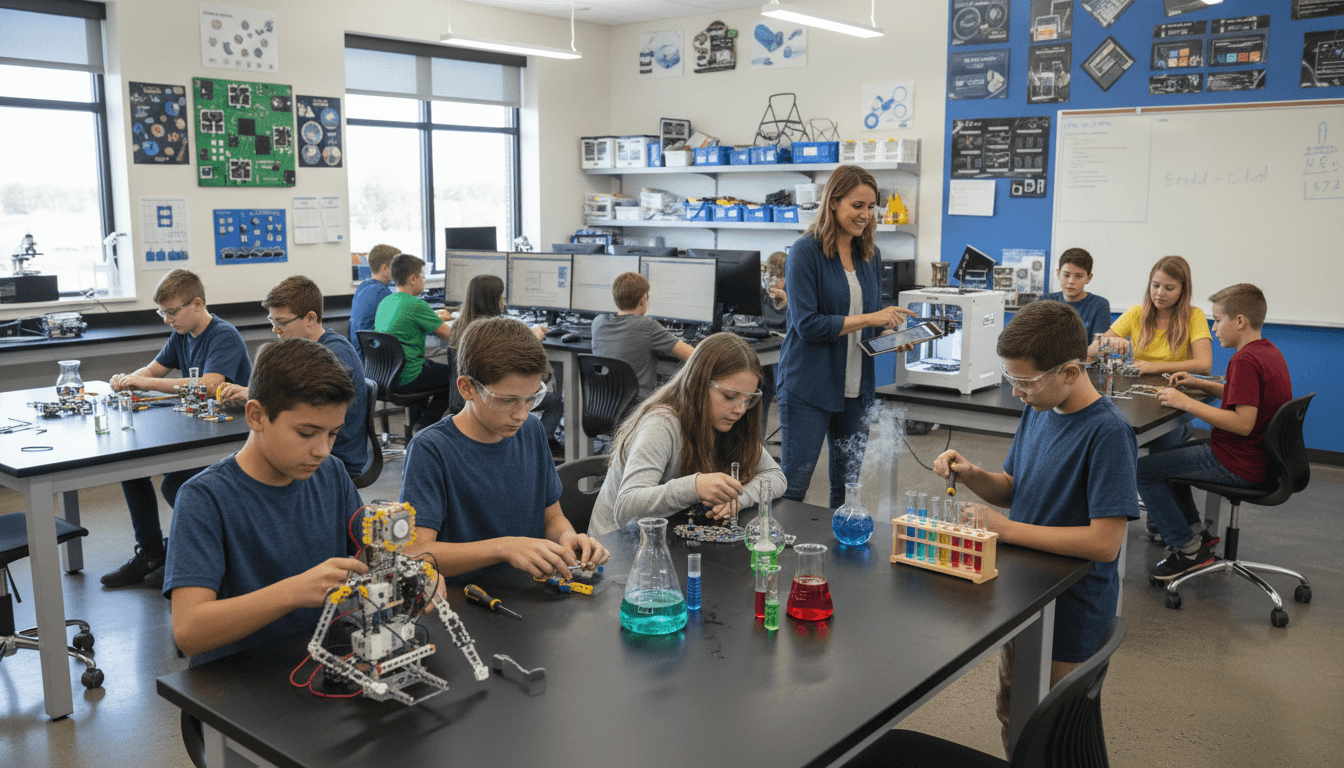
STEM instructional coaches are one of the least visible roles in a school's STEM program for families, and one of the most consequential for what happens in classrooms. A newsletter that makes the coaching role visible, explains what it does for teachers, and connects it to outcomes for students converts an abstract support structure into a concrete investment families can understand and value.
Introduce the coaching role clearly in the first newsletter
Many families have no mental model for what an instructional coach does. They may confuse the role with a teacher, an administrator, a tutor, or a specialist. A single clear paragraph that explains the role prevents that confusion and sets up every subsequent newsletter.
"My role is to work alongside your child's STEM teachers, not to evaluate or supervise them, but to be a thinking partner as they experiment with new approaches. I visit classrooms, co-plan lessons, and help teachers find research-backed strategies that work for the specific students in their class. I do not teach students directly. Everything I do is in service of helping teachers do their work better." That description is accurate and immediately comprehensible.
Connect coaching priorities to what families see in the classroom
A coaching newsletter that describes professional learning in abstract terms gives families no way to connect the coach's work to their child's experience. Describe the coaching focus in terms of what teachers are trying and what students are doing differently as a result.
"This year our coaching work is focused on how students explain their scientific reasoning in writing. We have been helping teachers design more opportunities for students to write about not just what they found but why they think it happened. If your child is spending more time on lab reports that require explanation rather than just data recording, that is this work in action." That connection makes the coaching immediately relevant to families.
Report on professional learning without violating teacher privacy
Coaching newsletters need to describe the work without identifying individual teachers in ways that could feel evaluative or uncomfortable. Write about the teacher population or teams rather than individuals.
"Our middle school math team has been exploring how to make problem-solving more accessible for students who shut down when they encounter unfamiliar problem types. We have been experimenting with having students read and discuss a problem before anyone attempts to solve it, which gives every student time to understand the question before performance anxiety kicks in." That description is specific enough to be interesting without identifying any individual teacher's practice.
Share evidence of impact in concrete, student-centered terms
The most persuasive coaching newsletters include evidence that the coaching work is improving what students can do. This does not require formal research. Classroom observations and teacher reflections are legitimate evidence.
"In the classrooms where we have been working on science argumentation, teachers report that students are asking better questions about each other's work in class discussions. Several teachers described students independently pushing back on a claim that lacked evidence, which is exactly the thinking we want to develop. This takes time, and we are seeing early signs that the approach is working." That kind of honest, evidenced update builds credibility in the program.
Describe the professional learning community teachers are part of
Families who understand that STEM teachers in their school are actively learning, trying new approaches, and reflecting on their practice see the school's STEM program as a living entity rather than a static curriculum. That perception affects how families engage with the program and how they respond when new approaches feel unfamiliar.
"Our STEM teachers meet monthly to share what they are trying in their classrooms and what they are learning. Last month a chemistry teacher shared a lab redesign that significantly improved student safety and engagement. That redesign is now being adapted for use in earth science. This is how professional learning communities are supposed to work: knowledge built in one classroom spreads to benefit students across the school."
Get one newsletter idea every week.
Free. For teachers. No spam.
Frequently asked questions
What does a STEM instructional coach do and how should they explain it in a newsletter?
A STEM instructional coach works with teachers to improve science, math, and technology instruction. Unlike a supervisor or evaluator, a coach is a thought partner who helps teachers experiment with new approaches, reflects on what is working, and finds resources for specific challenges. For families, the simplest description is: 'I work with teachers so they can better support your student in STEM classes.'
Should STEM instructional coaches send newsletters to families?
A family-facing newsletter from a STEM coach serves a specific purpose: it explains the coaching role so families understand why a coach is in their child's classroom, communicates the professional learning priorities of the school's STEM program, and shows families that the school is investing in teacher development alongside student development. It builds trust in the school's STEM program infrastructure.
How does STEM coaching improve student outcomes and how do I communicate that to families?
Coaching improves student outcomes by giving teachers time and support to try approaches that research shows are effective but are difficult to implement without guidance. 'Our math teachers have been working with me this year on helping students build number sense rather than just memorizing procedures. The early classroom data shows stronger retention and better performance on application problems.' That kind of specific connection between coaching work and student results is credible and useful.
How does a STEM instructional coach communicate with teachers about newsletter content?
Coaching newsletters shared with families should be co-developed with teachers whenever possible. When a coach describes what they worked on with teachers, those teachers should recognize their own work in that description. Newsletters that feel like surveillance rather than shared communication erode the trust that makes coaching effective.
How does Daystage support STEM instructional coaches in communicating with school communities?
Daystage lets STEM coaches send newsletters to the family lists of the schools they serve, making it practical to communicate across multiple buildings without managing a separate communication system for each one.

Adi Ackerman
Author
Adi Ackerman is a former classroom teacher and curriculum writer with 8 years in K-8 schools. She writes about school communication, parent engagement, and what actually works in real classrooms.
More for STEM
Ready to send your first newsletter?
3 newsletters free. No credit card. First one ready in under 5 minutes.
Get started free