
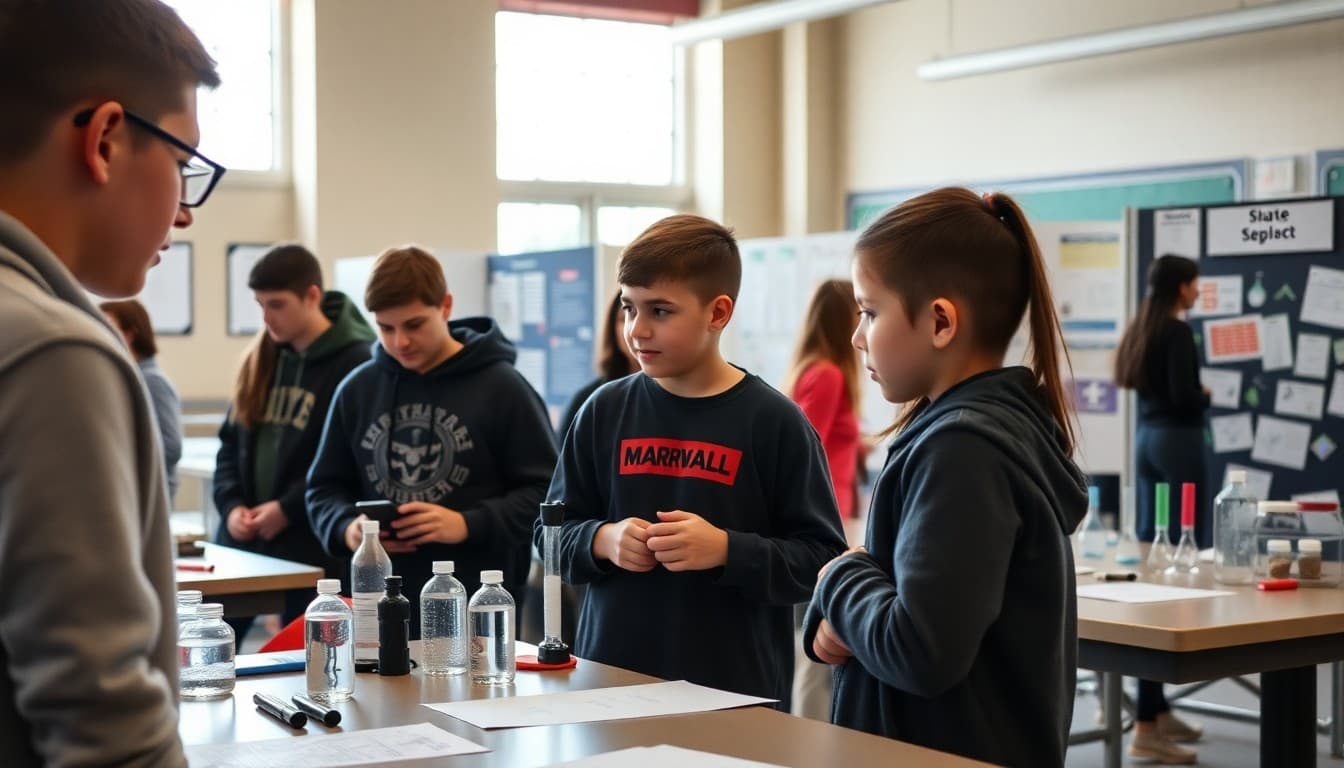
STEM Fair Newsletter: Science Tech Engineering Math Event
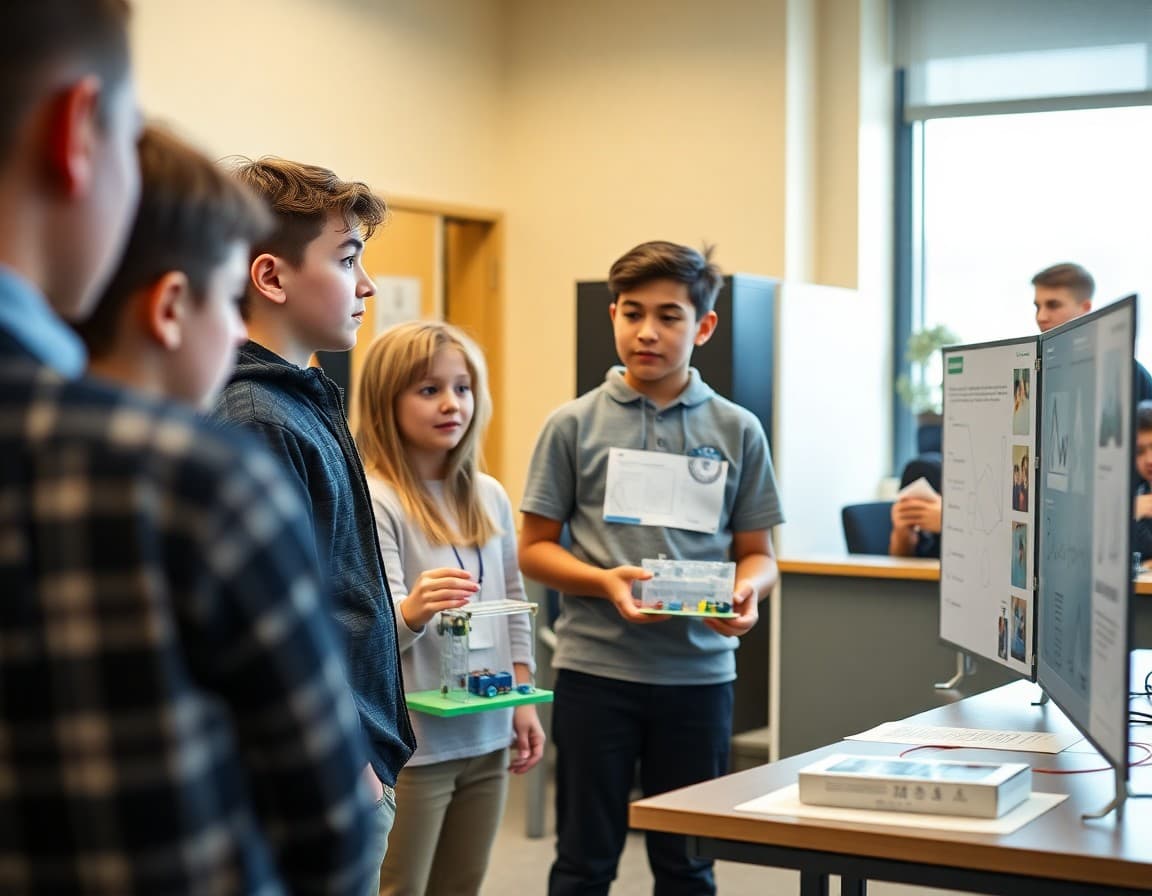
A STEM fair is broader than a traditional science fair and requires different communication. While science fairs typically follow the scientific method and experimental design, STEM fairs include engineering design challenges, computational thinking projects, and mathematical explorations. Families who understand the difference guide their students toward the right kind of project and arrive at the event ready to appreciate the full range of work on display.
Explain what a STEM fair includes
"Our STEM fair includes four project categories. Science investigation follows the scientific method with a testable hypothesis and controlled experiment. Engineering design identifies a problem, develops a solution, builds a prototype, and tests it through multiple iterations. Technology application uses coding, data analysis, or digital tools to solve a real problem. Math exploration investigates a mathematical question using data collection, modeling, or proof."
This categorization gives students four valid pathways and prevents the situation where every student defaults to the baking soda volcano because they do not know other types of projects are acceptable.
Share the project timeline in the kickoff newsletter
Map the project milestones to actual dates on your school calendar. For a STEM fair in late March:
- February 1: Project category and topic submitted to teacher
- February 8: Research or background reading completed
- February 15: Experimental design or engineering plan approved
- February 15 - March 1: Data collection, experimentation, or prototype testing
- March 8: Analysis and conclusions completed
- March 15: Display board submitted for teacher review
- March 20: STEM Fair, 6:00 - 8:00 p.m.
A specific timeline prevents the last-weekend scramble that produces low-quality projects and high family stress.
Describe the display requirements
Display requirements vary by program. State the specifics: "Displays must fit within a 36-inch wide by 30-inch deep table space. Backboards should be three-panel science fair boards, approximately 36 by 48 inches. All electrical components require a teacher safety check before the fair. Engineering projects should include the physical prototype in addition to the display board."
Families who know the display requirements before they buy materials avoid the frustrating experience of rebuilding a display that does not fit the table.
Explain the judging rubric
Share the rubric in the newsletter so students understand what judges are evaluating. Most STEM fair rubrics include:
- Problem or question clarity (10 points)
- Research and background knowledge (15 points)
- Design or methodology quality (20 points)
- Data collection and analysis (25 points)
- Conclusions and reflections (20 points)
- Presentation and communication (10 points)
Students who know the rubric in advance allocate their effort appropriately rather than spending 80% of their time on the display board and 20% on the methodology.
Feature diverse project examples
"Last year's STEM fair projects included: a water quality test of five local water sources comparing pH and dissolved solids, an engineering project building a passive solar water heater from recycled materials, a computational model analyzing patterns in school library checkout data, and a probability investigation into whether student-reported dice rolls match theoretical distribution. Those four projects represent four very different students with four very different interests. All four are valid STEM investigations."
Template: STEM fair kickoff newsletter section
"Jefferson Middle School's STEM Fair is March 20. All seventh and eighth-grade students will complete a STEM investigation in one of four categories: science, engineering, technology, or math. Project topics are due February 1. The full timeline and category descriptions are attached. Judges will evaluate projects using the rubric included in this newsletter. The fair is open to families from 6:00 to 8:00 p.m. on March 20. Top projects advance to the district STEM fair on April 5."
Report advancement and recognition in the recap
The post-fair recap should list all award recipients and any students advancing to district or regional competition. For engineering projects in particular, note the problem being solved and the solution developed: "Maya Chen's water filtration device removed 94% of suspended solids from simulated runoff water using three layers of natural filtration media. She advances to the district fair."
That level of specificity in the recap celebrates the intellectual work behind the project, not just the award.
Get one newsletter idea every week.
Free. For teachers. No spam.
Frequently asked questions
What should a STEM fair newsletter include?
Cover the event date and schedule, participation requirements and which grades or classes are involved, project category descriptions (science investigation, engineering design, math exploration, technology application), judging criteria, and display requirements. Give students and families a project timeline with key milestones. Explain the difference between a science fair and a STEM fair: STEM fairs include engineering design challenges, computational thinking projects, and mathematical explorations alongside traditional science investigation.
How do you communicate STEM fair judging criteria to families?
Describe the rubric categories and what judges are looking for in each: scientific question or problem definition, research and background knowledge, design or experimental methodology, data collection and analysis, conclusions and reflections, and presentation quality. For engineering projects, add design iteration and testing evidence. Families who understand the criteria before the project begins guide their students more effectively through the process.
How do you support diverse project topics in a STEM fair newsletter?
STEM fairs become more engaging and equitable when students can investigate topics they genuinely care about within the STEM framework. The newsletter should communicate this explicitly: 'Projects can investigate any question within science, technology, engineering, or math. Past projects have included testing water quality in the local creek, building an app to track school recycling, analyzing baseball statistics using probability, and engineering a water filtration device from household materials.' Breadth of examples invites breadth of student investigation.
What does a STEM fair project timeline look like for families?
A typical 6-week timeline: Week 1 - topic selection and question formulation. Week 2 - research and background. Week 3 - design or experimental plan. Weeks 4-5 - data collection, experimentation, or prototype testing. Week 6 - analysis, conclusions, display preparation. The newsletter should include this timeline with the specific dates mapped to your school calendar so families can plan accordingly.
How does Daystage support STEM program event communication?
Daystage lets you send the STEM fair kickoff newsletter with project timeline, a mid-project check-in with tips for students who are stuck, an event-day logistics newsletter for families, and a post-fair recap celebrating student work. Building the STEM fair into your school's newsletter series in Daystage ensures consistent communication that keeps students on track and families informed.

Adi Ackerman
Author
Adi Ackerman is a former classroom teacher and curriculum writer with 8 years in K-8 schools. She writes about school communication, parent engagement, and what actually works in real classrooms.
More for STEM
Ready to send your first newsletter?
3 newsletters free. No credit card. First one ready in under 5 minutes.
Get started free