
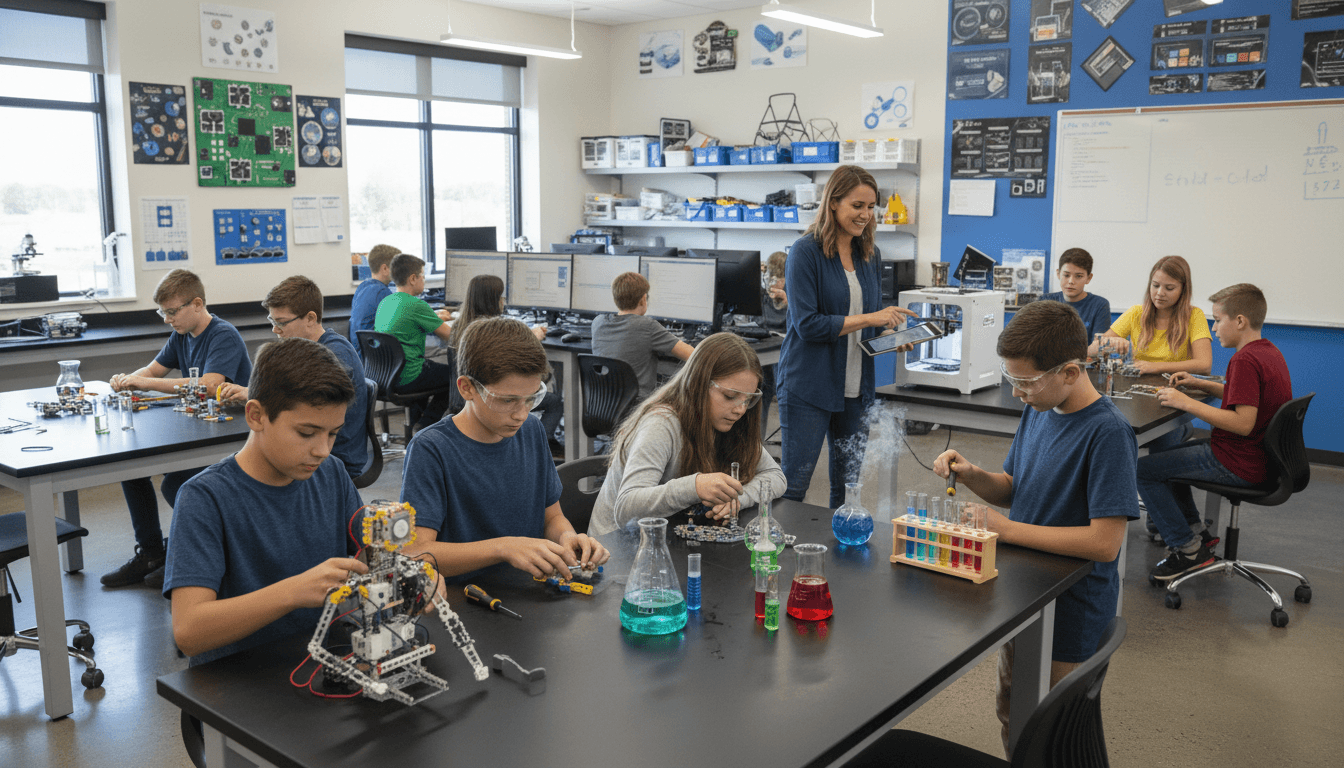
STEM College Prep Newsletter for High School Families
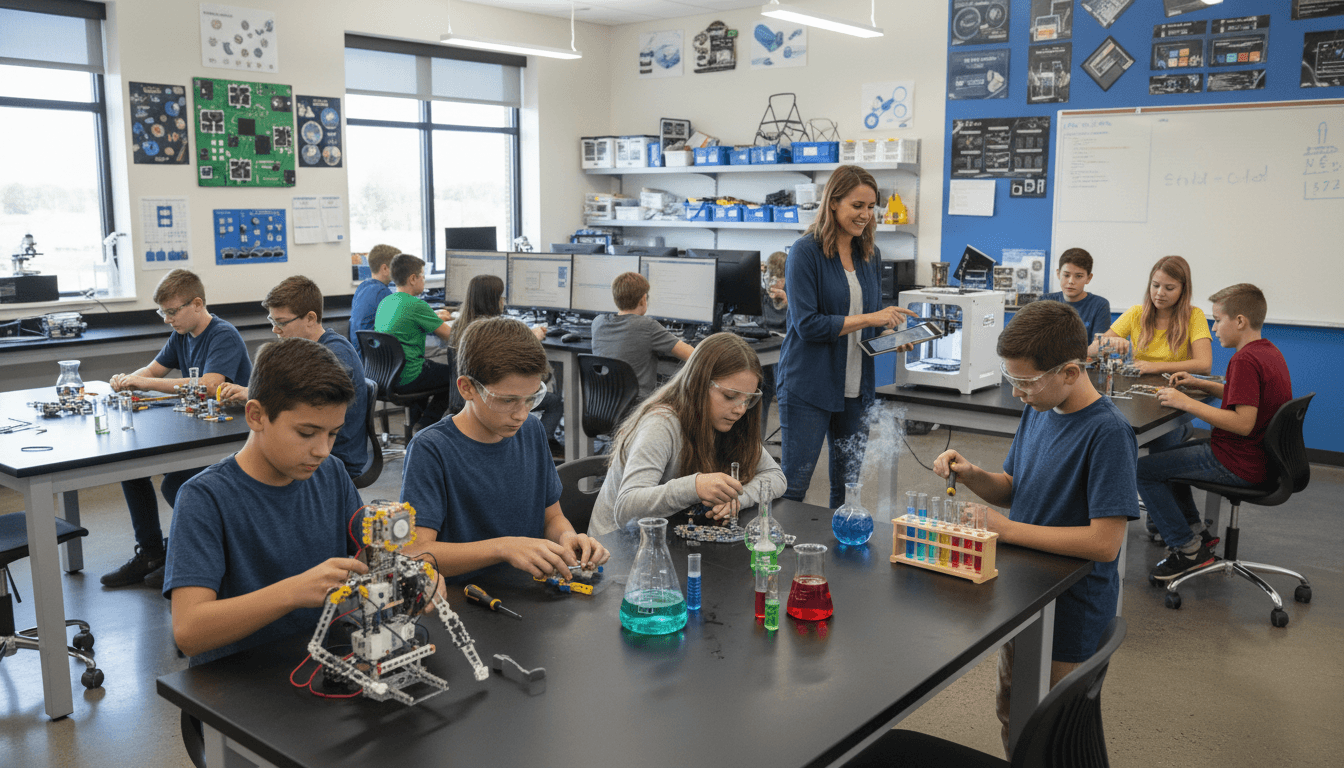
STEM college preparation is a four-year project, not a senior-year scramble. Families who begin understanding the landscape in ninth grade make meaningfully different decisions than families who learn about course sequences, competition opportunities, and application requirements in eleventh grade when most of the groundwork is already set. The college prep newsletter is how STEM teachers contribute to that early awareness.
Explain the STEM course sequence early and specifically
Different STEM college majors have different preparation requirements, and high school course choices that seem interchangeable to families are not. A student who takes statistics instead of pre-calculus in junior year may not be ready for calculus as a college freshman. A student who skips chemistry may not meet prerequisites for pre-med or engineering programs.
Your newsletter should lay out the standard STEM course sequences in your school and explain which majors they prepare for. "For students interested in computer science, engineering, or physics-based majors, the recommended sequence is [list]. Students interested in life sciences and health professions should prioritize [list]." That specificity helps families have informed conversations with counselors rather than learning about gaps after the fact.
Name the competitions and their actual value
High school STEM competitions range from local science fairs that most colleges do not notice to national competitions that significantly strengthen applications to top STEM programs. Families who do not know the difference may over-invest in less impactful activities or under-invest in meaningful ones.
Your newsletter can provide honest, specific guidance. Name the competitions available at your school, describe what preparation they require, and give families an honest assessment of their significance in the college context. A student who wins a regional engineering competition with independent research is in a different position than a student who completes a school-wide science fair. Both have value. Families deserve to understand the difference.
Describe research and summer program opportunities with deadlines
Research experience is one of the most compelling additions to a STEM college application and one of the least known about. University research labs, local company internships, and organized summer research programs are often available to motivated high school students, but the families who access them are disproportionately those who already know where to look.
Your newsletter is an equity tool here. Name specific programs in your region. Describe the application process in plain language. Give deadlines. Note whether there are costs and whether scholarships are available. A family that learns about a summer research program from your newsletter in January has time to apply. A family that learns about it in March after applications closed does not.
Address the gap between STEM grades and STEM identity
Many students who perform well in STEM courses do not think of themselves as STEM people. This identity gap is particularly common among first-generation college students and students from underrepresented groups in STEM. Families who understand this pattern can counter it at home.
"Students who earn A's in your STEM classes but do not think of themselves as future scientists or engineers often need external confirmation. Competitions, research experiences, and conversations with STEM professionals all provide that confirmation. If your student is a strong STEM performer who hesitates to identify as 'a STEM person,' one of these experiences is worth pursuing." That paragraph is honest, useful, and actionable.
Help families understand what colleges look for in STEM applications
Selective STEM college programs look beyond grades and test scores for evidence of genuine curiosity and independent initiative. Families who understand this send students into high school with a different kind of intentionality.
"The question college STEM programs are asking is not just 'did this student do well in science class?' but 'does this student actually think like a scientist?' The difference shows up in how students pursue questions beyond what is assigned, how they approach problems they have not seen before, and whether they can describe what interests them specifically and why." That framing helps families understand that STEM preparation is about developing a way of thinking, not accumulating credentials.
Get one newsletter idea every week.
Free. For teachers. No spam.
Frequently asked questions
What should a STEM college prep newsletter cover for high school families?
Cover the course sequence that prepares students for STEM college majors, which AP and dual-enrollment courses matter most for different fields, competition and research experience opportunities and their deadlines, how STEM portfolios and project documentation factor into applications, and summer programs worth considering. Start communicating this information in ninth grade so families have time to act on it.
How do I explain to families which STEM majors require which course sequences?
Be specific by field rather than generic. 'Students planning to major in engineering typically need four years of math through pre-calculus or calculus, three years of lab science including chemistry and physics, and computer science. Students interested in biology-related fields need four years of science including AP Biology or AP Chemistry.' That level of specificity helps families understand whether current course choices align with student goals.
How important are STEM competitions for college applications?
Competitions like Science Olympiad, MATHCOUNTS, FIRST Robotics, and research fairs demonstrate sustained interest and ability in ways that coursework alone does not. They are not required for college admission, but they are meaningful for selective STEM programs. A newsletter that describes available competitions, their time commitment, and their typical application value helps families make informed decisions about which ones to pursue.
How do I communicate about research and internship opportunities for STEM high schoolers?
Name specific programs by name with application deadlines. 'The local university research lab accepts high school students for summer research positions. Applications open in January and the program runs June through July. This is one of the strongest experience options available to students interested in life sciences.' Specific opportunities with specific deadlines convert parent interest into student action.
How does Daystage help high school STEM teachers send college prep newsletters?
Daystage lets high school STEM teachers send timely college prep updates to their family list at the moments when the information is most actionable, like before competition registration deadlines or college application season.

Adi Ackerman
Author
Adi Ackerman is a former classroom teacher and curriculum writer with 8 years in K-8 schools. She writes about school communication, parent engagement, and what actually works in real classrooms.
More for STEM
Ready to send your first newsletter?
3 newsletters free. No credit card. First one ready in under 5 minutes.
Get started free