
Science Literacy Newsletter: Building Scientific Thinkers

Science class teaches more than content. It teaches students how to think: how to form a question worth investigating, how to design a test, how to read data without cherry-picking convenient evidence, and how to defend a conclusion that other people might challenge. Those skills are what scientific literacy means in practice, and they are worth communicating explicitly to families.
Scientific thinking as a daily classroom habit
Scientific thinking is not saved for lab days. It shows up when a teacher asks a student to explain their reasoning rather than just state an answer. It shows up when students read a science news article and identify the claim versus the evidence. It shows up when a class compares two competing explanations for a natural phenomenon and decides which one is better supported. These moments happen multiple times each week in a science classroom and families rarely see them.
The claim-evidence-reasoning framework
One of the most concrete tools for building scientific literacy is the claim-evidence-reasoning writing frame. Students learn to make a specific claim about what an investigation showed, cite specific evidence from the data, and explain the reasoning that connects the evidence to the claim.
A third-grader writing about a sink-or-float experiment might write: "The wooden block floats because it is less dense than water. In our test, the wooden block stayed on the surface while the metal bolt sank immediately. Objects that are less dense than water will float." That is a complete scientific argument from a student who has not even reached middle school.
Reading and interpreting data
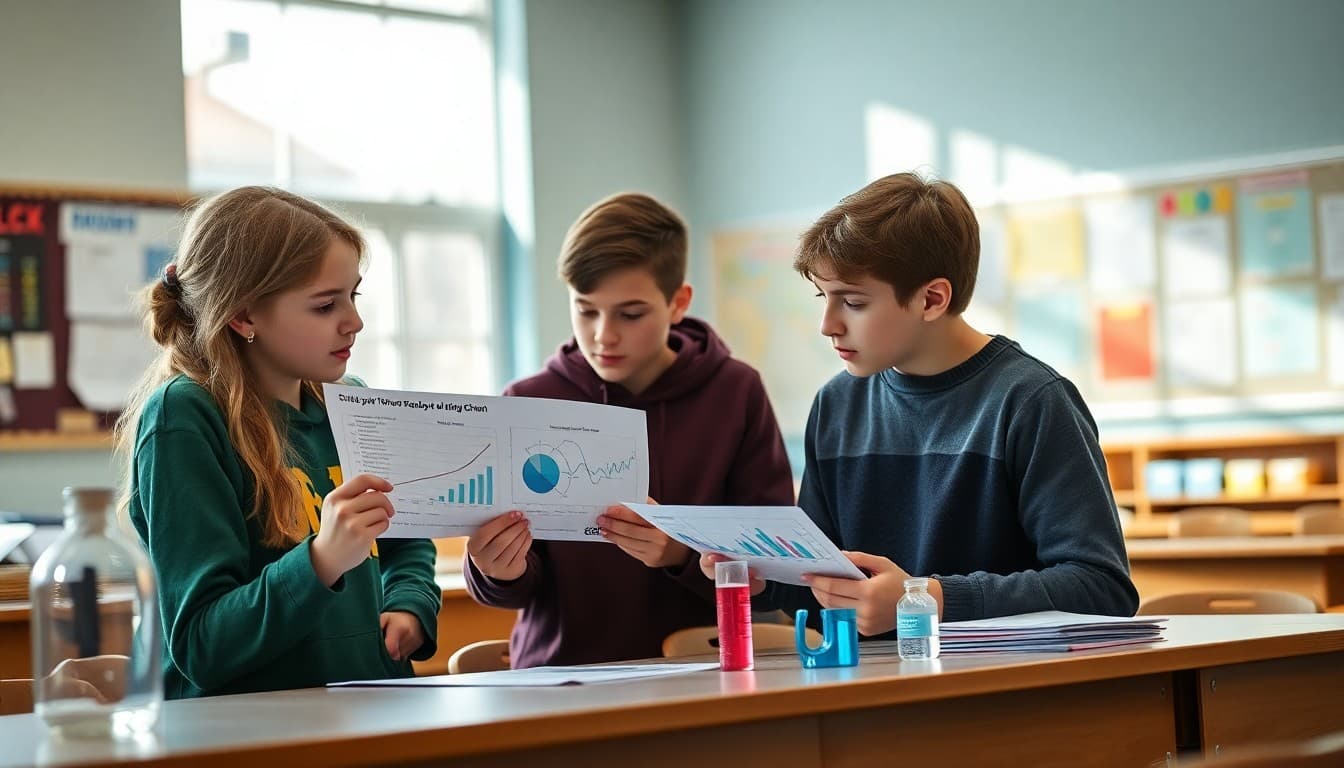
Data literacy is a core component of science literacy. Students learn to read tables, interpret bar graphs and line graphs, identify trends, and recognize when data is unclear or insufficient to draw strong conclusions. These skills matter far beyond science class. A citizen who can read a graph in a news article critically is better equipped to evaluate health claims, policy arguments, and environmental decisions.
When communicating with families, it helps to show an example of a graph students analyzed and explain what they were asked to do with it. That makes the skill visible in a way that "learning data literacy" does not.
Evaluating sources in science
Students learn to distinguish between a peer-reviewed journal article, a science news summary, a blog post, and a social media claim. They learn to ask: Who wrote this? What is the evidence? Has it been reviewed? Is the author qualified? These questions are taught as science skills, but they apply to every domain where students will encounter information.
Template: scientific thinking update for families
"This month in seventh grade science we completed our water quality investigation. Students collected data from three different water samples, organized it in data tables, and wrote claim-evidence-reasoning responses explaining which sample showed the most evidence of contamination. We are now beginning a unit on ecosystems. Students will be reading two competing scientific arguments about reforestation and evaluating which argument has stronger evidence. If you want to try this at home, ask your student to explain the difference between a claim and evidence using something from their everyday life."
Why families benefit from understanding scientific thinking
When families understand that science class is teaching reasoning skills, not just memorized facts, they become more engaged supporters of the subject. They ask better questions at home. They understand why their student is spending time arguing about data rather than filling in a worksheet. And they can reinforce the habits in everyday conversations.
Daystage makes it simple to send a focused science literacy newsletter each month that keeps families connected to the actual thinking happening in your classroom, not just the topic.
Get one newsletter idea every week.
Free. For teachers. No spam.
Frequently asked questions
What does scientific literacy mean for K-12 students?
Scientific literacy means a student can read a science text, interpret data, evaluate evidence, and form reasoned conclusions. It includes understanding how scientific investigations are designed, what makes evidence strong or weak, and how scientific consensus is reached. These skills matter for students regardless of whether they pursue science careers.
How do teachers build scientific thinking in everyday instruction?
Teachers build scientific thinking through structured routines: claim-evidence-reasoning writing frames, analysis questions that require students to defend answers with data, and regular practice with primary source science texts. The Socratic questioning approach, where the teacher asks follow-up questions rather than confirming right answers, also builds independent scientific reasoning.
What is the claim-evidence-reasoning framework?
Claim-evidence-reasoning, or CER, is a writing structure that teaches students to make a scientific claim, support it with specific evidence from an investigation or text, and explain the reasoning that connects the evidence to the claim. It mirrors how scientists write and argue and is one of the most transferable skills students can develop in science class.
How can parents support scientific thinking at home?
Ask your child to explain why, not just what. When they share something from science class, ask what evidence they have for that. Watch science documentaries and pause to discuss what questions scientists were trying to answer. Read science news together and ask whether the article includes evidence or just claims. These habits build the same thinking skills practiced in class.
How does Daystage support science teacher newsletters?
Daystage gives science teachers a clean way to send consistent family newsletters that explain the thinking skills embedded in science instruction. Teachers can share the current investigation framework, link to related reading, and invite families into the scientific conversation. Regular newsletters through Daystage turn science class from a mystery into a visible learning process.

Adi Ackerman
Author
Adi Ackerman is a former classroom teacher and curriculum writer with 8 years in K-8 schools. She writes about school communication, parent engagement, and what actually works in real classrooms.
More for STEM
Ready to send your first newsletter?
3 newsletters free. No credit card. First one ready in under 5 minutes.
Get started free