

FIRST Robotics Competition Newsletter: Build Season Updates
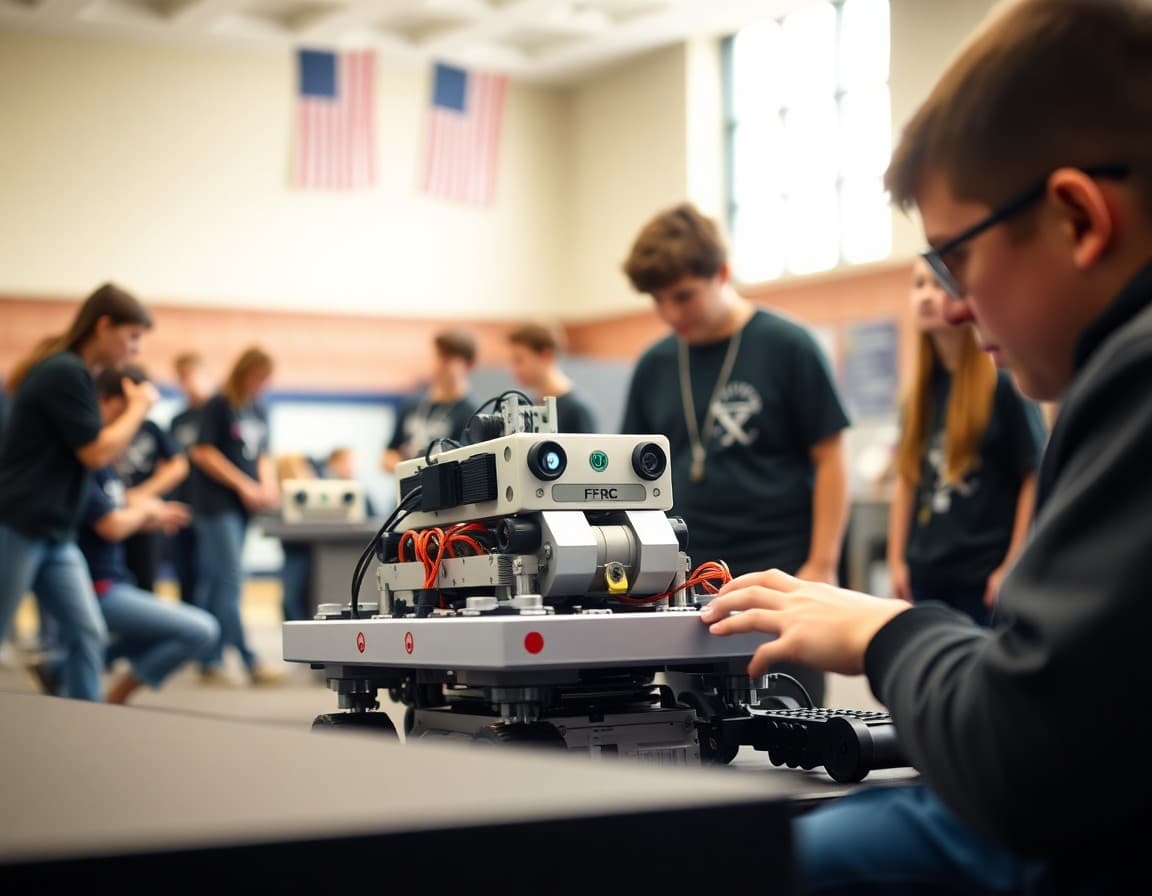
FIRST Robotics Competition is the most intense scholastic engineering activity in K-12 education. Six weeks. A fully functioning competition robot. A global competition structure. A newsletter that captures that intensity while keeping families informed and engaged is essential for a team that spends 80 to 100 hours together in build season.
Kickoff Week Newsletter
The Kickoff newsletter sets the tone for the entire season. Send it within 24 hours of the game reveal in January: "This year's FRC game has been revealed. In Reefscape, teams score points by picking up coral game pieces and placing them on reef structures of varying heights, plus climbing a cage structure during the final 30 seconds of the match. Our strategy team watched 4 hours of game video and had a 90-minute analysis session. We have a preliminary robot concept. Build season starts now."
Build Season Progress Updates
Weekly updates during the 6-week build season keep families connected to a period when students are often at school until 9 PM and working full weekends. Each weekly update should cover: what the team completed this week, what challenges arose and how they were solved, what is left to build, and where the team stands on their internal milestones. "Week 3 of 6: drivetrain complete and driving. Intake mechanism prototype failed twice before we found a design that picks up coral consistently. Programming has autonomous routines for two starting positions. We are approximately on schedule."
Template Excerpt: Build Season Update Newsletter
FRC Team 1482 - Build Season Week 4 Update
Week 4 status: We have a robot. It is not done but it is a robot. The intake mechanism works at 85% consistency, which is not competition-ready but is ahead of where we were last year at this stage. The elevator prototype is functional but heavy. The electrical team rewired the main panel twice this week - the second version is clean and properly documented.
What families need to know: Week 5 and 6 are the most demanding of the season. Students may be at school until 9:00 or 10:00 PM Tuesday through Thursday and most of Saturday. This is normal for this point in the season. Please make sure your student is eating dinner before coming to late sessions. The team has been ordering group dinners on Tuesdays and Thursdays (student contribution: $5 per session).
Subteam highlights: Programming achieved full autonomous driving to the reef scoring position in simulation. Business team completed the chairman's award essay draft. Safety team maintained 100% compliance on safety glasses in the shop for the third consecutive week.
Regional competition: March 7 to 9 at State University Events Center. Parents and supporters are welcome to attend. Competition is free for spectators. Bring hearing protection - FRC arenas are loud.
Competition Day Logistics
Regional competitions are full-day events spanning three days. Families who want to attend need clear information: "Regional competition at State University runs Friday March 7 (practice matches, 8 AM to 6 PM), Saturday March 8 (qualification matches, 8 AM to 8 PM), and Sunday March 9 (elimination rounds, 8 AM to 5 PM, or until eliminated). The team needs to be set up in the pit by 7:00 AM each day. Families are welcome all three days. Parking is in Lot D off Main Avenue."
Sponsor and Community Acknowledgment
FRC teams run on sponsorships. The newsletter is a good place to thank sponsors publicly and to describe their contributions: "This season we are grateful to Precision Manufacturing, Inc. for machining our custom aluminum parts. Without access to a CNC mill, our intake mechanism design would not have been possible. Thank you also to the Jefferson County Education Foundation for our annual program grant and to the 12 parent volunteers who donated a combined 140 hours to build season this year." Sponsors who see their name in newsletters tend to renew their support.
Get one newsletter idea every week.
Free. For teachers. No spam.
Frequently asked questions
What should a FIRST Robotics Competition newsletter include?
Build season timeline and milestones, game description and robot design decisions, team member roles and subteams, competition schedule and registration, mentor and sponsor acknowledgments, travel logistics for away competitions, and results after each event. FRC build season is intense and families appreciate updates that help them understand the timeline and support appropriately.
How do you explain the FRC season structure to families who are new to FIRST?
The FRC season has three distinct phases: Kickoff in January when the game is revealed and teams have six weeks to design and build their robot (build season). Regional and district competitions in spring where the robot competes for the first time. Championship for qualifying teams in late April. A one-paragraph explanation in the first newsletter prevents confusion about what happens when and why the team is working such long hours in January and February.
What are the different subteams in an FRC program and why does this matter for the newsletter?
FRC teams typically divide into subteams: mechanical/fabrication, electrical/wiring, programming, drive team, and business/marketing. The newsletter should acknowledge all subteams and explain their roles so families understand that every student on the team has a specific contribution. Families whose children are on the programming or business subteam sometimes feel their child's contribution is less visible than the students actually driving the robot.
How do you communicate build season intensity to families?
Be direct about the time commitment. FRC build season runs 6 weeks from Kickoff to bag day. Most teams work 3 to 5 evenings per week and full weekends during this period. Tell families this clearly in January so they can plan around it rather than be surprised. Teams that communicate the time commitment early have better attendance and fewer family conflicts during the most critical phase.
Can Daystage handle a large-team newsletter for an FRC program with 30 to 50 members?
Yes. Daystage scales to any team size. An FRC team with 40 students and 10 mentors can use Daystage to send a weekly build season update to all team families, competition travel reminders, and post-event results newsletters. Daystage also generates a public web link for each newsletter, which is useful for sharing with sponsors and community supporters who aren't on the family email list.

Adi Ackerman
Author
Adi Ackerman is a former classroom teacher and curriculum writer with 8 years in K-8 schools. She writes about school communication, parent engagement, and what actually works in real classrooms.
More for STEM
Ready to send your first newsletter?
3 newsletters free. No credit card. First one ready in under 5 minutes.
Get started free