

FIRST LEGO League Newsletter: Team Updates and Competition
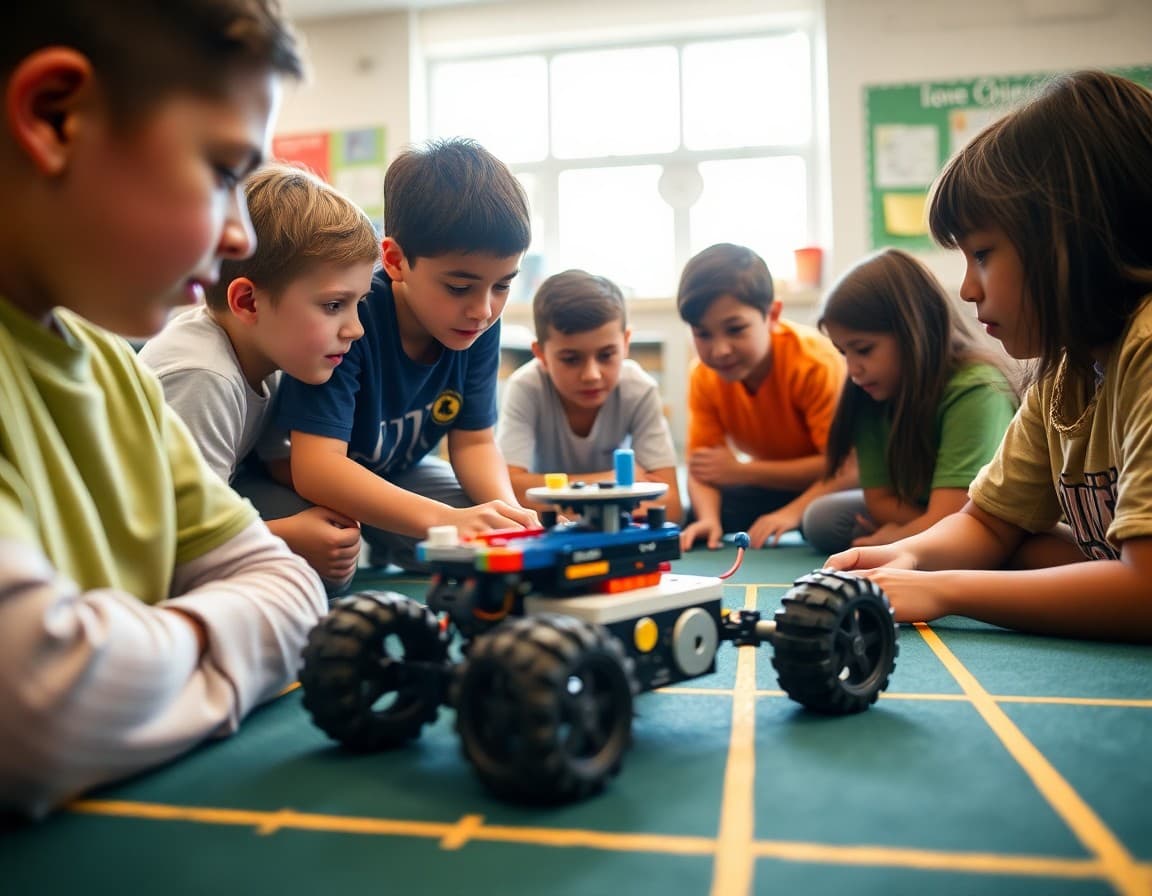
FIRST LEGO League is many children's first experience with structured team competition and engineering design. A newsletter that helps families understand all four judged components, not just the robot game, sets realistic expectations and helps them support their child's development throughout the season.
Season Overview: The Four Judged Areas
The first newsletter of the season should explain how FLL Challenge is scored: "Our team is evaluated in four areas at the tournament. Robot Game: our robot completes missions on a 2.5 x 4.5 foot mat in a 2.5-minute timed run. Higher mission scores equal higher rankings. Innovation Project: we present a solution to a real-world problem related to this year's theme (SUBMERGED - ocean exploration) to a panel of judges. Robot Design: we explain our robot's design and programming decisions to technical judges. Core Values: judges observe how our team works together. All four areas matter for awards."
Robot Game Progress Updates
Families who don't attend practices want to know how the robot is developing. Brief monthly updates on mission performance keep families informed without requiring them to be at every session: "Current robot game score in practice: 210 points out of 400 possible. We are consistently completing 8 of 16 missions. Missions we've reliably solved: coral nursery, shark tank, and kraken's treasure. Our highest-value unsolved mission (octopus, 30 points) has been prototyped four different ways. The fifth version is in testing this week."
Innovation Project Updates
The innovation project is often where teams differentiate themselves. A newsletter that tracks research progress helps families support it at home: "Our innovation project addresses underwater communication for deep-sea research teams. After reviewing academic papers and interviewing a marine biologist from State University (via video call), we identified that current acoustic communication systems have significant time delay at depths over 3,000 meters. Our proposed solution: a laser-based relay communication network that uses underwater robots as signal boosters at depth intervals. We present this in eight minutes at the tournament."
Template Excerpt: Pre-Tournament Newsletter
FIRST LEGO League Team OCEAN EXPLORERS - Tournament Week!
Tournament day is Saturday, November 22 at Lincoln Middle School. Please arrive by 8:00 AM sharp. The team must check in with equipment by 8:15. Awards ceremony is approximately at 3:30 PM. Plan to stay until 4:00 PM.
What to bring: Team t-shirts (wearing them now through tournament morning). A lunch (concessions available but limited). Camera for award ceremony. Comfortable shoes for a full day of walking.
Tournament schedule (approximate): 8:00 AM check-in. 9:00 AM robot game practice run. 10:00 AM judging sessions (three 10-minute sessions: innovation project, robot design, core values). 11:30 AM lunch break. 12:30 PM qualification rounds (3 robot game runs). 3:30 PM awards ceremony.
How to watch: Robot game runs are open to spectators. Judging sessions are closed. You'll see your child's best work in the awards ceremony when the innovation project and robot design judges speak about what they observed.
Our goal for Saturday: Execute our best-practice robot run at least once. Give our best innovation project presentation. Show our Core Values under pressure when something goes wrong. Something always goes wrong at a tournament. How the team responds is what we've been practicing.
Core Values in Practice
Include a brief section about Core Values periodically so families can reinforce them at home. For an FLL team, Core Values are evaluated during the tournament and demonstrated throughout the season: "This week: Teamwork and Inclusion. Two team members disagreed about robot arm placement. Instead of one person overriding the other, the team ran a 10-trial test of both designs and compared the results. Design B won by 4 points per run on average. This is exactly how we want to handle disagreements in competition."
Get one newsletter idea every week.
Free. For teachers. No spam.
Frequently asked questions
What are the components of FIRST LEGO League and how should the newsletter explain them?
FLL Explore and FLL Challenge have different structures. FLL Challenge (ages 9-14) has four judged categories: robot game performance, innovation project, core values, and robot design. The newsletter should explain all four components at the start of the season so families understand that their child's team is being evaluated on much more than just how the robot performs on the competition mat.
What is the Innovation Project in FIRST LEGO League?
The Innovation Project requires teams to identify a real-world problem related to the season's theme, research it thoroughly, and develop an innovative solution. Teams present their project to judges at tournaments. It is a significant part of the overall score and is often where teams win judged awards even if their robot game performance is not top-tier. Families who understand this invest more in helping with research at home.
What are FLL Core Values and why do they matter?
FLL Core Values (Discovery, Innovation, Impact, Inclusion, Teamwork, Fun) are evaluated by judges during a structured observation session at tournaments. Teams that demonstrate these values in how they interact with each other, other teams, and judges earn Core Values awards. Families who understand Core Values can reinforce them at home and help their child understand that how the team treats each other is as important as how the robot performs.
How do you communicate FLL tournament day logistics clearly?
FLL tournaments are full-day events, often 6 to 8 hours. Families need: arrival time, parking, whether they can observe robot rounds, how judging sessions work (some are closed to spectators), when awards are typically presented, and when students will be released. Undercommunicating logistics leads to parents showing up at the wrong time and missing the moments they came to see.
Can Daystage produce FLL team newsletters that are appropriate for elementary or middle school parents?
Yes. Daystage newsletters work for any audience. An FLL newsletter for a team of 10-year-olds should be designed for their parents: clear, visual, with photos of robot work and innovation project research. Daystage's layout keeps the newsletter clean and readable on a phone, which is where most busy parents will read it.

Adi Ackerman
Author
Adi Ackerman is a former classroom teacher and curriculum writer with 8 years in K-8 schools. She writes about school communication, parent engagement, and what actually works in real classrooms.
More for STEM
Ready to send your first newsletter?
3 newsletters free. No credit card. First one ready in under 5 minutes.
Get started free