
Chemistry Club Newsletter: Lab and Learning Updates
A chemistry club newsletter needs to convey two things simultaneously: that the work is rigorous and academically valuable, and that it is safe and properly supervised. Miss either one and you lose part of your audience before they finish the first paragraph.
Open with a clear description of safety protocols
Chemistry club generates more parent concern than most after-school activities because families associate chemistry with hazardous materials. Address that concern directly in your first newsletter rather than waiting for parents to email.
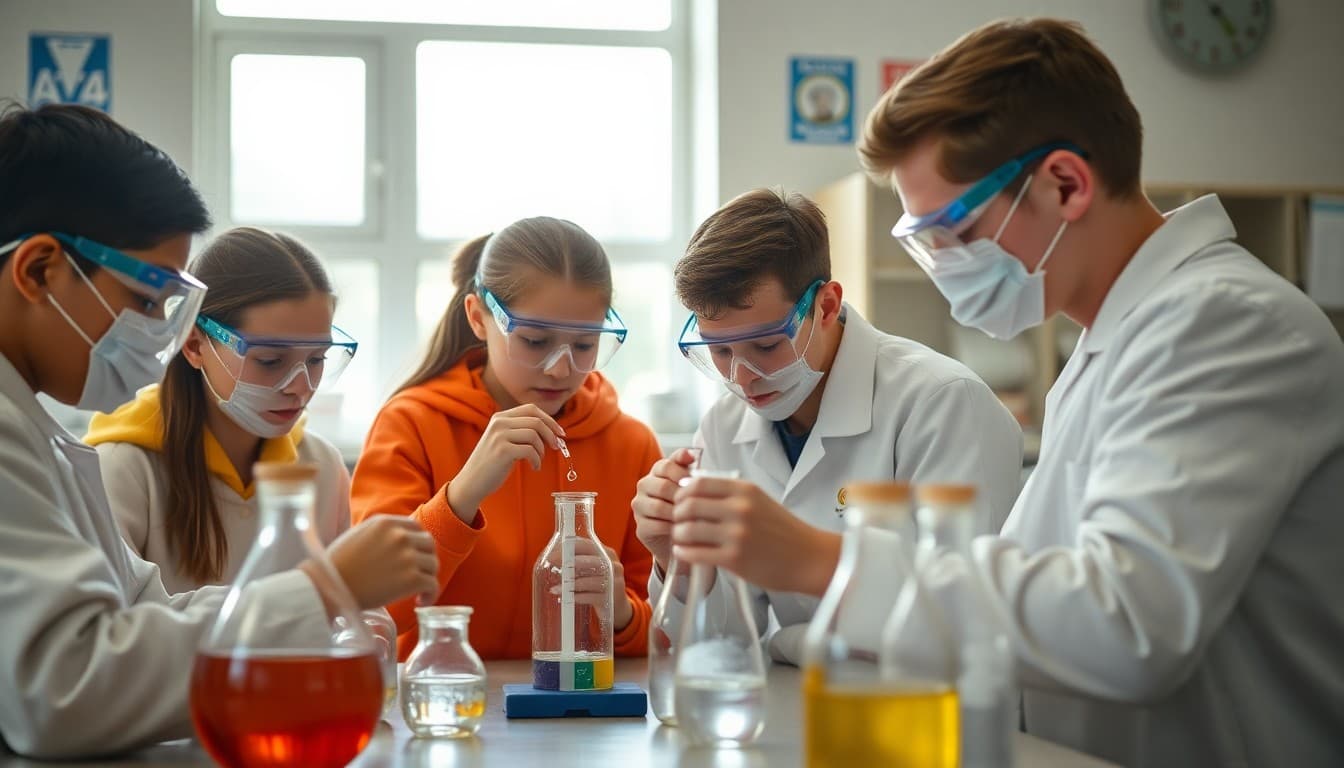
"All chemistry club experiments use materials from our school's approved reagent list, which excludes all corrosives, strong oxidizers, and toxic gases. Students wear full personal protective equipment including goggles, nitrile gloves, and lab aprons from the moment they enter the lab until after they complete cleanup. A certified teacher is present for every session. We have never had an injury in four years of running the program."
Describe each experiment with the underlying chemistry concept
Lab descriptions that only mention what students did without explaining why they did it read like a list of craft projects. Include the chemical principle being demonstrated alongside the procedure.
"This week, students built a simple battery using copper and zinc strips in a lemon juice electrolyte. The goal was to measure how electrolyte concentration affects voltage output. This is the same electrochemical principle that powers every rechargeable battery in a phone or laptop, operating at a larger scale with more efficient materials."
Share specific experimental results and what they mean
Numbers give chemistry experiments credibility. When families read that students measured a specific voltage, temperature change, or reaction time and compared it to a theoretical prediction, they understand that the work is quantitative and rigorous, not just visually interesting.
"Students ran the hand warmer thermochemistry experiment and measured temperature changes ranging from 8 to 14 degrees Celsius depending on the mass of iron powder used. The theoretical prediction from their calculations was 11 degrees. Most groups were within 2 degrees of the predicted value. The groups with larger deviations were able to identify measurement error in their data."
Cover competition preparation with timeline and format
If your chemistry club prepares for USNCO or any other competition, families need to understand the format and timeline early. The USNCO local exam in March requires months of preparation for students aiming to advance. Walk families through the structure so they can support the study time required.
"The USNCO local exam is 60 multiple choice questions covering all major areas of general chemistry plus some analytical chemistry and thermodynamics. The top scores nationally qualify for the national exam. Students who want to compete need to spend approximately three to four hours per week studying content from the ACS exam prep materials we provide."
Sample newsletter template excerpt
Chemistry Club update for November:
This month we ran three polymer chemistry experiments. Students made sodium alginate beads (the same technology used to make caviar-shaped food garnishes in molecular gastronomy restaurants), nylon synthesis through an interfacial polymerization reaction, and a cross-linked polymer gel with variable viscosity.
The nylon synthesis was the most technically challenging. Students had to maintain two immiscible liquid phases at the interface and pull the forming nylon thread slowly enough to maintain a continuous strand. Seven of eight teams produced a usable nylon thread. The eighth team's thread broke during extraction and they documented the reason in their lab report.
Connect lab skills to chemistry careers
Chemistry skills are foundational to careers in pharmaceuticals, materials science, food science, environmental science, and medicine. When a lab experiment connects to a professional application, name it.
"The chromatography technique students practiced this month is the same method forensic chemists use to identify substances at crime scenes and that pharmaceutical scientists use to verify the purity of drug compounds. Students who understand chromatography conceptually have a genuine advantage in AP Chemistry and any college lab science course."
Invite families to share chemistry in real life
Chemistry happens in every kitchen, garden, and bathroom. A newsletter that asks families to notice and name chemistry in daily life creates a connection between school learning and home that most subjects cannot claim as easily.
"Ask your student to explain the chemistry behind how bread rises, why copper pipes turn green, or what the numbers on a sunscreen bottle mean. If they can explain it, they have internalized the concept. If they cannot, it is a perfect prompt for next week's session."
Get one newsletter idea every week.
Free. For teachers. No spam.
Frequently asked questions
What kinds of experiments does a school chemistry club typically run?
Chemistry clubs run experiments that go beyond the standard curriculum, including electrochemistry projects like building simple batteries and electroplating metal, polymer chemistry like making slime and nylon, thermochemistry like building hand warmers and cold packs from household chemicals, chromatography for separating pigments and analyzing ink composition, chemiluminescence demonstrations, and food chemistry like making ice cream with liquid nitrogen. Clubs that compete prepare experiments aligned to specific competition events like Science Olympiad Chemistry Lab or ChemOlympiad.
Is chemistry club safe for middle and high school students?
Yes, with proper supervision and protocols. All school chemistry club activities use chemicals appropriate for student age and experience level. Students wear safety goggles, gloves, and lab aprons during every experiment. A teacher or certified advisor is present and directs all chemical handling. Experiments are chosen specifically to avoid hazardous reagents while still demonstrating real chemical principles. The safety training students receive in chemistry club often exceeds what they get in the standard lab curriculum.
What chemistry competitions do school clubs participate in?
Major chemistry competitions include the U.S. National Chemistry Olympiad (USNCO), which begins with a local exam in March; Science Olympiad Chemistry Lab and Forensics events; SkillsUSA Chemistry; and many regional chemistry challenge competitions run by local universities and ACS (American Chemical Society) chapters. The USNCO local exam is open to any high school student and covers general and analytical chemistry at an AP level and above.
How can families support a student who is passionate about chemistry?
Families can support chemistry interest by getting library books on chemistry history, watching chemistry-focused documentary content together, and discussing chemistry in everyday contexts like cooking, cleaning products, and biology. Purchasing a basic home chemistry kit for safe kitchen experiments extends the learning beyond school. Families should not attempt to replicate school lab experiments at home without proper equipment and supervision, but many commercially available home chemistry kits are designed to be genuinely educational without the risks.
How does Daystage help chemistry club advisors communicate with families?
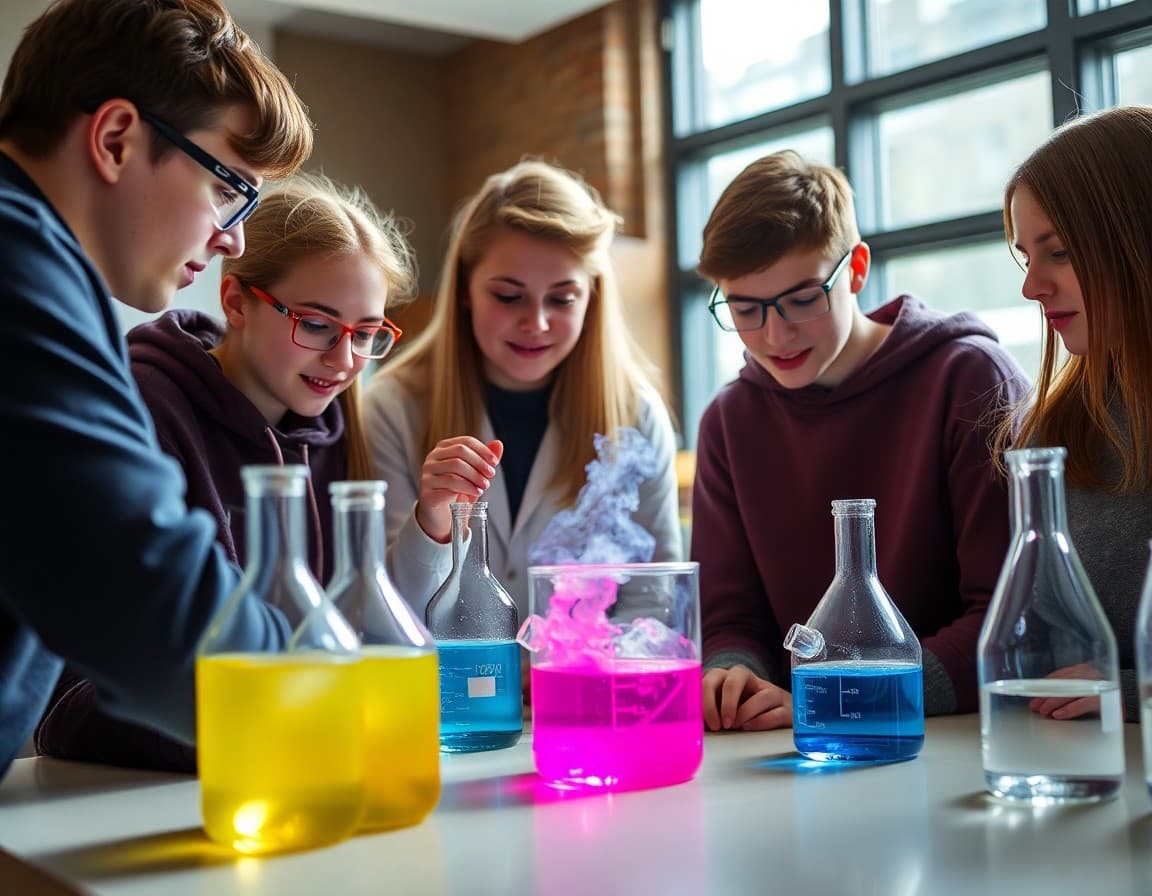
Daystage lets chemistry club advisors share lab photos, experiment results, and competition schedules in a newsletter that reaches families directly. When families see photos of students in safety gear running a real experiment alongside an explanation of what they were testing and what they found, chemistry club stops being a mystery activity after school and becomes a visible part of their child's education.

Adi Ackerman
Author
Adi Ackerman is a former classroom teacher and curriculum writer with 8 years in K-8 schools. She writes about school communication, parent engagement, and what actually works in real classrooms.
More for STEM
Ready to send your first newsletter?
3 newsletters free. No credit card. First one ready in under 5 minutes.
Get started free