
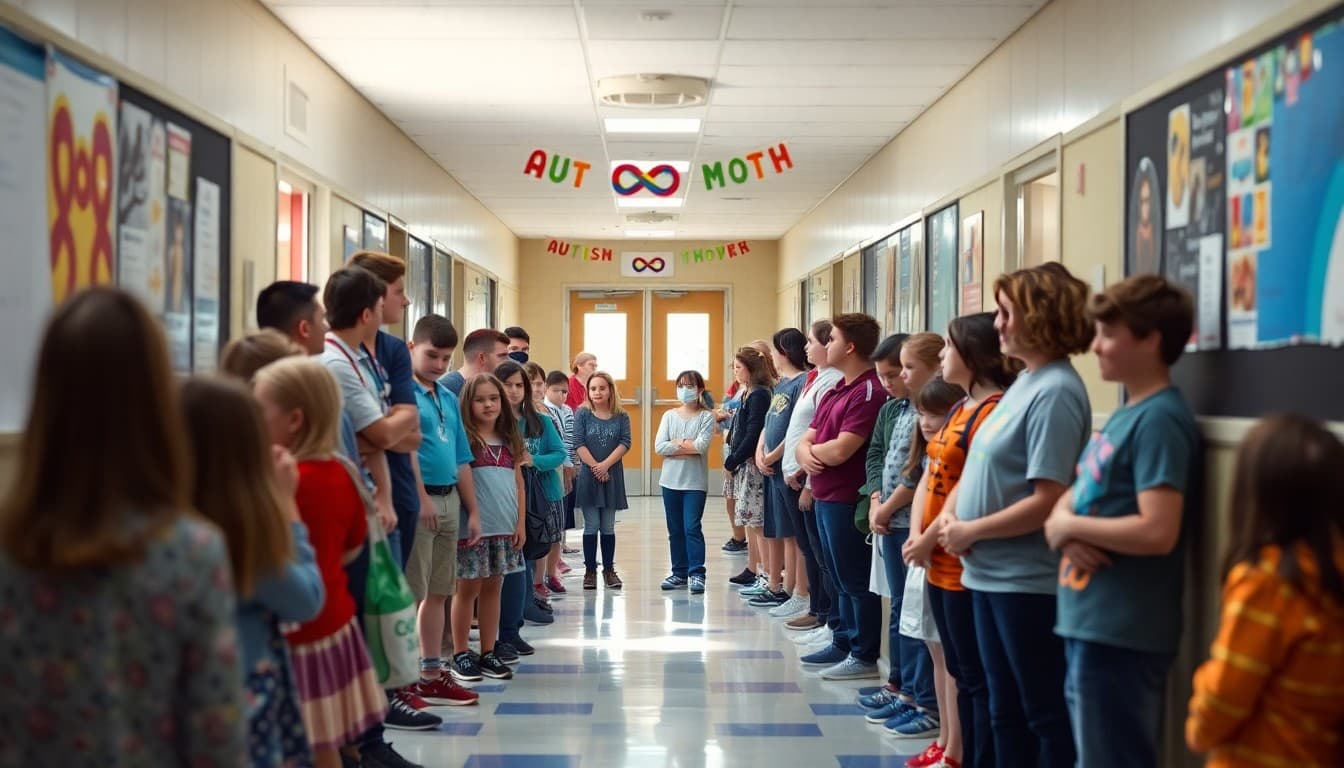
Autism Acceptance Month Newsletter: A Guide for Schools

April is Autism Acceptance Month. The shift from 'awareness' to 'acceptance' is not just a branding change. It reflects a meaningful shift in how the autistic community, disability advocates, and many families want schools and communities to engage with autism. Awareness says: know it exists. Acceptance says: create space for autistic people to belong as they are. A school newsletter that makes this distinction earns credibility with the families who know it matters.
Explain the awareness-to-acceptance shift
Many families have not encountered the language shift. A newsletter paragraph that explains it briefly is genuinely educational. "Autism Acceptance Month asks us to go beyond awareness and toward belonging. Awareness says: autism exists and it is important to know about it. Acceptance says: autistic students belong in our school, their neurological differences are a part of human diversity, and our job is to build a community where they can participate fully. That is the frame we are working from this month."
Highlight what the school is actually doing
The strongest Autism Acceptance Month newsletters are specific about the school's actual practices. What sensory accommodations are in place? How does the school handle sensory-sensitive events like assemblies or fire drills? What does inclusion look like in specific classrooms? Are there quiet spaces for students who need them? Specific, concrete details are more credible than general statements about commitment to inclusion.
Amplify autistic voices rather than speaking for them
The autistic community consistently asks neurotypical people and institutions to amplify autistic perspectives rather than speak on behalf of autistic people. In a school newsletter, this can mean sharing a quote from an autistic student (with permission), linking to resources created by the Autism Self Advocacy Network or other autistic-led organizations, or acknowledging that the school has been learning from autistic voices in how it approaches inclusion. The message: autistic people are the experts on autistic experience.
Language matters: what to use and what to avoid
Use 'autistic person' or 'person with autism' (views differ in the community; either is acceptable). Use 'neurodivergent,' 'autism spectrum,' and 'autistic community.' Avoid 'suffers from autism,' 'afflicted with autism,' and 'fighting autism.' Avoid the puzzle piece symbol, which many autistic advocates have rejected as implying autistic people are incomplete. The infinity symbol in rainbow colors has become a widely accepted symbol for neurodiversity and autism acceptance.
Template: Autism Acceptance Month newsletter opening
"April is Autism Acceptance Month. At [School], we are using this month to move from awareness to action. Autistic students are full members of our community, and our job is to build a school where they can participate, learn, and belong as themselves. This month we are highlighting [specific event or practice]. We also want to acknowledge the autistic students, families, and adults who have helped us understand what genuine inclusion looks like. We still have work to do, and we are grateful for the community that is doing it with us."
Give families one concrete action
A newsletter that ends with a specific action is more powerful than one that ends with a sentiment. Read one book written by an autistic author. Watch one talk by an autistic speaker. Learn about your child's sensory needs and what helps them. Reach out to the special education team with any questions about the school's inclusion practices. One clear action is something families can actually do.
Daystage makes it easy to send this Autism Acceptance Month newsletter to the full school community with embedded links to advocacy resources and events, in a format families will read and share.
Get one newsletter idea every week.
Free. For teachers. No spam.
Frequently asked questions
What is the difference between autism awareness and autism acceptance?
Autism awareness focuses on informing people that autism exists. Autism acceptance goes further: it affirms that autistic people belong, that their neurological differences are part of human diversity, and that the goal is inclusion rather than correction. The shift from awareness to acceptance language, reflected in organizations like the Autism Self Advocacy Network (ASAN), is meaningful to autistic people and their families. A school newsletter that uses acceptance language signals that the school understands this distinction.
What should a school Autism Acceptance Month newsletter include?
An effective Autism Acceptance Month newsletter should: briefly explain the shift from awareness to acceptance and why it matters, highlight something specific about the school's approach to inclusion for autistic students, share a perspective that amplifies autistic voices rather than speaking only about autistic people, acknowledge the families and students who live with autism daily, and give the community one concrete action toward building a more inclusive environment.
How should schools handle sensory accommodations mentioned in a newsletter?
A newsletter can describe sensory accommodations at the general level without disclosing individual student information. 'Our school has quiet spaces available during high-stimulation events, flexible seating options in classrooms, and scheduled movement breaks built into the school day's routines.' This communicates that the school takes sensory needs seriously without identifying any student. It also normalizes sensory accommodations for the whole community.
What language should schools avoid in an Autism Acceptance Month newsletter?
Avoid: 'suffers from autism,' 'afflicted with autism,' 'autism epidemic,' 'fighting autism,' and framing autism as something to be cured or overcome. These framings are rejected by most autistic adults and advocacy organizations. Prefer: 'autistic person' or 'person with autism' (both are used and views vary by individual preference), 'autism spectrum,' 'neurodivergent,' and 'autistic community.' Avoid the puzzle piece symbol, which is associated with organizations that have been criticized by autistic advocates.
How does Daystage support Autism Acceptance Month school newsletters?
Daystage lets schools send Autism Acceptance Month newsletters to the full school community with embedded links to ASAN resources, inclusive classroom information, and event details. A single newsletter can reach all families at once while maintaining the professional presentation that reflects how seriously the school takes this community building. Daystage also makes it easy to include images and embedded video from school acceptance month events.

Adi Ackerman
Author
Adi Ackerman is a former classroom teacher and curriculum writer with 8 years in K-8 schools. She writes about school communication, parent engagement, and what actually works in real classrooms.
More for Special Education
Teacher Newsletter Disability Awareness: Building an Inclusive School Community
Special Education · 6 min read
Teacher Newsletter Inclusion Classroom: Explaining Inclusion to Families
Special Education · 6 min read
Special Ed Newsletter for Parents: What Families Actually Need
Special Education · 6 min read
Ready to send your first newsletter?
3 newsletters free. No credit card. First one ready in under 5 minutes.
Get started free