

New York Special Education Newsletter: IDEA and Family Rights
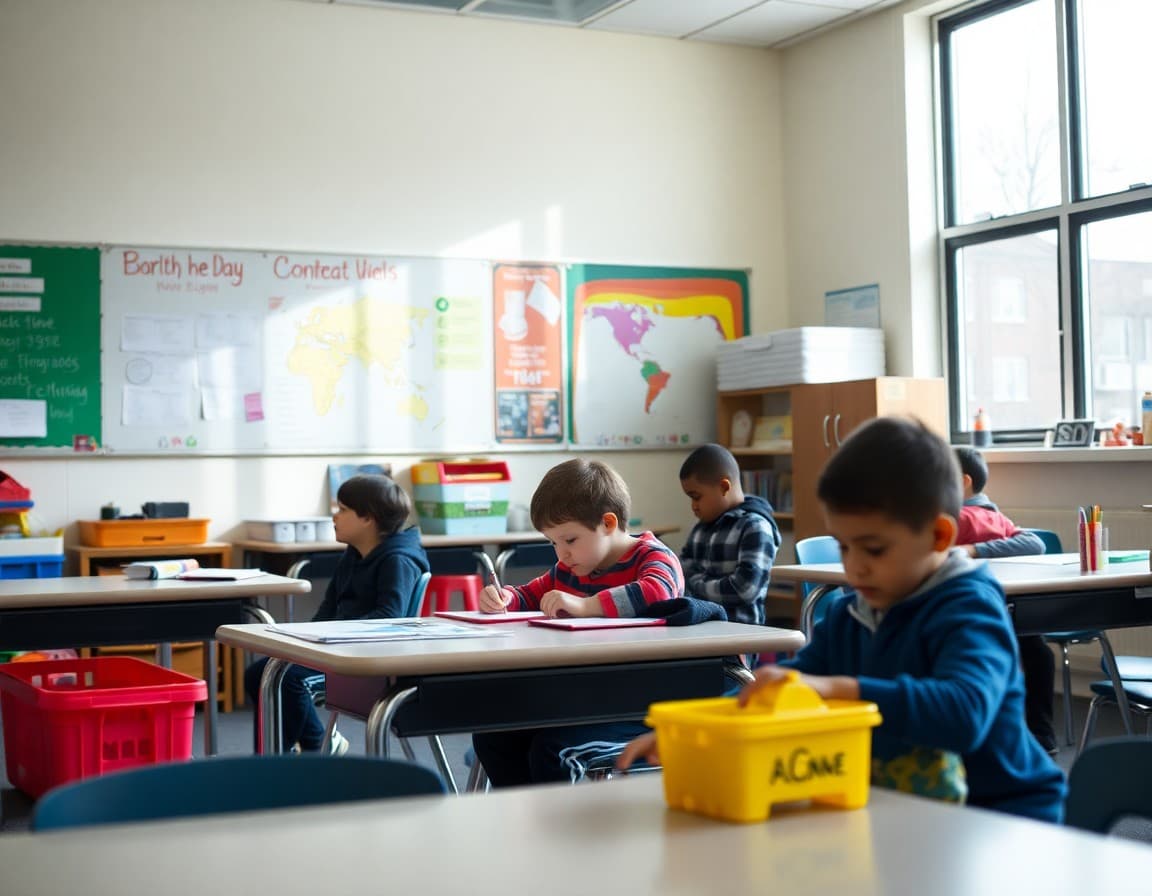
New York's special education system is among the most complex in the country, governed by Part 200 of NY state regulations, IDEA, and -- for NYC -- the DOE's Office of Special Education guidance. For special education teachers, a newsletter is a relationship tool: it builds family trust, prepares parents for formal processes, and provides a documented record of consistent communication. Here is how to make it work within NY's specific regulatory context.
New York Part 200 and What It Means for Your Newsletter
New York's Part 200 regulations implement IDEA at the state level and add some NY-specific requirements. Key obligations: prior written notice before any change in a student's program, CSE meeting notice at least five days in advance (unless the parent waives the notice period), annual provision of procedural safeguards, and specific IEP content requirements that go beyond IDEA minimums. None of these are fulfilled by a newsletter. Your newsletter's role is to build the relationship that makes formal processes easier for everyone involved.
For NYC teachers specifically, the DOE's Office of Special Education publishes family-facing guides that you can reference in your newsletter. The "Navigating Your Child's IEP" guide from the DOE is a useful resource to link in your September edition.
What to Include in a NY Special Education Newsletter
Focus on program-level information without individual student details:
- Current instructional focus (skill area, unit, learning theme)
- General CSE meeting season announcement for upcoming anniversary months
- NY-specific resources (Advocates for Children, ACCES-VR, OPWDD)
- A "Know Your Rights" section -- one procedural safeguard per month, briefly explained
- Family engagement suggestions tied to current skills
- Your direct contact information
A Template Excerpt for a NY Sped Newsletter
This Month: Students are working on executive function skills -- specifically planning, organizing tasks, and managing time. We are using visual schedules and step-by-step task breakdown strategies. Ask your child to show you how they break a big task into smaller steps. Practicing this at home extends the work we do at school.
Know Your Rights: Under IDEA and NY Part 200, parents have the right to request an independent educational evaluation (IEE) at public expense if they disagree with the district's evaluation. The district can either agree to fund the IEE or initiate an impartial hearing to defend its evaluation. Contact Advocates for Children of New York at advocatesforchildren.org for free guidance on this process.
Annual Reviews Coming Up: CSE annual reviews for students with December and January IEP anniversary dates will be scheduled soon. You will receive a written notice at least five days in advance. I am happy to discuss the agenda before your meeting -- reach out any time.
NYC District 75 and Specialized Programs
NYC's District 75 serves approximately 25,000 students with significant disabilities across all five boroughs. If you teach in a D75 school, your newsletter audience is primarily families of students with the most complex needs. These families often have the most experience navigating the special education system and the highest expectations for communication. Be specific, be honest, and be generous with information about resources. D75 families are experienced advocates and will engage deeply with a well-written newsletter.
For transition services, D75 schools work with OPWDD, ACCES-VR, and NYC's STEPS program for supported employment. Your newsletter should introduce these agencies early -- ideally in the first year of secondary transition planning -- so families understand the application timelines and waitlist realities.
Covering Transition in NY High School Sped Newsletters
New York requires transition planning to begin in students' IEPs by age 15 (federal minimum is 16; NY is stricter). For secondary special education teachers, your newsletter should cover transition topics systematically:
- ACCES-VR referral process and timeline (ideally two years before graduation)
- OPWDD eligibility application (submit early; processing takes months)
- NYC STEPS program for supported employment
- NY's Skills and Achievement Commencement Credential for students on alternate assessment paths
- Post-secondary education options for students with disabilities in NY (SUNY/CUNY, community colleges, certificate programs)
Language Access for NYC Sped Families
NYC's special education families represent the same linguistic diversity as the broader DOE population. IDEA requires that IEP notices and procedural safeguards be provided in the parent's native language. Your newsletter should follow the same standard. Use the DOE Translation Unit for major languages and note in your newsletter that interpretation is available for all CSE meetings. Many families do not attend meetings because they assume they will not be able to understand what is being said. A clear statement that interpreters are available -- and a bilingual reminder in Spanish if relevant to your community -- significantly increases meeting participation.
Managing Your Newsletter Without Adding to Your Load
NY special education teachers carry administrative burdens that rival any role in education: IEP writing, evaluation timelines, CSE meeting preparation, state reporting, and transition documentation. A newsletter should not meaningfully add to that. Template, schedule in advance, and commit to 20 minutes of production time per month. Daystage's scheduling feature lets you batch-write several months at once during a planning period and send them automatically on schedule.
Get one newsletter idea every week.
Free. For teachers. No spam.
Frequently asked questions
What are New York State's special education communication requirements under IDEA?
New York's Part 200 regulations implement IDEA at the state level. Districts must provide prior written notice before any change in identification, evaluation, or placement and must offer procedural safeguards annually. New York also has specific requirements for CSE (Committee on Special Education) meeting notice, IEP timelines, and dispute resolution through impartial hearings. NYC has additional guidance through the DOE's Office of Special Education, which publishes family-facing resources that complement IDEA requirements.
What NY-specific resources should a special education newsletter mention?
Include Advocates for Children of New York (free legal advocacy, particularly strong for NYC families), NYSED's Special Education Parent Center, the NY Alliance for Inclusion and Innovation, the Parent Training and Information Center serving NY, and the NY State Commission on Quality of Care and Advocacy for Persons with Disabilities (CQCAPD). For transition-age students, mention ACCES-VR (state vocational rehabilitation) and OPWDD (Office for People with Developmental Disabilities).
How do NYC's specialized high schools and District 75 affect special education newsletter content?
NYC's District 75 serves students with significant disabilities and operates as a separate district with its own schools and programs. If you teach in a District 75 school, your newsletter should reference D75-specific transitions and resources. For students in regular District schools with IEPs, your newsletter should address how IEP services are delivered in NYC's ICT (integrated co-teaching) or special class settings and how families can navigate the CSE process.
How often should NY special education teachers send newsletters?
Monthly is appropriate for most NY sped programs. Teachers in D75 schools or self-contained settings with high family engagement expectations often communicate more frequently. The key is that every newsletter includes your direct contact information and an explicit invitation for families to reach out -- special education families should never feel like they need to go through a front desk to reach their child's teacher.
What tools work for NY special education newsletters?
Daystage is a good fit because it keeps newsletter content entirely separate from IEP records and handles bilingual content for NYC's diverse families. Many NY sped teachers use it alongside the DOE's SESIS (Special Education Student Information System) to maintain a clean separation between legal case management and general family communication.

Adi Ackerman
Author
Adi Ackerman is a former classroom teacher and curriculum writer with 8 years in K-8 schools. She writes about school communication, parent engagement, and what actually works in real classrooms.
More for Special Education
Ready to send your first newsletter?
3 newsletters free. No credit card. First one ready in under 5 minutes.
Get started free