

Arizona Special Education Newsletter: IDEA and Family Rights
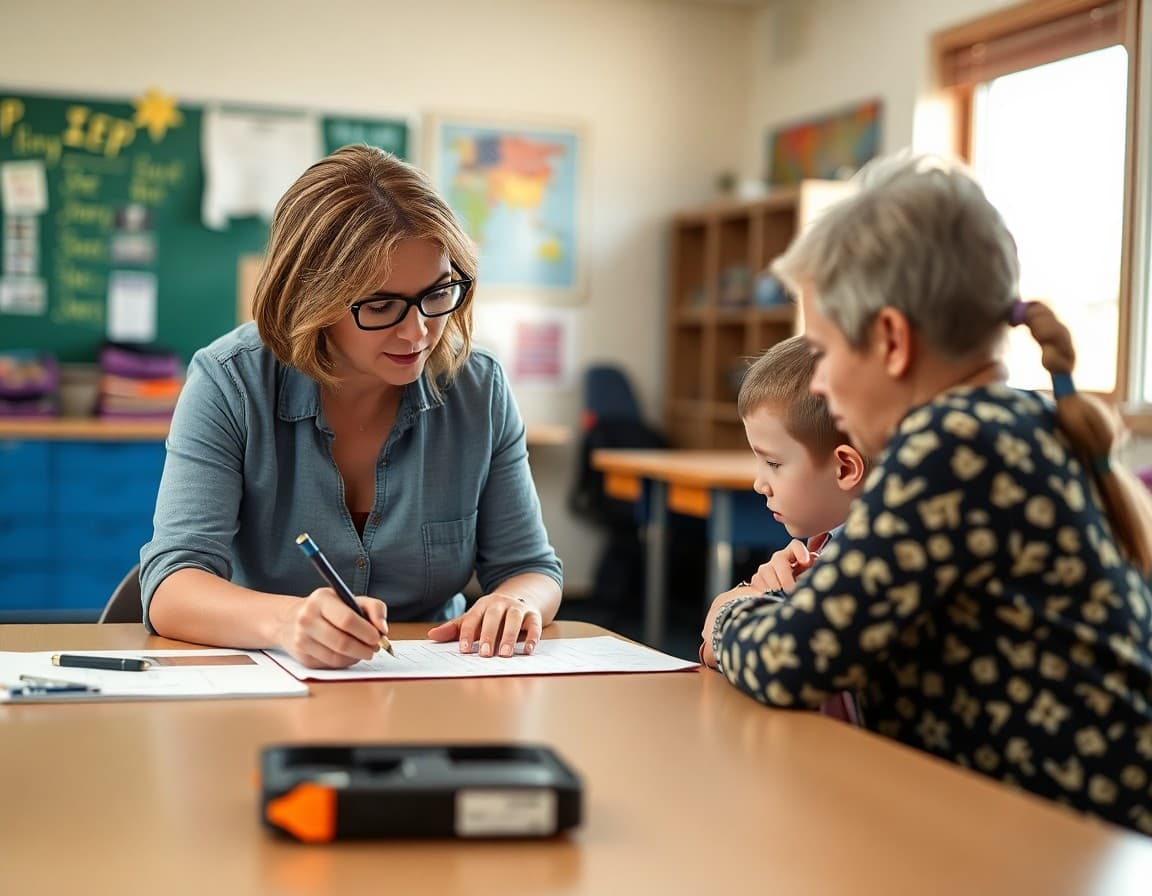
Special education teachers in Arizona serve a diverse population across Phoenix metro schools, rural tribal communities, and border-area districts. The communication needs of these communities vary, but the IDEA framework applies equally. A clear, regular newsletter keeps families engaged in their student's program between the formal IEP cycle.
Explain Arizona's Exceptional Student Services Framework
Arizona's special education system is administered through the ADE's Exceptional Student Services (ESS) division. The state has specific procedural requirements that follow IDEA but include Arizona-level guidance on evaluation timelines, IEP formats, and transition planning. Your back-to-school newsletter should introduce the ESS framework briefly, name the Raising Special Kids organization as a free family resource, and explain your school's specific special education coordinator contact information. Families who know who to call before a problem develops are better positioned to engage constructively.
Open the Year with a Plain-Language Services Overview
Describe your student's current services in plain terms that do not require special education background to understand. Instead of "specially designed instruction in written expression at 45 minutes per day in a co-taught setting," write "your student receives daily writing support in a class where two teachers work together -- one focusing on the general lesson and one providing individualized assistance." This translation makes the newsletter useful rather than technical, and families who understand what services their child receives are more likely to ask useful questions at the IEP meeting.
Address Arizona's Assessment Options Clearly
Arizona's AzM2 is the standard statewide assessment for grades 3-8. The Arizona Alternate Assessment (AzAA) is available for students with significant cognitive disabilities who cannot participate meaningfully in the standard assessment even with accommodations. Before testing season, your newsletter should specify which assessment the student will take, what IEP accommodations apply, and how results will be reported. For students taking the AzAA, explain that the assessment measures academic content at a complexity level matched to the student's instructional needs, and that results use a different scale than the AzM2.
A Pre-IEP Meeting Newsletter Template
Annual IEP Meeting Coming Up -- [Date]
What we will discuss: Progress on current goals, any service changes needed, and new goals
What to bring: Your observations about what is working and what concerns you
Interpreter: Available -- please confirm by [Date]
Support person: You are welcome to bring anyone who supports you
Your rights summary: Available in writing before the meeting on request
Contact: [Teacher name and email]
Introduce Transition Resources for High School Families
Arizona's Division of Developmental Disabilities and the Arizona Rehabilitation Services Administration both provide services to students with disabilities after age 16. DDD provides services for students with intellectual disabilities, developmental disabilities, and autism. AzRSA provides vocational rehabilitation for students with a range of disabilities who are pursuing employment or post-secondary education. Your newsletter for 9th and 10th grade families should introduce both agencies by name and explain when and how the referral process begins. Families who first hear about these agencies at the age-16 IEP meeting have far less time to prepare than families who learned about them two years earlier.
Reach Arizona's Spanish-Speaking Special Education Families
Phoenix and Tucson have large Spanish-speaking communities, and many of these families have students in special education. IDEA requires that IEP meeting invitations and procedural safeguard notices be provided in the parent's native language or other mode of communication. For newsletter communication beyond required notices, translating key sections into Spanish ensures these families receive the same program information as English-speaking families. Raising Special Kids provides bilingual family support and can be a translation resource for teachers without district bilingual support.
Communicate Behavioral Support Plans When Appropriate
For students whose IEPs include Behavioral Intervention Plans, a newsletter that describes the plan's goals in plain terms -- without identifying information that could embarrass the student -- helps families understand and reinforce the same strategies at home. "We are working on helping your student recognize when they feel frustrated and use a calming strategy before responding. The strategy we use at school is [description]. Using the same approach at home creates consistency across settings." This kind of cross-environment coordination significantly improves BIP outcomes.
Document and Archive Everything
Arizona's special education due process system is active, and disputes about services and communication are not uncommon. A consistent newsletter archive -- sent regularly, saved in a digital folder by date -- provides documentation that communication occurred even when a family claims otherwise. This is not adversarial preparation; it is professional practice. Teachers who communicate consistently and document that communication are better protected against unfounded complaints and better positioned to demonstrate program quality in any review.
Get one newsletter idea every week.
Free. For teachers. No spam.
Frequently asked questions
What are Arizona's special education communication requirements?
Arizona follows federal IDEA 2004 requirements and is administered through the Arizona Department of Education's Exceptional Student Services division. Arizona requires prior written notice, IEP meeting invitations in the parent's home language, annual procedural safeguard notices, and consent for initial evaluations. The Raising Special Kids organization serves as Arizona's federally funded Parent Training and Information Center and provides free support to families.
What transition resources are available for Arizona students with disabilities?
The Arizona Division of Developmental Disabilities (DDD) and the Arizona Rehabilitation Services Administration (AzRSA) are the primary adult services agencies for students with disabilities transitioning out of high school. AzRSA provides vocational rehabilitation, job training, and post-secondary education support. Connecting families to these agencies before age 16 -- ideally at the first transition IEP in 9th or 10th grade -- gives families time to prepare for the eligibility and enrollment process.
How should Arizona special education newsletters address assessment accommodations?
Arizona's assessments include AzM2 (Arizona's Mathematics Assessments) and the Arizona Alternate Assessment (AzAA) for students with significant cognitive disabilities. Before each testing window, a newsletter section should specify which assessment the student will take, which IEP accommodations apply to that assessment, and how those accommodations will be implemented. For students transitioning from the standard assessment to the AzAA, a clear explanation of what the alternate assessment measures is essential.
How can Arizona special education teachers communicate with Spanish-speaking families?
Arizona has a large Spanish-speaking special education family population, particularly in Phoenix, Tucson, and border communities. All IEP meeting invitations, prior written notices, and procedural safeguard documents must be provided in the parent's home language. For newsletter communication beyond required notices, a Spanish version of key sections ensures Spanish-speaking families receive the same program information as English-speaking families.
Can Daystage support Arizona special education newsletters?
Yes. Daystage lets special education teachers send regular family updates that supplement the formal IEP communication cycle. Consistent newsletters keep families informed about student progress and upcoming events without requiring every interaction to happen at an IEP meeting.

Adi Ackerman
Author
Adi Ackerman is a former classroom teacher and curriculum writer with 8 years in K-8 schools. She writes about school communication, parent engagement, and what actually works in real classrooms.
More for Special Education
Ready to send your first newsletter?
3 newsletters free. No credit card. First one ready in under 5 minutes.
Get started free