
Weekly SEL Newsletter: A Five-Minute Template
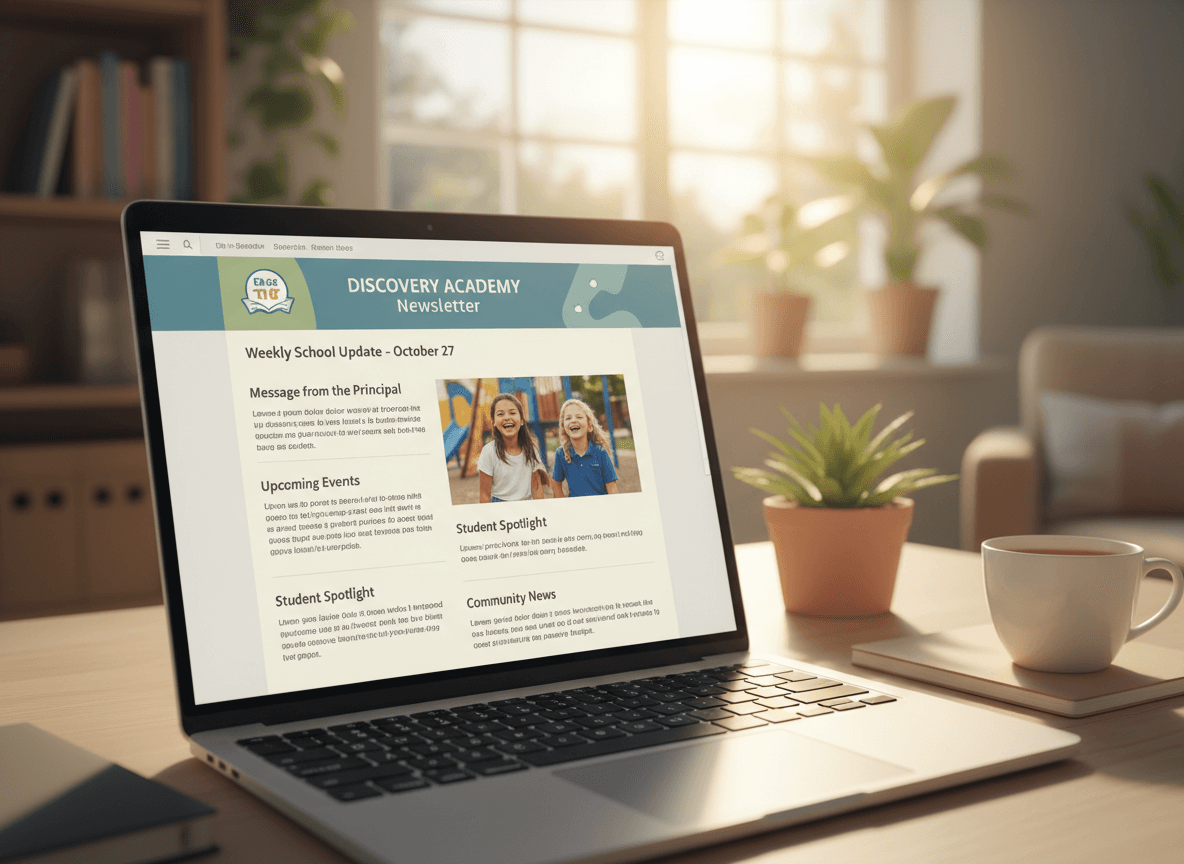
Weekly newsletters fail for the same reason teachers stop running their reading groups: they get too elaborate, too quickly. Sustainable weekly communication looks like five minutes on Sunday night, one skill, one moment, one prompt, a few logistics, send. The five-minute rule is what keeps it going through April when everyone is tired. Anything longer turns into guilt and then silence.
The five-section structure
Use the same five sections every week. Subject line that names what the week was about. One sentence about the SEL skill the class practiced. One short moment from the classroom, two or three sentences. One dinner prompt for parents. Three logistics lines at the bottom. That is the whole template.
The subject line is the heads-up
Most parents read the subject line and decide from there. Skip "Weekly Newsletter Week 12." Use the actual content. "Practicing how to ask for help this week." "What we learned at the assembly." "A small fight at recess and how we handled it." Subject lines that name a moment get opened. Subject lines that name a number do not.
The skill
Pick one SEL skill the class practiced. Self-advocacy. Listening. Taking turns. Naming frustration. Asking for help. One. Not five. The whole point of the weekly is that families end up with a clear, accumulating picture over the year. Forty weekly newsletters at one skill each is a full curriculum laid out for the home.
The moment
Two or three sentences. A real thing that happened. "On Wednesday, Jordan asked Marcus if he could play on the four-square court. Marcus said no. Jordan asked why. Marcus said the spots were full. Jordan said okay and asked if he could be next. That is the skill we have been practicing." The moment is what parents actually remember a month later.
The dinner prompt
One specific question parents can ask at dinner. "Tonight, ask your child to teach you the calming-down trick we practiced this week." "Tonight, ask your child what they think it means to be a good listener." Specific beats generic. "Talk to your child about their feelings" is not a prompt. "Ask your child what was the most frustrating part of their day" is a prompt.
The logistics
Three lines at the bottom. Field trip permission slips due Wednesday. Library books due Friday. Picture day is the 18th. That is enough. If you have more, hold them for a separate email. Mixing fifteen logistics lines with one SEL section is the fastest way to lose parents.
A short example
Here is a full weekly newsletter at length:
Subject: How we handled three recess conflicts this week
This week, our class practiced self-advocacy. The skill is asking for what you need, directly, without going to an adult first. On Thursday, three students came to me after recess to say someone had taken the ball they were playing with. By Friday, two of them had handled it themselves before I heard about it. That is the win.
At home this week, ask your child to teach you the script we practiced: 'I was using that. Can I have it back when you are done?' Let them say it out loud. The practice matters more than the conversation.
Logistics: library books due Friday. Field trip permission slip due Wednesday. Picture day moved to the 18th.
What to leave out
Leave out the inspirational quote. Leave out the curriculum unit title. Leave out anything that is not specific to your class this week. The weekly newsletter is a postcard, not a magazine. Anything that does not fit on a postcard belongs in a different send.
The five-minute rule
If the weekly takes longer than five minutes, shrink the template. Skip the moment for the week. Skip the dinner prompt if you are out of ideas. Send a four-section version. Sending something short every week beats sending something perfect once a month and then disappearing for six weeks.
How Daystage helps with weekly newsletters
Daystage has a weekly template designed for the five-minute rule. You type three lines: the skill, the moment, the dinner prompt. Daystage drafts the five-section structure in your voice, fills in the subject line, and formats the logistics at the bottom. You read it, edit one or two sentences, and send. The whole process takes under five minutes from open to send.
Get one newsletter idea every week.
Free. For teachers. No spam.
Frequently asked questions
Is weekly really the right cadence?
For some teachers, yes. For most, biweekly is more sustainable. A weekly newsletter only works if you keep each one under five minutes to write. The minute it starts taking thirty minutes is the minute you skip a week, then two, then you stop. Pick the cadence you can hold for a year.
What goes in a weekly newsletter that is not in a longer one?
Less. The weekly is the heads-up version. One skill the class worked on, one moment that shows it, one dinner prompt, two or three logistics lines. That is the whole thing. Save the longer pieces, the parent-teacher conference prep, the holiday note, for separate sends.
When should the weekly go out?
Sunday evening or Monday morning before school. Sunday is better. Parents read it while planning the week. By Tuesday, most weekly newsletters are forgotten. The Sunday timing also matches when families are setting up the week mentally.
What if nothing big happened this week?
That is fine. The newsletter is not a highlight reel. A week where the class practiced taking turns in line is still a week worth naming. Small moments are the work. Reserve the big drama for the school year as a whole, not week to week.
Can Daystage draft a weekly newsletter?
Daystage has a weekly template designed for under-five-minute drafting. You add three lines about the week, hit generate, and read the draft. It pulls forward the skill name, the moment, the dinner prompt, and the logistics into a clean five-section structure. You edit one or two sentences and send.

Adi Ackerman
Author
Adi Ackerman is a former classroom teacher and curriculum writer with 8 years in K-8 schools. She writes about school communication, parent engagement, and what actually works in real classrooms.
More for Social-Emotional Learning
Ready to send your first newsletter?
3 newsletters free. No credit card. First one ready in under 5 minutes.
Get started free