
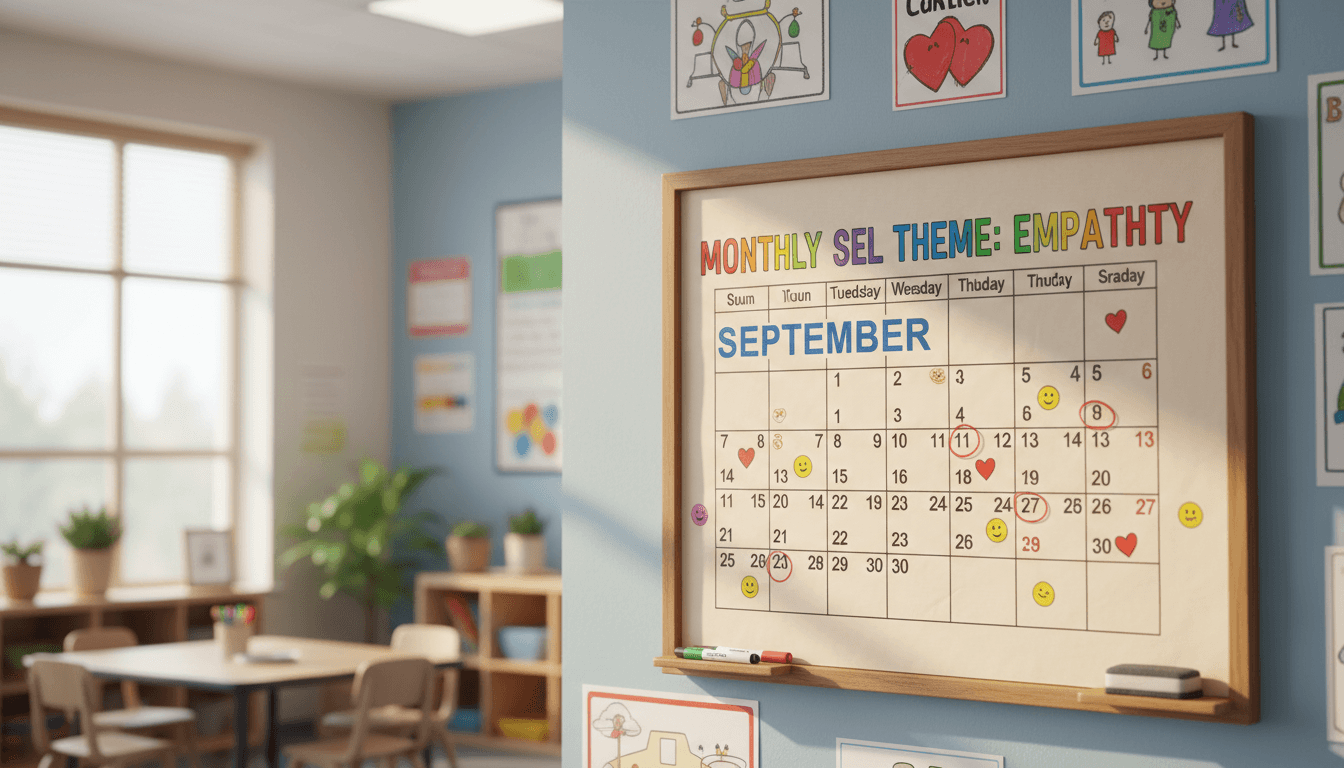
Monthly SEL Newsletter: A Template You Can Reuse

A monthly SEL newsletter is the lowest-effort cadence that still builds a real picture of the year for parents. Twelve newsletters, twelve themes, twelve dinner questions. By the end of the school year, families have a clear sense of what their child practiced and how to keep the language going at home. The template that makes it work is short and repeatable. Same structure every month. The content changes. The shape does not.
The five-block structure
Use the same five blocks every month. Theme of the month at the top. Two or three classroom moments that show the theme. One parent question to discuss at dinner. A short look-back at last month's theme. Logistics at the bottom. The repetition is the feature, not a bug. Parents learn where to look for what they need.
Theme of the month
Pick one SEL idea and stay with it for four weeks. Common themes by month: September, classroom community. October, self-awareness. November, gratitude. December, kindness. January, responsibility. February, friendship. March, empathy. April, perseverance. May, reflection. June, growth. Adjust to your school's curriculum if you have one.
Write the theme as a sentence, not a buzzword. "This month, we are practicing empathy, which means trying to understand what someone else is feeling." One sentence. Then move into the classroom moments.
The classroom story
Two or three short moments that show the theme in action. "Last Tuesday, two students worked through a disagreement at the math center without coming to me. They each said what they were upset about. They each said what they wanted. They split the manipulatives and moved on." The story is the proof. Parents believe a moment more than they believe a curriculum description.
The parent question
One specific question parents can ask at dinner sometime in the month. "Ask your child to tell you about a time someone at school understood how they felt without them having to explain. Then ask them to tell you about a time they tried to understand someone else." Two questions tied to one theme. Parents can ask them at different dinners. The conversation lasts five minutes each.
The look-back
Two sentences at the end about last month's theme. "Last month, we focused on responsibility. The class chose three classroom jobs this week without me assigning them. The lights, the recycling, and the line-up. Responsibility shows up in small choices like that." The look-back tells parents the work accumulates. It is not a string of disconnected months.
A short example
Here is what a parent section can look like for an empathy month:
On Thursday, a new student joined our class. She did not say much for the first hour. By recess, three kids had offered her their seat at the lunch table. One of them, Sami, told me later he remembered being new at his old school and how long the first lunch felt. That is empathy. He remembered his own first day and used it to make her first day shorter.
The dinner question, expanded
Some parents like one question. Some want a few options. Offer both. Lead with the one question, then add two alternates. "Or ask: what is one thing you noticed someone else feeling today? Or ask: when is a time you wanted someone to understand how you felt?" Three options. Pick one or rotate through the month.
The logistics
Keep logistics to four lines at the bottom. Field trip dates. Conference week reminder. Picture re-take day. Spring break. Anything urgent or time-sensitive belongs in a separate email, not the monthly. The monthly is a steady letter, not a logistics dump.
Subject lines that get opened
Use the theme in the subject line. "October: practicing self-awareness in our class." "March: what empathy looked like this month." Skip the "Newsletter" word. Parents do not need to be told it is a newsletter. They need to know what it is about.
How Daystage helps with monthly newsletters
Daystage has a monthly template with the five-block structure already in place, the theme list mapped to the school year, and a slot for the classroom story. You add the theme and one or two classroom moments. Daystage drafts the rest in your voice, builds the look-back from last month's send, and formats the logistics at the bottom. The whole process takes under ten minutes a month.
Get one newsletter idea every week.
Free. For teachers. No spam.
Frequently asked questions
Is monthly really enough?
For most classrooms, yes. Monthly is the cadence parents actually read. Weekly newsletters get skimmed for logistics and then deleted. A monthly newsletter that is well written gets opened, read, and saved. The trade-off is that monthly cannot carry urgent updates, so keep a separate channel for those.
When should the monthly go home?
First school day of the month or the last Friday before. First-of-the-month works for setting a theme. Last-Friday works better for closing out and looking back. Pick one and hold it. Inconsistent timing is what trains parents to stop watching for it.
What is a theme of the month?
One SEL idea the class will focus on for four weeks. Self-management. Empathy. Friendship. Responsibility. Pick from your school's existing SEL curriculum if you have one. Otherwise pick from the CASEL five core competencies. The theme is the anchor for the month, not a graded unit.
What if a month is shorter than four weeks of school?
Adjust the theme to fit. December and June are usually compressed by holidays and end-of-year, so use lighter themes like gratitude or reflection. February is short but full of school days, so a heavier theme like friendship works. Match the theme to the calendar you actually have.
Can Daystage help draft a monthly newsletter?
Daystage has a monthly template with the theme block, the classroom story slot, the dinner question, and a four-week look-back structure already in place. You add the theme and one or two classroom moments from the month. It drafts the rest in your voice in under ten minutes.

Adi Ackerman
Author
Adi Ackerman is a former classroom teacher and curriculum writer with 8 years in K-8 schools. She writes about school communication, parent engagement, and what actually works in real classrooms.
More for Social-Emotional Learning
Ready to send your first newsletter?
3 newsletters free. No credit card. First one ready in under 5 minutes.
Get started free