
Start-of-Year SEL Newsletter: A Template Parents Will Read
The first newsletter of the year sets the relationship with every family in your class for the next ten months. Most teachers spend an entire weekend on it and end up with something that reads like a syllabus. The fix is a tight structure: warm greeting, what the classroom feels like, the routines that will repeat all year, and one clear protocol for contact. Five sections, 500 words, sent in the first two weeks. This is the template.
Open as yourself, not as the curriculum
The first three sentences are the only ones every parent will definitely read. Use them to be a person. Your name, what grade you are teaching, one thing you are excited about for the year. Skip the bio paragraph. Parents do not need to know where you got your master's degree. They need to know you are warm, organized, and already paying attention to their kid.
Describe the classroom community you are building
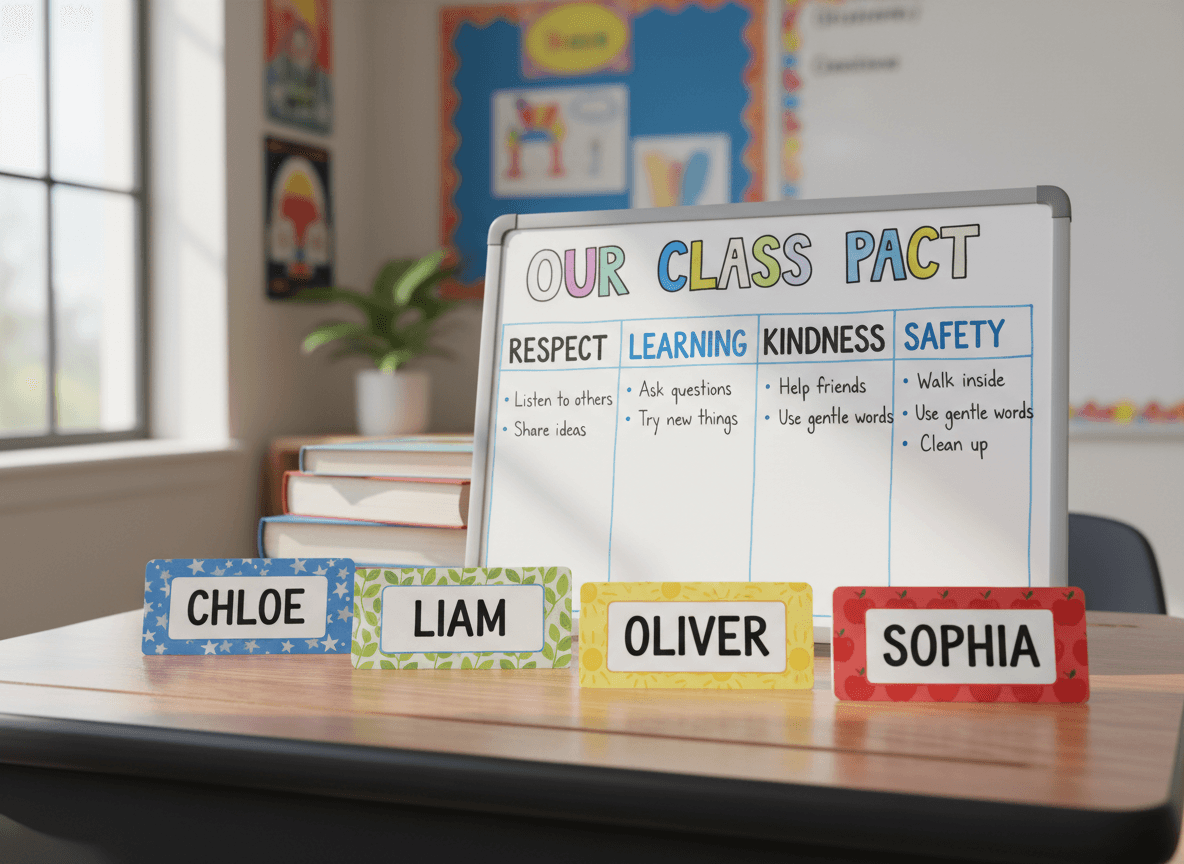
Three to four short lines about the norms the class is co-creating in the first week. "We are working on three agreements together: listen when others are talking, ask before you borrow, and try again when something is hard. Students helped pick the wording. These are posted in the room and we will refer back to them every day." That tells a parent more about your classroom than any philosophy statement.
Introduce morning meeting
Most parents in K-5 have never heard the term. Describe what happens instead of naming the framework. "Every morning starts with about fifteen minutes together on the rug. We greet each other by name, one or two students share something brief, we do a short activity or song, and I write a message on the board that previews the day." Then one sentence on why it matters. "This gives every student a moment of being seen before academics start." If your school uses Responsive Classroom, drop the name once at the bottom for the parents who want to search it.
The SEL focus for the first month
Name one skill the class will be working on in September. Not five. One. "For the first month we are practicing self-management, which means noticing when you are getting frustrated and using a strategy before you react. You may hear your child use the words 'reset' or 'take a break.' Those are ours." Parents now have language they can reinforce at home.
The contact protocol
Be specific. "I check email twice a day: 7:30 a.m. and 3:30 p.m. I will respond within one school day for non-urgent items. For anything urgent, please call the front office and they will get word to me. If you would like a phone call or a quick meeting, please reply to this email and I will send you two time slots." That protocol prevents the late-night Sunday text and the panic email that goes unanswered for six hours.
What you will hear about
Close with what to expect from the newsletter going forward. "These notes will come out every other Friday. They will be short. They will tell you what your child is practicing, one moment from the classroom, and one thing you can ask at home." Parents now know the rhythm. They will not bug you in week three asking whether they missed something.
One classroom moment from the first week
If the first week has already happened by the time you send this, include one 60- to 80-word story from those first days. A greeting at the door that went well. A student who walked in nervous and walked out with a friend. A class agreement that was harder to land than expected and how the kids worked it out. Real moments outperform any photo of a name tag display. They tell parents that you are paying attention to who their child is, not just to the classroom you are running.
What not to put in the first newsletter
Three traps. The first is the academic scope and sequence. Save it for week three or four when the class has actually started the work. The second is your full credentials and background. Parents will trust you faster from a warm three-line opener than from a paragraph that reads like a LinkedIn profile. The third is a long supply list. The supply list belongs in its own email or in a back-to-school packet.
Subject lines that earn opens in week one
"Welcome to Room 12" is fine but generic. "What our first morning meeting looked like, and how to reach me" is concrete. Lead with something specific in the issue. Parents are getting roughly fifteen back-to-school emails the first week. Yours needs to look different in the inbox.
How Daystage helps with start-of-year SEL newsletters
Daystage has a back-to-school template preset with every section in this article in the right order. You add your name, your grade, a line or two about your room, and your contact protocol. Daystage formats it in plain parent-friendly language and writes a subject line that gets opened. The first newsletter of the year stops being a weekend project and becomes a fifteen-minute task you can do before lunch.
Get one newsletter idea every week.
Free. For teachers. No spam.
Frequently asked questions
When should the first SEL newsletter of the year go out?
Within the first ten school days. Earlier than that and you have nothing real to describe yet. Later and parents have already formed their picture of the classroom from whatever their child happened to mention at dinner. The first two weeks are the window.
Should the start-of-year newsletter include a curriculum overview?
Keep curriculum to one short paragraph near the bottom. Parents do not need a scope and sequence in week one. They need to know that you have a plan, what the classroom feels like, and how to reach you. The curriculum details land better mid-September.
How do you introduce morning meeting to parents who have never heard of it?
Describe what happens, not what it is. 'Each day we start with fifteen minutes of greeting, sharing, an activity, and a written message on the board.' Then one sentence on why. 'This sets the tone and gives every student a moment of being seen before academics start.' Skip the framework citation in the intro letter.
What contact information should you include?
Your school email, the best time of day to reach you, expected response time, and the channel for urgent issues. 'I check email twice a day, before school and at the end. For anything urgent, please call the front office.' Parents respect a clear protocol more than a promise of constant availability.
Can Daystage build a start-of-year SEL newsletter from a few notes?
Daystage has a back-to-school template with all the sections preset: greeting, what to expect, morning meeting intro, classroom norms, contact protocol. You type four or five notes about your room and Daystage drafts the full newsletter in your voice. Most teachers send their first issue in under fifteen minutes.

Adi Ackerman
Author
Adi Ackerman is a former classroom teacher and curriculum writer with 8 years in K-8 schools. She writes about school communication, parent engagement, and what actually works in real classrooms.
More for Social-Emotional Learning
SEL Newsletter for Teachers: Communicating Without the Buzzwords
Social-Emotional Learning · 6 min read
End-of-Unit SEL Newsletter: Sections to Include Every Time
Social-Emotional Learning · 6 min read
Classroom Community Building Newsletter: What to Send the First 30 Days
Social-Emotional Learning · 6 min read
Ready to send your first newsletter?
3 newsletters free. No credit card. First one ready in under 5 minutes.
Get started free