

End-of-Unit SEL Newsletter: Sections to Include Every Time
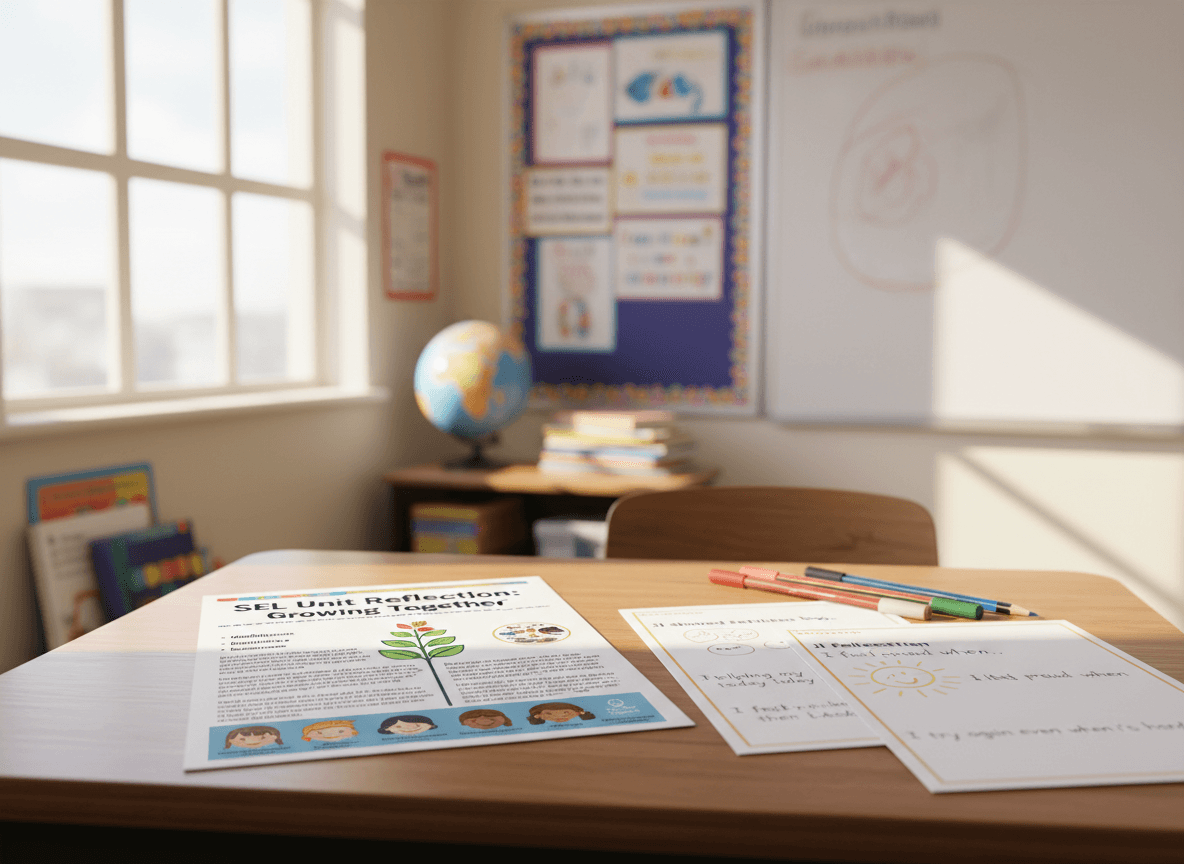
The end of an SEL unit is the moment parents most want to hear from you. The kids have been working on something for weeks. Vocabulary has been repeated, routines have been built, a few real moments have happened in class. An end-of-unit newsletter that lands well closes the loop for families and sets up the next chunk of work. This is the template, with the sections in the order they should appear.
Open with the unit headline in plain language
Skip the curriculum-doc title. If the unit was called "Self-Management Module 2," the headline parents read is "Two weeks of learning how to calm down before reacting." Lead with what the kids actually practiced. The technical name can sit in a sentence further down for parents who want to look it up.
Recap what students worked on
Two short paragraphs. The first names the skill in plain language and lists the vocabulary the class used. The second describes the routine or activity that anchored the unit. "Every morning we started with a check-in where students picked a feeling word from a chart of twelve options. By the end of the unit, most of them reached for words like 'frustrated' and 'overwhelmed' instead of just 'bad.'" That tells parents exactly what changed.
Share what the kids reflected on
At the close of any SEL unit, kids should be reflecting on something. Pull two or three anonymized quotes from those reflections. Real student voice carries the newsletter. A line like "I learned that when I am mad, I can ask for a break instead of yelling" lands harder than any teacher summary.
One concrete classroom moment
Pick a single moment from the unit and tell it in 80 to 120 words. Last week, a fourth grader walked away from a recess argument, came back two minutes later, and said, "I needed to cool down. Can we try again?" His friend nodded and they kept playing. That is the whole skill. Naming it after the story is short: "This is what we have been calling a reset." Stories do the teaching.
Preview the next unit
One short paragraph. Name the next theme, the rough start date, and the first piece of vocabulary parents will hear at home. "Starting next Monday we move into social awareness, which means noticing how other people are feeling and what they might need. The first word we will be using is 'perspective.' If your child uses it at dinner, that is where it came from."
Give parents one specific prompt
Vague suggestions get ignored. Concrete prompts get used. "Ask your child to teach you the reset routine we practiced this unit. Have them walk you through what they would do if they got frustrated doing homework tonight." That is something a parent can actually do at the table after school.
Close with what to watch for
End on a short line that points parents to a behavior they may notice at home. "You may hear your child ask for a break in the next few weeks. That is the skill working. The right answer is usually yes." This sets families up to reinforce the work without you having to write a separate parent guide.
Subject lines that actually get opened
"End of Unit 3 Newsletter" is a label. Labels are ignored. "Two weeks of learning how to reset, and what comes next" is a promise. Promises get opened. The subject line is the only marketing on the entire newsletter. Spend ninety seconds on it. Lead with the skill the kids practiced or with a sliver of student voice. "Maya learned what 'overwhelmed' means this week" outperforms anything that starts with the word "newsletter."
What to skip in an end-of-unit newsletter
Three things make end-of-unit newsletters drift toward unread. First, the full activity log. Parents do not need a list of every Morning Meeting topic and every read-aloud. Second, the rationale paragraph about why this unit matters. Save the case for SEL for once a year. Third, the long assessment summary. If you have data worth sharing, pick one number and put it in a sentence. "Eighteen of twenty-two students could name three calm-down strategies by Friday. Up from six at the start of the unit." That is the entire data section.
Make it skim-able on a phone
Most parents open the newsletter on a phone in the carpool line. Short paragraphs. Bold headers. One image, with permissions cleared. No three-column layouts. No headers in all caps. The version that works on a phone also works on a desktop. The reverse is rarely true.
How Daystage helps with end-of-unit SEL newsletters
Daystage has the end-of-unit arc preset as a template: headline, recap, student voice, story, preview, prompt, close. You type the unit theme and a few short notes from class. Daystage drafts the full newsletter in plain parent-friendly language with a subject line that earns opens. The whole closing ritual for a unit takes under fifteen minutes instead of an evening at the kitchen table with a half-built Word doc.
Get one newsletter idea every week.
Free. For teachers. No spam.
Frequently asked questions
When should an end-of-unit SEL newsletter go out?
Send it the day the unit closes or within two school days after. Any later and parents have lost the context. The point is to anchor what their child practiced while the language is still fresh, then bridge into the next unit so families know what is coming.
How long should the newsletter be?
300 to 500 words. Two or three short sections, one student quote or moment, one prompt parents can use at home. Anything longer and you lose the parents who read on a phone between meetings.
Do you have to include student work samples?
Not every issue. A short student quote works just as well, sometimes better. If you do include work, pick one piece, get permission, and let it carry the section rather than padding with three or four samples.
What if the unit did not go well?
Say so in plain language. 'We spent two weeks on conflict resolution and we are not there yet. Here is what we are doing differently in the next unit.' Parents trust teachers who name what was hard. They distrust newsletters that read like a brochure.
Can Daystage build an end-of-unit SEL newsletter quickly?
Daystage has the end-of-unit structure built into its SEL templates. You type the unit theme, three short notes about what students practiced, and one preview line for the next unit. Daystage drafts the full newsletter with subject line, parent prompt, and bridge paragraph in under ten minutes.

Adi Ackerman
Author
Adi Ackerman is a former classroom teacher and curriculum writer with 8 years in K-8 schools. She writes about school communication, parent engagement, and what actually works in real classrooms.
More for Social-Emotional Learning
Ready to send your first newsletter?
3 newsletters free. No credit card. First one ready in under 5 minutes.
Get started free