
SEL Newsletter on Problem-Solving Skills: A Template With Examples

Problem-solving is one of the few SEL topics that maps directly onto something kids do every hour of every day. The newsletter that works names a clear frame, shows it applied to one real problem, and gives parents one move to add at home.
The 4-step problem-solving frame
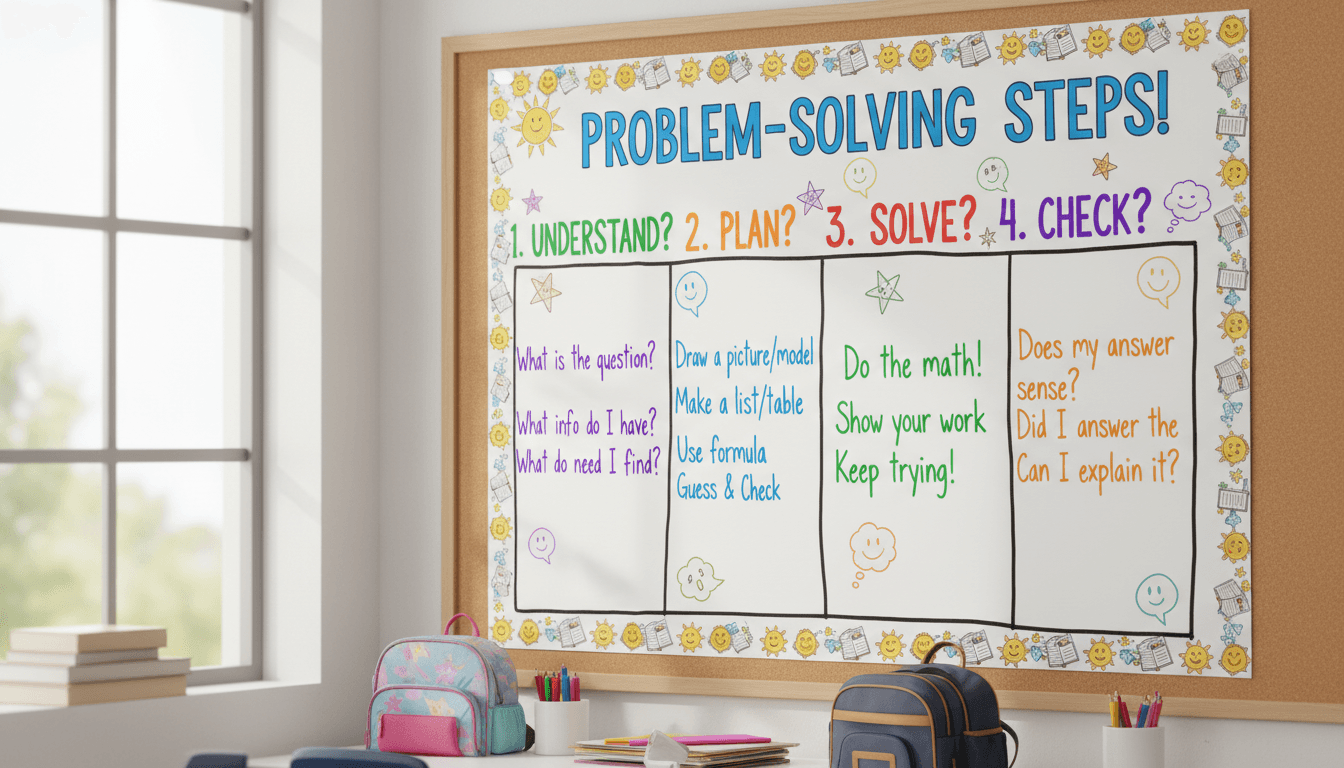
Four steps, in plain language. Name the problem. List two or three things you could try. Pick one and try it. Look back and see what worked. The first time you write about this in a newsletter, list the four steps in full. After that, refer to them by name. The point is for the family to share a vocabulary with the class.
Why step two matters
Most kids (and many adults) skip from naming the problem to picking the first solution that comes to mind. Step two is where the work happens. Listing two or three things you could try means at least one bad idea, and bad ideas are useful because they let the kid feel the contrast. Tell parents this. At home, when their kid is stuck, the most useful question is "what are two things you could try?"
The what-worked reflection
Step four is the part most curricula skip. After a problem gets solved (or does not), ask two questions. What worked? What did not? The answers do not need to be smart. They need to be said out loud. Naming what worked turns one solved problem into a move the kid can use again. Naming what did not work prevents the same try next time.
One real example
Here is what a 200-word section sounds like:
On Tuesday two students, Aaron and Mia, both wanted to use the one tablet during reading rotation. We named the problem (two kids, one tablet, ten minutes left). We listed three things they could try. Take turns at five minutes each. Pick a different activity for one of them. Share the tablet for one shared task. They picked the third one. They ended up reading an article together about sea otters.
What worked: listing three options before deciding. What did not work: trying to share without a plan, which they had attempted first. Both parts of the reflection mattered. The first one gave them a move for next time. The second one told them what to skip.
What not to do
Do not give kids the answer when they get stuck on step two. The point of listing options is the listing, not the quality of each option. If a child says "I could ask my mom," that is a real option even if it is not the one you would pick. The frame works because the kid does the thinking.
Give parents one specific move
End the newsletter with one prompt. "Next time your child is stuck, ask 'what are two things you could try?' before suggesting anything." Most parents jump to suggestions. This prompt slows them down by one step. The difference is large.
Keep it short
300 to 500 words. Four steps named. One real example. One prompt for home. A subject line that names the skill, not the unit. "How my third graders solved a tablet fight in two minutes" gets opened. "Problem-Solving Unit Update" does not.
How Daystage helps with problem-solving newsletters
Daystage was built for the kinds of newsletters that need a clear frame and a real example. You type three short notes about what your class did this week. Daystage drafts a parent-ready newsletter, formats the email, and sends it to every family on your class list. The problem-solving template keeps the four steps and the reflection prompt structured so each issue feels familiar.
Get one newsletter idea every week.
Free. For teachers. No spam.
Frequently asked questions
What is the 4-step problem-solving frame?
Name the problem. List two or three things you could try. Pick one and try it. Look back and see what worked. Four steps, in plain language, repeatable across most elementary problems. Parents who know the four steps can coach the same frame at home without changing your wording.
What is the what-worked reflection?
After a problem gets solved (or does not), you ask two questions. What worked? What did not? The point is to make the thinking visible. Kids who can name what worked are kids who can use the same move again. This is the part most problem-solving units skip.
Should the newsletter include a real classroom example?
Yes, one example. One real problem your class hit and what they tried. Not every issue, just this one. Examples make the four steps concrete in a way that diagrams do not. Skip the names if the situation was sensitive.
What is the take-home prompt for problem-solving?
During the next argument or stuck moment at home, ask 'what are two things you could try?' before suggesting anything. Most parents jump to step three (pick one and try it) without doing step two (list options). The newsletter is the place to nudge them to slow down by one step.
Can Daystage help write a problem-solving newsletter?
Daystage drafts a parent newsletter from a few short notes about what your class practiced this week, formats the email, and sends it to every family on your roster. The problem-solving template includes the four-step frame and a reflection prompt so the structure stays consistent across issues.

Adi Ackerman
Author
Adi Ackerman is a former classroom teacher and curriculum writer with 8 years in K-8 schools. She writes about school communication, parent engagement, and what actually works in real classrooms.
More for Social-Emotional Learning
Classroom Community Building Newsletter: What to Send the First 30 Days
Social-Emotional Learning · 6 min read
Character Education Newsletter Template Without the Cliches
Social-Emotional Learning · 6 min read
SEL Newsletter for Teachers: Communicating Without the Buzzwords
Social-Emotional Learning · 6 min read
Ready to send your first newsletter?
3 newsletters free. No credit card. First one ready in under 5 minutes.
Get started free