
SEL Newsletter for MLK Day: How to Send It
MLK Day lands on a Monday in January, which means the newsletter about it has to go home the week before. A short, careful note to families is better than a long one. It names the day, names what the class will read or discuss, names what the family can do over the long weekend, and stops there. Skip the inspirational quote graphic. Skip the speech excerpt unless you are reading it together. Lead with what the kids will actually do.
Open with the day, plainly
"Monday, January 20, is the federal holiday honoring Dr. Martin Luther King Jr. School is closed. Before the weekend, our class will be reading and talking about who Dr. King was, what he worked for, and what his birthday asks us to do today." Three sentences. Now parents know what is coming.
Age-appropriate framing by grade band
Kindergarten through second grade hears the simple version. Dr. King was a real person who helped change unfair rules that said some people could not use the same drinking fountains, sit in the same parts of buses, or go to the same schools because of the color of their skin. He did it without using violence. He used his voice and his feet. He gave speeches and led marches. Kids this age can hold that.
Third through fifth grade can handle more. Add the specific events: Montgomery bus boycott, March on Washington, the I Have a Dream speech, the Voting Rights Act. Add that the unfair rules had a name, segregation, and that ending them took thousands of people, not just one. Add that the work is not finished, in terms a ten-year-old can recognize: in some places people are still treated unfairly because of who they are, and the same skills Dr. King taught, speaking up and helping each other, are what change that.
Anti-racism in plain language
The newsletter is going home to a wide range of families. Skip academic vocabulary like systemic and anti-racist if your community is not already using it. Use plain words. "We are teaching our class that treating people unfairly because of the color of their skin is wrong. We are also teaching that when we see it happen, our job is to say something or get an adult." The point lands in every household when you say it this way.
A family service prompt
Give one specific idea for the long weekend. "Pick one small thing to do as a family that helps someone outside your home. Drop off a coat at a shelter. Write a card to a neighbor who lives alone. Make sandwiches for a community fridge. Pick up trash at a local park." Tell parents the conversation matters more than the size of the action. The point is the kid sees the adults in their life choosing to help, on the day that asks for it.
A short example
Here is what a classroom story can look like:
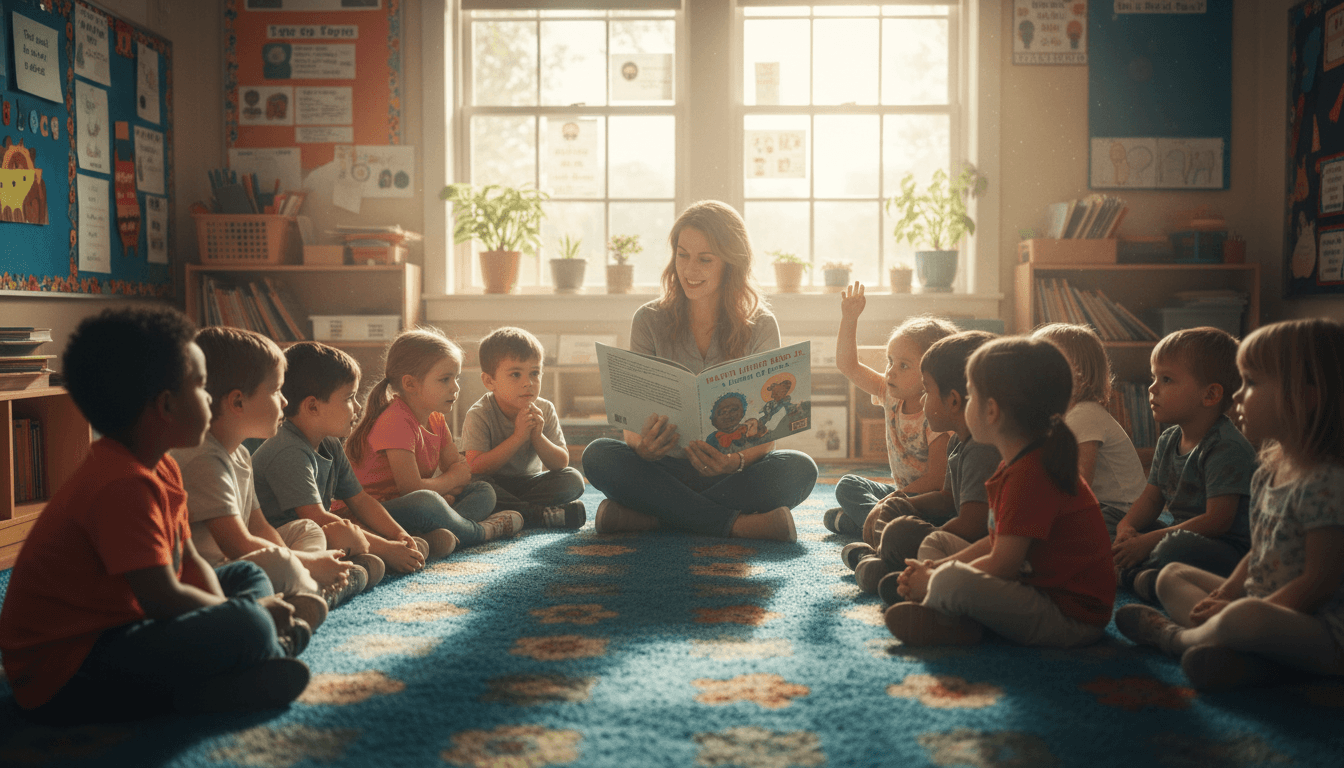
Last year our class read 'Martin's Big Words' on the Friday before the long weekend. After we finished, a second grader asked if Dr. King ever got scared. I told her yes, often. She sat with that for a minute and then said, "but he kept going anyway." That is the line she remembered three months later. Kids hold the brave parts.
What to talk about at home
Give parents two prompts they can pick from. Younger kids: "Ask your child to tell you what they learned about Dr. King this week, in their own words." Older kids: "Ask your child what they think Dr. King would say about something unfair they have seen at school or in the neighborhood." Both questions take five minutes. Both work over dinner. Neither requires the parent to have the right answer ready.
Loop in the school librarian
Most school libraries do a display the week of MLK Day. Mention it. If your librarian is doing read-alouds during library time, say so. It tells parents the school is doing the work in more than one classroom, which builds trust.
How Daystage helps with MLK Day newsletters
Daystage has an MLK Day template that already includes the grade-band framing, the plain-language anti-racism paragraph, a slot for a book recommendation, and the family service prompt. You add your classroom moment and the book your class read. Daystage drafts the rest in your voice in under ten minutes. The result reads like a real teacher who thought about every family in the room, not a copy-paste holiday note.
Get one newsletter idea every week.
Free. For teachers. No spam.
Frequently asked questions
When should the MLK Day newsletter go home?
Send it the Thursday or Friday before the long weekend. Families need the heads-up to read a picture book together, plan a service activity, or talk through what the day means. A Tuesday-after send is too late. By then the day has passed and the moment is gone.
Is it appropriate to teach about racism in elementary school?
Yes, in age-appropriate language. Kindergarten through second grade learns that people were treated unfairly because of their skin color and that Dr. King helped change unfair rules. Third through fifth grade can handle more detail, including specific events and the connection to today. Kids encounter difference and unfairness on their own. Teaching them the words and the history is honest, not heavy.
What books work for read-aloud?
For K through 2: 'Martin's Big Words' by Doreen Rappaport. For grades 3 through 5: 'A Picture Book of Martin Luther King, Jr.' by David Adler, or 'I Have a Dream' picture book edition with Dr. King's words. Read the book before reading it aloud. Some passages need pacing.
Should the newsletter mention service?
Yes. MLK Day was designated as a day of service in 1994. Give families one easy idea. Donate gently used winter coats to a local shelter. Write a card to a community helper. Pick up trash at a neighborhood park. The service activity ties the holiday to action, which is the point.
Can Daystage help draft an MLK Day newsletter?
Daystage has an MLK Day template with grade-band framing, a book recommendation slot, a family service prompt, and a short kindness-to-action paragraph already structured. You add classroom-specific details. It drafts the rest in your voice in under ten minutes.

Adi Ackerman
Author
Adi Ackerman is a former classroom teacher and curriculum writer with 8 years in K-8 schools. She writes about school communication, parent engagement, and what actually works in real classrooms.
More for Social-Emotional Learning
Character Education Newsletter Template Without the Cliches
Social-Emotional Learning · 6 min read
Classroom Community Building Newsletter: What to Send the First 30 Days
Social-Emotional Learning · 6 min read
SEL Newsletter for Teachers: Communicating Without the Buzzwords
Social-Emotional Learning · 6 min read
Ready to send your first newsletter?
3 newsletters free. No credit card. First one ready in under 5 minutes.
Get started free