
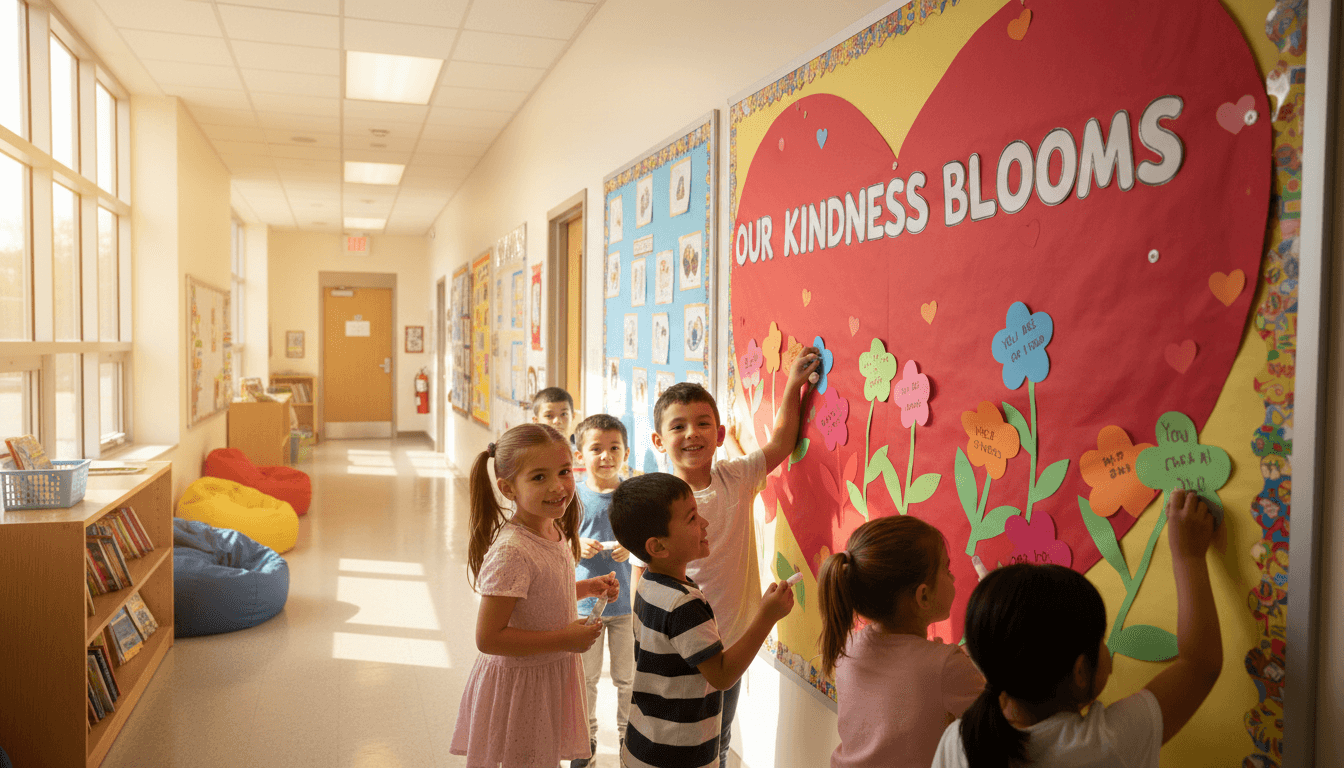
SEL Newsletter for Kindness Week: A Template With Examples
Kindness week is one of the easier SEL newsletters to write because the structure does most of the work. Five days, five small themes, one short story to close. The trick is keeping it specific. A newsletter that just says "be kind to others this week" lands nowhere. A newsletter that says "Monday is random act day, here is what that looks like" gives families something to do at breakfast.
The five daily themes
Use the same five themes each year so families recognize the structure. Monday: a random act of kindness. Hold a door, pick up a dropped pencil, let someone go first in line. Tuesday: write a note. One sentence, one classmate, one specific thing you noticed about them this week. Wednesday: include someone. Find a kid at recess who is alone and invite them in. Thursday: family kindness at home. Do something kind for someone you live with, without being asked. Friday: self-kindness. The hardest one. Pick one thing you say to yourself that is mean, and try a kinder version for the day.
Lead the newsletter with Monday
Put the first day's theme in the first paragraph. Parents read the top of the page on a Sunday night and skim the rest by Tuesday. If Monday is the first thing they see, Monday is the day they prepare their kid for. The other days can sit lower on the page.
Random act day, in plain language
A random act of kindness for an eight-year-old is small and physical. Hold the cafeteria door for the class behind you. Pick up the pencil someone dropped without being asked. Let a kid who is faster than you cut in front in the line for the water fountain. The point is action without expectation. Tell parents not to ask "what kindness did you do today" at pickup. Kids who feel watched stop doing the thing. Ask at dinner instead.
Write a note day
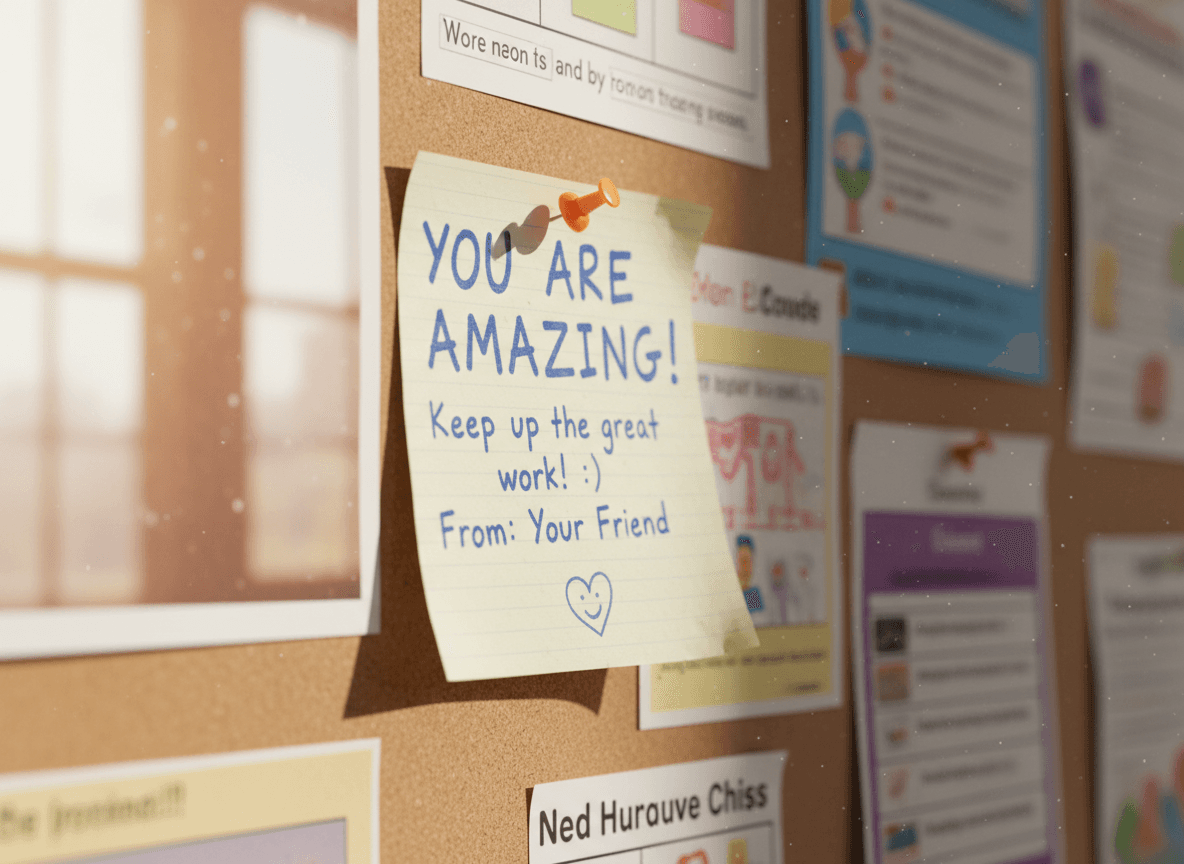
Tuesday is the easiest day for the teacher and the hardest for the kids. Give each student one piece of paper at the start of the day. They write one sentence to one classmate. Specific. "Thank you for sharing your eraser last week." "I liked how you helped Marcus with the math problem on Friday." Skip "you are nice." Vague kindness is forgettable. Specific kindness gets remembered for a year.
Include day
Wednesday is the one parents need to hear about most. Tell them every recess has a kid who is alone. Sometimes by choice, sometimes not. The job for Wednesday is to walk over and ask. Not pull them in. Not insist. Ask. "Do you want to play four-square with us?" If the answer is no, that is fine. The invitation is the kindness. Tell parents this is the harder day because their kid might be the one being invited, and it might sting if it feels like a project. Coach them to celebrate the invite either way.
Family kindness day
Thursday is the day parents do something. Each kid does one thing kind for someone in their household without being asked. Empty the dishwasher. Read to a younger sibling. Make a card for a grandparent. Tell parents not to assign it. The whole point is the kid notices what needs doing and does it.
Self-kindness day
Friday is the day kids find the hardest. Most of them have one sentence they say to themselves that is mean. "I am bad at math." "I look weird in this shirt." "Nobody wants to play with me." The exercise is to notice the sentence and try a kinder version of it for the day. "Math is hard for me right now." "This shirt is fine." "I will ask someone to play." Tell parents to expect their kid to be quiet about this one. It is more personal than the others.
A short example
Here is what a closing classroom story looks like:
On Wednesday, two girls in our class noticed a third grader from another class eating alone at the end of our cafeteria table. They scooted down and asked her about her shoes, then about her dog, and by the end of lunch she was laughing. They did not tell me they did it. I heard about it from the cafeteria monitor on Friday. That is the kind of kindness this week is for.
How Daystage helps with kindness week newsletters
Daystage has a kindness week template with the five daily themes, the parent prompts, and a slot for the closing classroom story. You add one classroom moment and any school-specific details. Daystage drafts the newsletter in your voice. The result reads like a real teacher with real stories, not a poster.
Get one newsletter idea every week.
Free. For teachers. No spam.
Frequently asked questions
When should the kindness week newsletter go home?
Send it the Friday before kindness week starts. Parents need the weekend to read it and the heads-up to participate in the family kindness day. A Monday morning send is too late. By the time families see it, day one is half over.
Does the class have to do all five themes?
No. Pick three if your week is short or interrupted by a field trip. Random act, write a note, and include someone are the three that work even with no prep. Family kindness and self-kindness are bonuses if you have the time and the parent buy-in.
What if a student forgets the day's theme?
That is fine. The point is the practice, not the perfection. A kid who does a random act on note day and a note on include day has still done both. Resist the urge to make a chart. Charts turn kindness into a worksheet.
How do you handle a kid who is unkind during kindness week?
The same way you handle it any other week. Name the behavior, repair if possible, move on. Do not lecture them about the irony. The week is not a test. It is a chance to practice a skill, including the kids who are still learning it. The repair is the lesson.
Can Daystage help draft a kindness week newsletter?
Daystage has a kindness week template with the five daily themes, the family kindness prompt, and the closing classroom story already structured. You add classroom-specific notes. It drafts the newsletter in your voice in under ten minutes.

Adi Ackerman
Author
Adi Ackerman is a former classroom teacher and curriculum writer with 8 years in K-8 schools. She writes about school communication, parent engagement, and what actually works in real classrooms.
More for Social-Emotional Learning
Character Education Newsletter Template Without the Cliches
Social-Emotional Learning · 6 min read
Classroom Community Building Newsletter: What to Send the First 30 Days
Social-Emotional Learning · 6 min read
SEL Newsletter for Teachers: Communicating Without the Buzzwords
Social-Emotional Learning · 6 min read
Ready to send your first newsletter?
3 newsletters free. No credit card. First one ready in under 5 minutes.
Get started free