
SEL Newsletter on Kindness: A Template Parents Will Read
A kindness newsletter is hard to write because the topic invites clichés. The good ones avoid that trap by describing one real thing that happened in class and giving parents a single question to ask at home. Everything else is filler.
Open with a moment, not a definition
Do not start with "Kindness is one of the most important values we teach." Start with what happened. "On Wednesday morning, a new student walked into the classroom and Sara stood up, walked across the room, and asked if she wanted to sit at her table." That sentence does more than three paragraphs of explanation. Parents understand kindness already. They want to know what their child is learning to do.
Explain the kindness chain so parents understand the wall
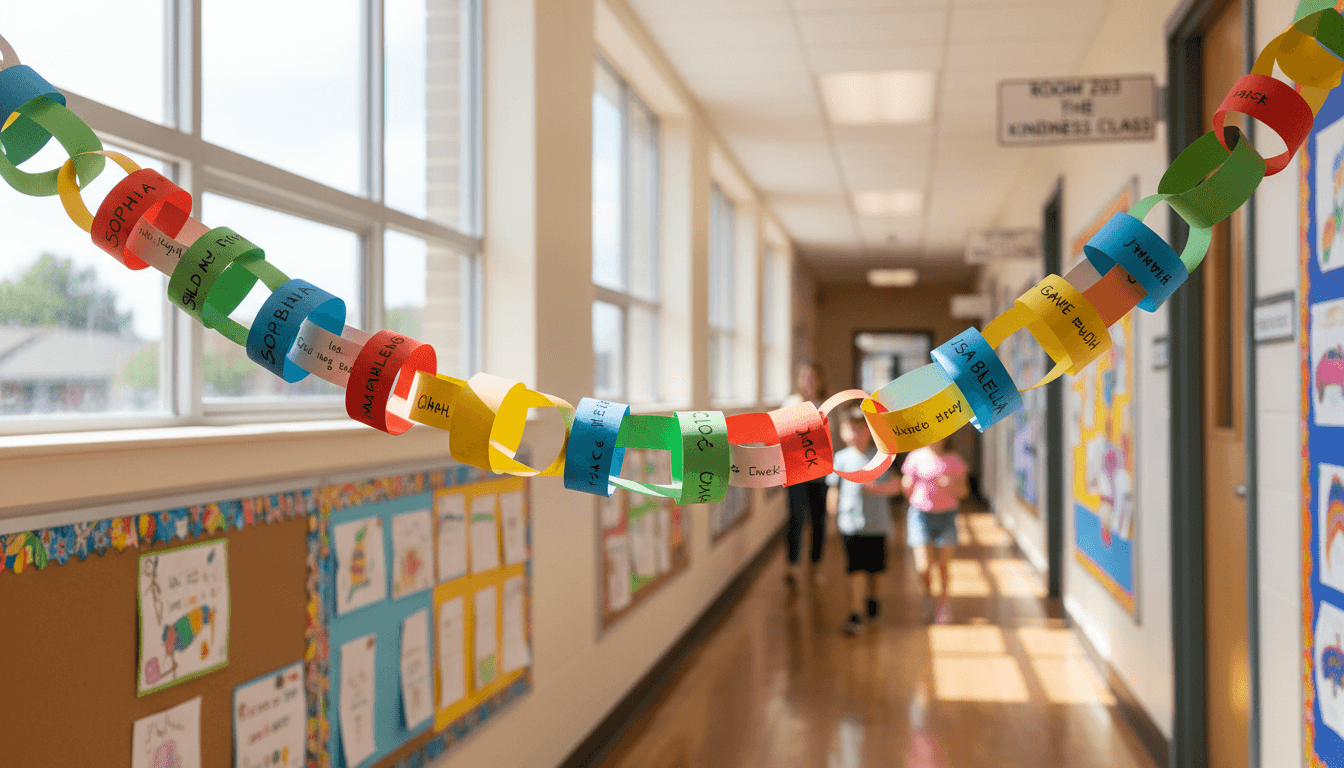
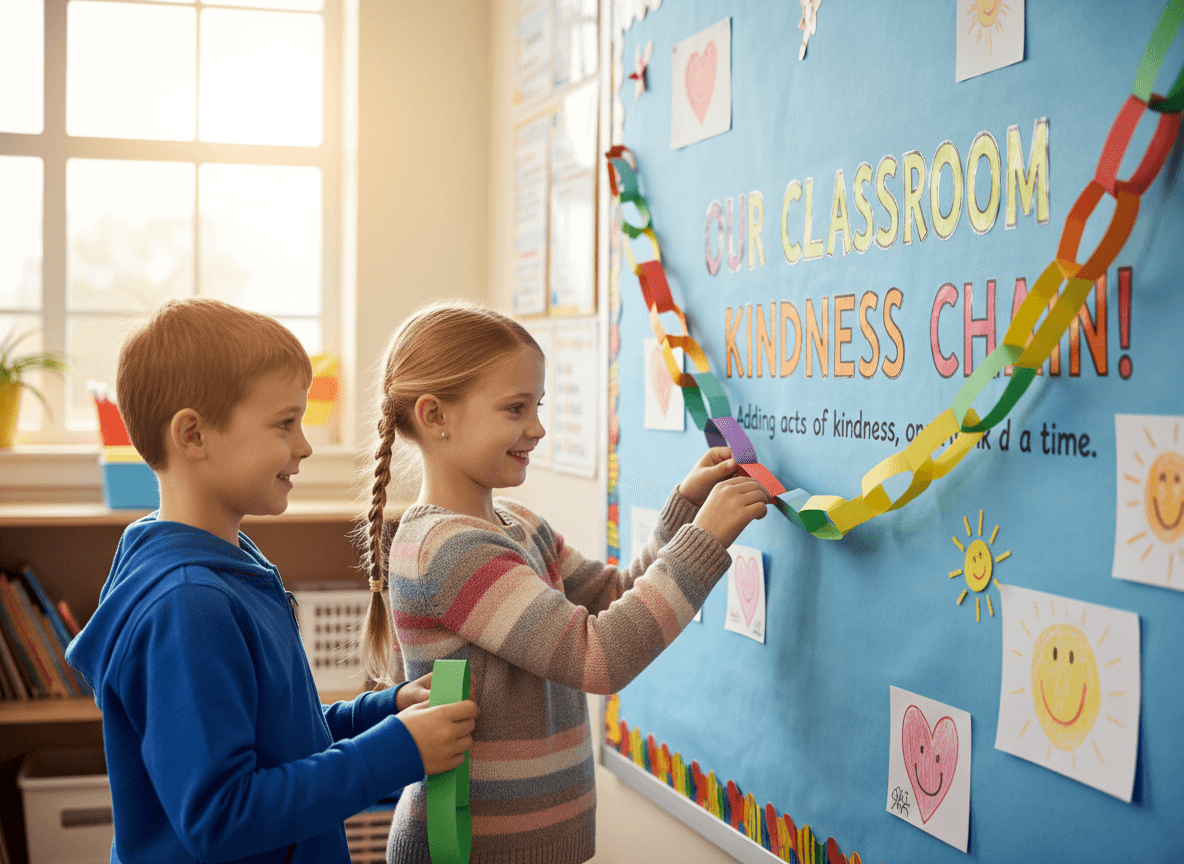
If your school does a kindness chain or kindness jar or a class tracker, describe it. Parents see colorful paper loops in the hallway at pickup and skip past them. Tell families what each link means in two sentences. "Each link goes up when a student notices another student doing something kind. We are at 47 links this month and counting toward 100 by spring break." Now the visual reads as a running count of attention, not decoration.
Make space for the Friday share
A short weekly ritual works better than a one-time unit. Many classrooms hold an "act of kindness" Friday share where students name something kind they saw that week. The point is not to praise the kind kid. The point is to train the rest of the class to look. Mention this ritual in the newsletter so parents can ask about it at the dinner table. "Who got named in the Friday share this week?" is a real conversation starter.
Why scripted kindness assignments can backfire
Some kindness curricula ask students to do three kind acts a week and log them in a journal. The intention is sound. The result is often a child who picks the cheapest possible acts (smiling at a sibling, holding a door) to fill the chart. Worse, it teaches that kindness needs to be tracked to count. Better to talk about kindness you noticed than to demand kindness you can grade.
A short example
Here is the kind of section that works:
On Tuesday at recess, two third graders, Noah and Aaron, were stuck on opposite sides of a four-square argument. Marcus, who was not part of the game, walked over and asked, "Can I help you two figure it out?" That sentence is the whole skill we are building this month. He did not pick a side. He did not solve it for them. He offered to help.
At home, you can build this by pausing during sibling arguments and asking your child, "Is this something you want help with, or do you want to handle it yourself?" Let them answer. Then act on their answer.
Give parents one specific prompt
Forget "talk to your child about kindness." Give them a script. "At dinner tonight, ask: what is one kind thing you saw a classmate do today, not something you did, something you noticed." Specific prompts produce real conversations. Vague ones produce shrugs.
Keep the length short
Aim for 300 to 500 words. One moment from class. One sentence about the kindness chain or tracker. One prompt for home. Subject line that names the issue clearly. "How a third grader broke up a recess fight this week" gets opened. "October Kindness Update" does not.
How Daystage helps with kindness newsletters
Daystage was built for teachers who do not have time to wrestle a newsletter into shape every two weeks. You type three lines about what happened in class. Daystage drafts a clean, parent-ready newsletter with a subject line and a take-home prompt. You read it, fix one or two sentences, and send it to every family on your roster. The kindness template keeps the "moment first, framing second" structure built in.
Get one newsletter idea every week.
Free. For teachers. No spam.
Frequently asked questions
What does a kindness newsletter actually cover?
One classroom moment that showed kindness in action, the language students used, what the kindness chain or visual tracker looks like this month, and one short thing parents can try at home. That is the whole thing. Skip the inspirational quotes.
Is the kindness chain a good activity to write about?
Yes, if you describe what the chain represents. Parents see a hallway full of paper loops and have no idea what counts as a link. Tell them. 'Each link is an act of kindness a student noticed someone else do.' Now the visual makes sense at pickup.
Why do scripted kindness assignments sometimes backfire?
When kindness becomes homework, kids start performing it for the grade or the sticker instead of for the other person. A child who is told to do three kind acts this week and report back often picks the easiest, most visible ones. Talk about kindness you noticed, not kindness you assigned.
What should parents try at home for a kindness unit?
Ask one specific question at dinner: 'What is something you saw today that someone else did to help a classmate?' This trains noticing, which is the harder skill. Doing the kind act comes after seeing that kindness is something to look for.
Can Daystage help write a kindness newsletter?
Daystage gives you a parent newsletter template with a built-in 'one moment from class' section. You type three sentences about what a student did this week. Daystage drafts the full newsletter in plain language, formats the email, and sends it to every family on your class list.

Adi Ackerman
Author
Adi Ackerman is a former classroom teacher and curriculum writer with 8 years in K-8 schools. She writes about school communication, parent engagement, and what actually works in real classrooms.
More for Social-Emotional Learning
Character Education Newsletter Template Without the Cliches
Social-Emotional Learning · 6 min read
Classroom Community Building Newsletter: What to Send the First 30 Days
Social-Emotional Learning · 6 min read
SEL Newsletter for Teachers: Communicating Without the Buzzwords
Social-Emotional Learning · 6 min read
Ready to send your first newsletter?
3 newsletters free. No credit card. First one ready in under 5 minutes.
Get started free