
SEL Newsletter for the Holiday Season: Sections Parents Read
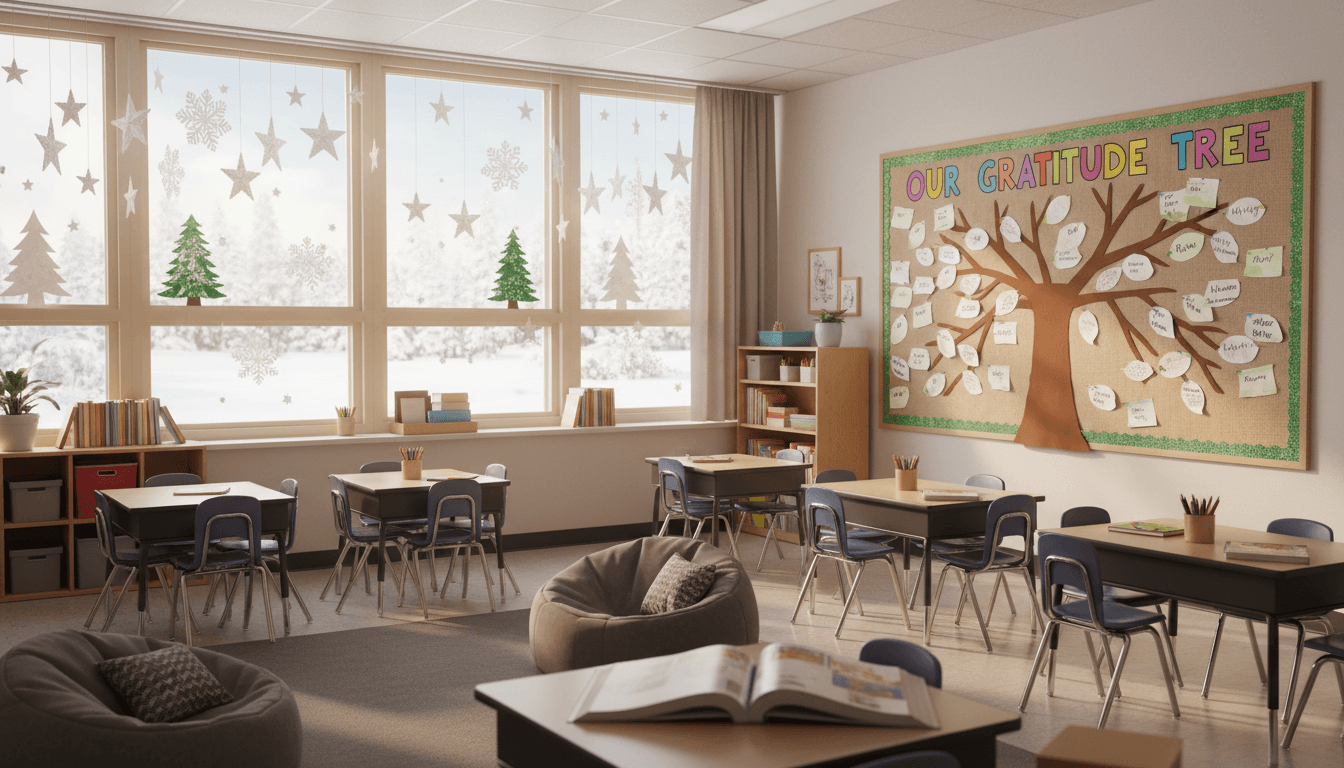
The holiday season is the part of the year where school newsletters most often miss the mark. They either go overboard on cheer, with snowflake graphics and reminders about the gift exchange, or they go so neutral they say nothing. The version that works lands in the middle. It names what the class is doing, holds space for families who celebrate differently or not at all, and gives parents something useful to do at home.
Open with what the class is doing this month
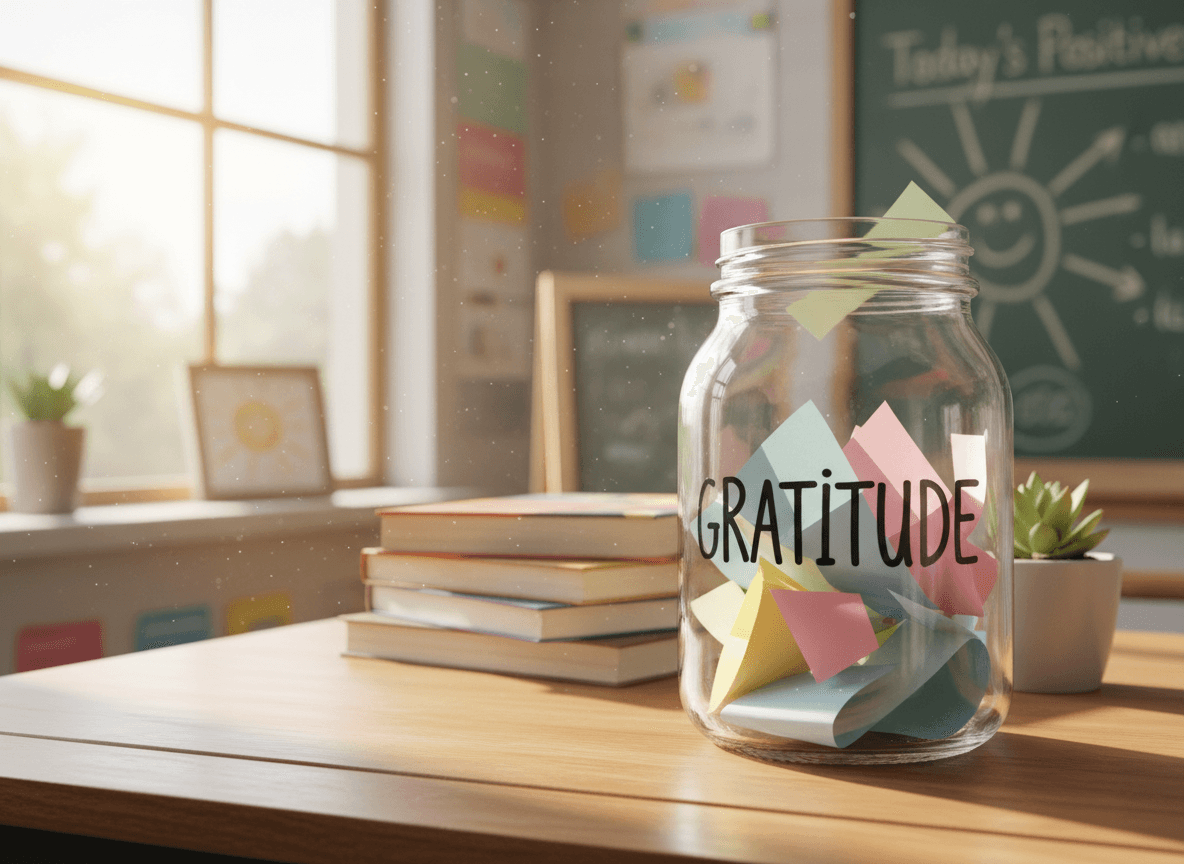
Skip the seasonal opener about cozy weather. Open with a classroom-specific sentence. "This month our class is practicing gratitude. We have a jar on the back counter. Each kid adds one thing each week." That tells parents exactly what is happening. They can ask their child about it at dinner.
The gratitude practice, in plain language
Describe gratitude as a skill, not a feeling. The skill is noticing what is good before it disappears. The classroom version is small. One sentence per week per child. Folded, dropped in the jar, read out at the end of the month. That is the whole practice. Tell parents the version they can do at home is even smaller. Pick one dinner a week and ask each person at the table to name one thing they were grateful for that day. Three minutes. No journal. No pressure to be profound.
Respect families who do not celebrate
Some kids in the class do not celebrate Christmas. Some do not celebrate any winter holiday. Some celebrate Hanukkah or Diwali or Kwanzaa and feel sidelined when the classroom only nods at the major one. Write the inclusivity line directly. "Not every family in our class celebrates these holidays, and that is okay. Our classroom focus this month is gratitude and kindness, which work for every family." Then mean it. No Christmas crafts. No Santa letters as a graded assignment.
December is hard for some families
Loss shows up louder in December. A grandparent who died last spring is suddenly gone from the holiday table. A divorce that finalized in October produces a kid splitting two houses for the first time. A parent deployed overseas misses the first day of winter break. A family that lost a job in October is quietly deciding which gifts to skip.
Put one line in the newsletter that names this. "December is hard for some of our families, and that is part of the work this month too. If your child is struggling, please reach out. Our school counselor is available, and so am I." Parents who are quietly having a hard month feel seen. The ones who are not having a hard month learn that their teacher is paying attention.
A short example
Here is what a section can look like:
Last week, Jordan dropped a slip into the gratitude jar that said 'my sister came back from college.' Sofia's said 'we got the heat fixed.' Olivia's said 'my dog stopped limping.' None of the answers were about presents. The practice works because the kids start noticing the small things on their own. We are going to read more of them out loud on the last Friday before break.
What to say at home this month
Give parents one prompt. "This week, ask your child what they think kindness looks like when no one is watching." Let them sit with the question at dinner. The answers are often better than anything an adult would script. Avoid prompts that require a long conversation. Five minutes is the right length for school-night dinner.
Winter break logistics, briefly
Include the practical information at the bottom, not the top. Last day of school before break. First day back. Any classroom items going home over break, like library books or recorders. Keep it to three bullet lines. Parents will find it because they are looking for it. The rest of the newsletter is about the kids.
How Daystage helps with holiday newsletters
Daystage has a holiday season template with the gratitude block, the inclusivity line, the December is hard paragraph, and the winter break logistics structure already in place. You add classroom moments and any school-specific dates. Daystage drafts the newsletter in your voice. The result reads like a teacher who sees every family in the room, not a generic holiday card.
Get one newsletter idea every week.
Free. For teachers. No spam.
Frequently asked questions
When should the holiday SEL newsletter go home?
Send the first one the week before Thanksgiving, then a second one the first week of December. The Thanksgiving one handles gratitude. The December one handles the harder reality that the season is not joyful for every family. Two short newsletters work better than one long one trying to do both.
How do you handle families who do not celebrate?
Name it directly in the newsletter. 'Not every family in our class celebrates these holidays, and that is okay.' Then describe what the class is actually doing in neutral terms. A gratitude jar is not a Thanksgiving project. A kindness chain is not a Christmas project. Use the universal language so the activity does not exclude anyone by default.
Is it okay to mention that the season is hard for some kids?
Yes, and it should be mentioned. Loss, family changes, financial stress, and missing parents all show up more in December. A simple line in the newsletter, 'December is hard for some of our families and that is part of the work this month too,' tells parents the teacher sees it. That line alone earns trust.
What gratitude practice works for elementary kids?
The simplest one: each child writes or draws one thing they are grateful for, folds it, and adds it to a class jar. On the last Friday before winter break, read a few out loud. Skip the gratitude journal that requires daily entries. Kids forget by day three and it becomes a worksheet instead of a practice.
Can Daystage help with the holiday newsletter?
Daystage has a holiday season template with the gratitude block, the inclusivity line, and the December is hard for some families paragraph already structured. You add classroom-specific notes. It drafts the rest in your voice in under ten minutes.

Adi Ackerman
Author
Adi Ackerman is a former classroom teacher and curriculum writer with 8 years in K-8 schools. She writes about school communication, parent engagement, and what actually works in real classrooms.
More for Social-Emotional Learning
Character Education Newsletter Template Without the Cliches
Social-Emotional Learning · 6 min read
Classroom Community Building Newsletter: What to Send the First 30 Days
Social-Emotional Learning · 6 min read
SEL Newsletter for Teachers: Communicating Without the Buzzwords
Social-Emotional Learning · 6 min read
Ready to send your first newsletter?
3 newsletters free. No credit card. First one ready in under 5 minutes.
Get started free