
SEL Newsletter on Gratitude: A Template With Examples
Gratitude is one of the easier SEL topics to teach and one of the hardest to write about without sounding like a greeting card. The newsletters that work skip the warm fuzzies and describe a real practice, then give parents one short version of it to try at home.
Open with what your class actually does
Avoid starting with "Gratitude has been shown to improve well-being and academic outcomes." Parents do not need the citation. Open with a sentence about what happens in class. "Every morning at 8:55, my second graders sit in a circle and each one names one thing they are grateful for. It takes four minutes." That tells parents what you are doing, when you are doing it, and how long it takes. They can copy it at the dinner table that night.
Describe the one-line gratitude practice
The shorter the ritual, the longer it lasts. A one-line gratitude practice asks each student to say one thing they noticed and were grateful for, in a single sentence. No journals. No prompts about what they are most grateful for in their whole life. Just "I am grateful that the rain stopped before recess" or "I am grateful my brother helped me find my reading book." Small, real, daily. Tell parents this is the practice you are doing. They will recognize the format when their child uses it at home.
Explain the gratitude tree so parents see the wall
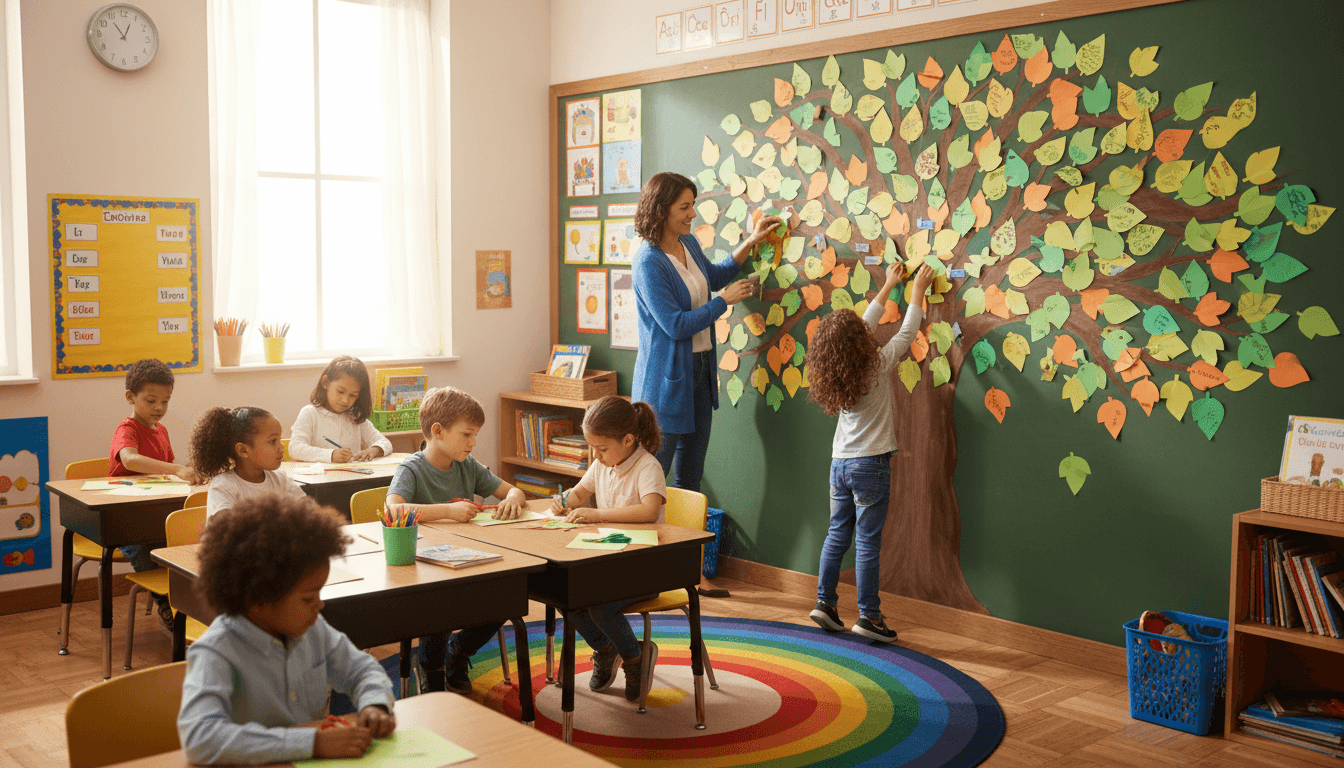
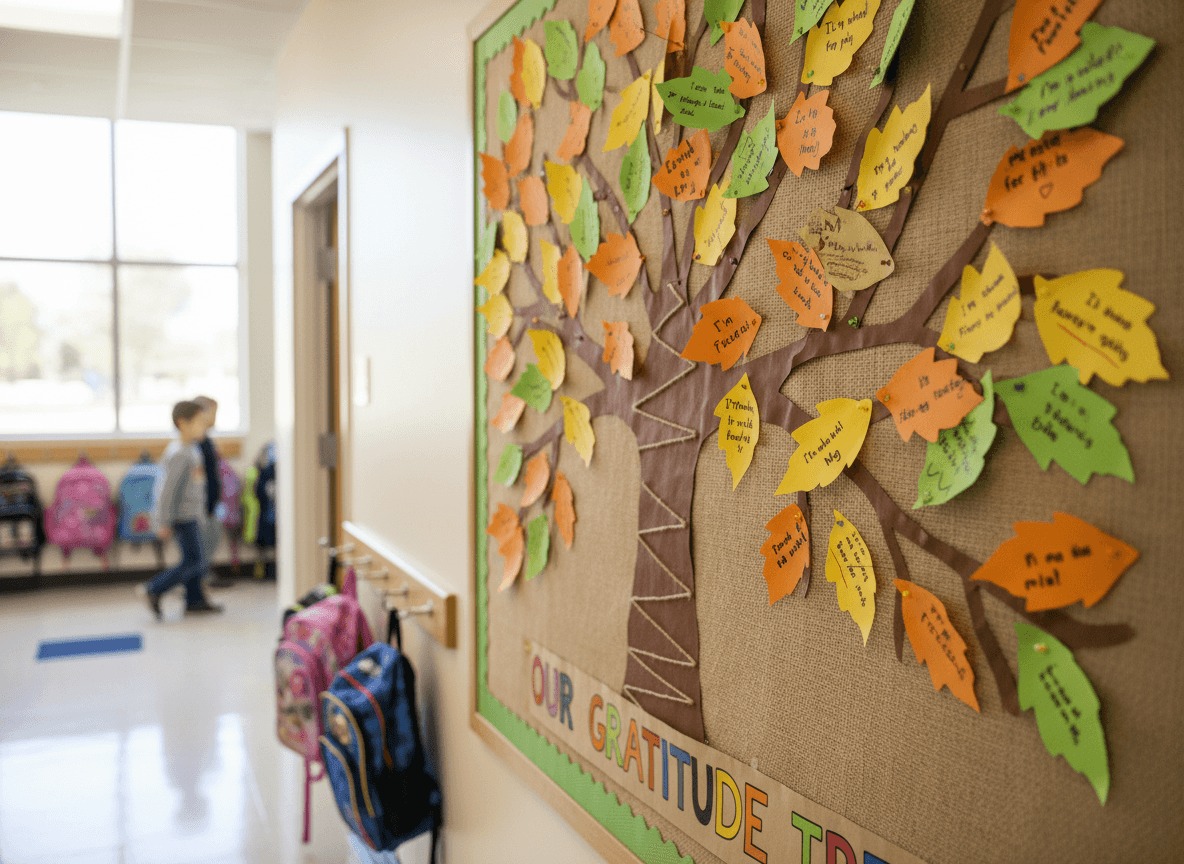
If your classroom has a gratitude tree, write about it. Each leaf is one student's gratitude from one day. By the end of November you end up with hundreds of leaves and a wall that tells the story of the month. Parents who walk into the classroom for a conference deserve to know what they are looking at. Two sentences in a newsletter does the job.
What not to demand of kids around gratitude
Some adults push gratitude as a corrective for complaining. "You should be grateful for what you have" gets said a lot when a kid is upset. It does not work. Forced gratitude is performance. It teaches kids to say the words while feeling the opposite, which builds the wrong habit. The newsletter is a good place to mention this gently. Parents appreciate being told they do not need to weaponize gratitude during a hard moment.
A short example
Here is what a 200-word section can sound like:
On Monday, Mia said she was grateful that her grandmother had taught her how to tie her shoes. Three other kids in the circle said they had not learned yet. By Friday, Mia had given two informal shoe-tying lessons during morning choice time. The gratitude was not the lesson. The gratitude was the thing that started the lesson.
At home, try one round of one-line gratitude at dinner. Each person says one thing they noticed today that they are grateful for. Keep it to one sentence. Do not coach. Do not correct what counts.
Keep it short and concrete
300 to 500 words. One ritual described clearly. One example. One prompt for home. A subject line that names the practice, not the season. "How a one-line gratitude practice changed our mornings" gets opened. "November Gratitude Update" does not.
How Daystage helps with gratitude newsletters
Daystage was built so teachers spend less than ten minutes on a newsletter. You type three short notes about what happened in class. Daystage drafts the full newsletter, formats it for email, adds a take-home prompt, and sends it to every family on your class list. The gratitude template keeps the one-line practice front and center.
Get one newsletter idea every week.
Free. For teachers. No spam.
Frequently asked questions
How often should a gratitude newsletter go out?
Once during your gratitude unit, then once more a few weeks later to keep the practice alive. Sending it every week turns gratitude into a chore for both you and the families. Two well-written newsletters carry a unit further than six rushed ones.
What is a one-line gratitude practice?
A daily ritual where each student says one thing they are grateful for in a single sentence. Not a paragraph. Not a journal entry. One line, spoken out loud, takes thirty seconds per student. Over a month it builds the habit of noticing without becoming a writing assignment.
Should the newsletter explain the gratitude tree?
Yes. Parents see a wall covered in paper leaves at pickup and have no idea what they are. Two sentences fix this. 'Each leaf is one thing a student in our class was grateful for this week. By the end of November we will have over 300.' Now the tree reads as a record, not a decoration.
What should parents not demand from kids around gratitude?
Do not force a child to feel grateful for something painful or to thank someone they are still hurt by. Forced gratitude teaches kids to perform an emotion they do not feel, which is the opposite of the skill we want. Notice, name, and share. That is enough.
Can Daystage help send a gratitude newsletter?
Daystage drafts a parent-ready newsletter from a few short notes you type in, formats it as a clean email, and sends it to every family on your class list. The gratitude template includes a 'try this at home' section with a one-line practice script parents can use at dinner.

Adi Ackerman
Author
Adi Ackerman is a former classroom teacher and curriculum writer with 8 years in K-8 schools. She writes about school communication, parent engagement, and what actually works in real classrooms.
More for Social-Emotional Learning
Character Education Newsletter Template Without the Cliches
Social-Emotional Learning · 6 min read
Classroom Community Building Newsletter: What to Send the First 30 Days
Social-Emotional Learning · 6 min read
SEL Newsletter for Teachers: Communicating Without the Buzzwords
Social-Emotional Learning · 6 min read
Ready to send your first newsletter?
3 newsletters free. No credit card. First one ready in under 5 minutes.
Get started free