

SEL Newsletter on Friendship Skills: How to Talk About It
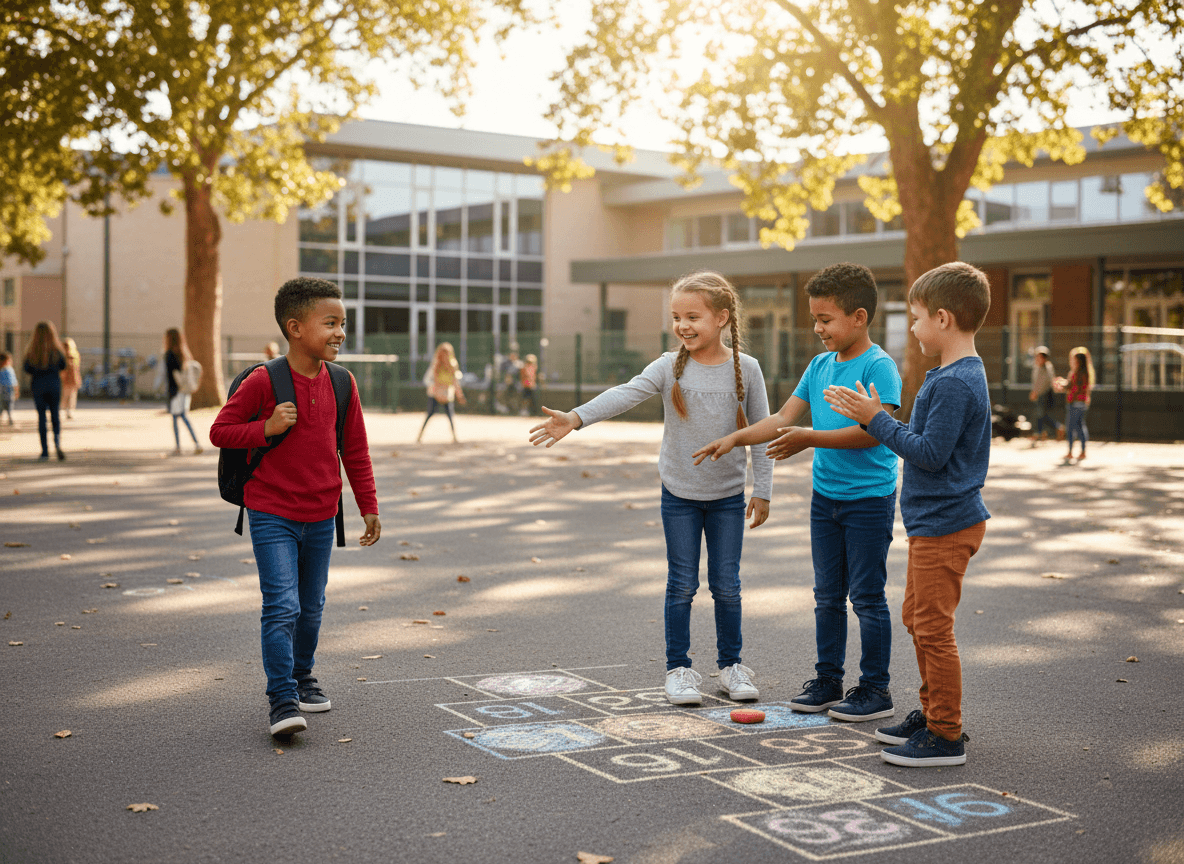
Friendship is the SEL topic most parents care about and the one most newsletters treat too softly. A good friendship newsletter names the actual moves. How to join a group. How to read body language. What to do when someone says no. These are skills, not feelings. They can be taught and practiced.
Open vs. closed body language
Most second graders can spot an unwelcoming kid before they can explain why. Naming the signals makes them teachable. Open body language faces toward you, eyes up, hands loose. Closed body language is turned away, eyes down, arms crossed. Tell parents these words. The next time their child says "Avi did not want to play with me," the parent can ask, "Was his body open or closed?" That is a more useful conversation than guessing.
Joining a play group, in three steps
Joining a game in progress is one of the hardest social moves an elementary kid does. Most attempts fail because the kid walks straight in. Three steps work better. Watch first to see what the game is. Stand near the group, not in the middle, for ten or fifteen seconds. Ask one specific question. "Can I be on your team" works. "Can I play" rarely does. Practice this in class and put the three steps in your newsletter so parents can coach the same script.
What to do when a friend says no
Kids often hear "no" as a verdict. It is one data point about one moment. Teach two responses. Accept the no. Walking away is not failure, it is information. Then try a different question or a different person. "Want to play tag?" "No." "Want to draw with me at the table?" "Sure." The friendship is fine. The first request was just about tag.
The protocol for the new student
If a new student joined the class this month, mention it in the newsletter and tell parents what your class did. "We assigned two students to be Maya's guide for her first week, one to walk her to specials and one to sit with her at lunch." Parents whose kids are not on the guide list still want to know this happens. Many will ask their child to invite the new student to a playdate that month.
A short example
Here is what a 200-word section sounds like:
On Wednesday at recess, two third graders were playing four-square. A third kid, James, walked over and watched for a minute before asking, "Can I be next when someone goes out?" That is the move. He did not interrupt the game. He waited until the rules made room for him. By the end of recess, he had been in three rounds. The skill that made it work was patience and a specific question.
At home, you can build this by asking your child to describe how they joined a game at recess. If they say "I just went over," ask what happened next. Specific scripts beat general encouragement.
What not to say to a kid struggling with friendships
Skip "just be yourself" and "they should be lucky to be your friend." Both are true and both are useless to a seven year old. Offer the next move instead. "What do you want to try at recess on Monday?" gives the kid a plan. Plans beat reassurance.
How Daystage helps with friendship skills newsletters
Daystage was built for teachers who do not want to write the same paragraph about kindness every two weeks. You type three short notes about what your class practiced. Daystage drafts a parent-ready newsletter with a take-home script and sends it to every family on your class list. The friendship template keeps the three core skills front and center.
Get one newsletter idea every week.
Free. For teachers. No spam.
Frequently asked questions
What friendship skills should an SEL newsletter cover?
Three core ones. How to join a play group without disrupting it. How to read open vs. closed body language. What to do when a friend says no to a request. These three carry a year of elementary friendship work and are concrete enough for parents to coach at home.
What is open vs. closed body language for kids?
Open body language means facing toward someone, eyes up, hands relaxed. Closed body language means turned away, eyes down, arms crossed. Kids can read these signals long before they can name them. Naming them makes the skill teachable. The newsletter is the place to give parents the same words you use in class.
How do you teach a kid to join a play group?
Three steps. Watch first to see what the game is. Stand near, not in the middle. Ask one specific question like 'can I be on your team' rather than 'can I play'. The specificity matters because vague entry questions are easier for a busy group to dismiss. Practice this in class and tell parents the script.
What should a kid do when a friend says no?
Two things. First, accept the no. Walking away is not failure. Second, try a different question or a different person. 'No' is one data point about one moment, not a verdict on the friendship. Parents who hear this language at home and at school give their kids the same map.
Can Daystage help send a friendship skills newsletter?
Daystage drafts a parent newsletter from a few short notes about what your class practiced that week. It formats the email, includes a take-home script, and sends it to every family on your roster. The friendship template builds in the three core skills so each issue feels consistent.

Adi Ackerman
Author
Adi Ackerman is a former classroom teacher and curriculum writer with 8 years in K-8 schools. She writes about school communication, parent engagement, and what actually works in real classrooms.
More for Social-Emotional Learning
Classroom Community Building Newsletter: What to Send the First 30 Days
Social-Emotional Learning · 6 min read
Character Education Newsletter Template Without the Cliches
Social-Emotional Learning · 6 min read
SEL Newsletter for Teachers: Communicating Without the Buzzwords
Social-Emotional Learning · 6 min read
Ready to send your first newsletter?
3 newsletters free. No credit card. First one ready in under 5 minutes.
Get started free