
SEL Newsletter Explaining Second Step: A Parent-Friendly Template
Second Step is used in roughly thirty percent of K-5 classrooms in the United States. Most parents have seen the home-link page come home in a folder. Far fewer can tell you what their child actually does during a Second Step lesson. A clear parent newsletter at the start of each unit fixes this. It is not a curriculum doc. It is a description of what kids will hear and see, why it works, and what to ask at home. This is the template.
Open with what the unit is about
Skip the unit number. Lead with the skill. "Starting next week, our class will spend four lessons learning how to ask for help without giving up first. We use a curriculum called Second Step for these lessons. Below is what your child will see, hear, and bring home."
What kids will see and hear in class
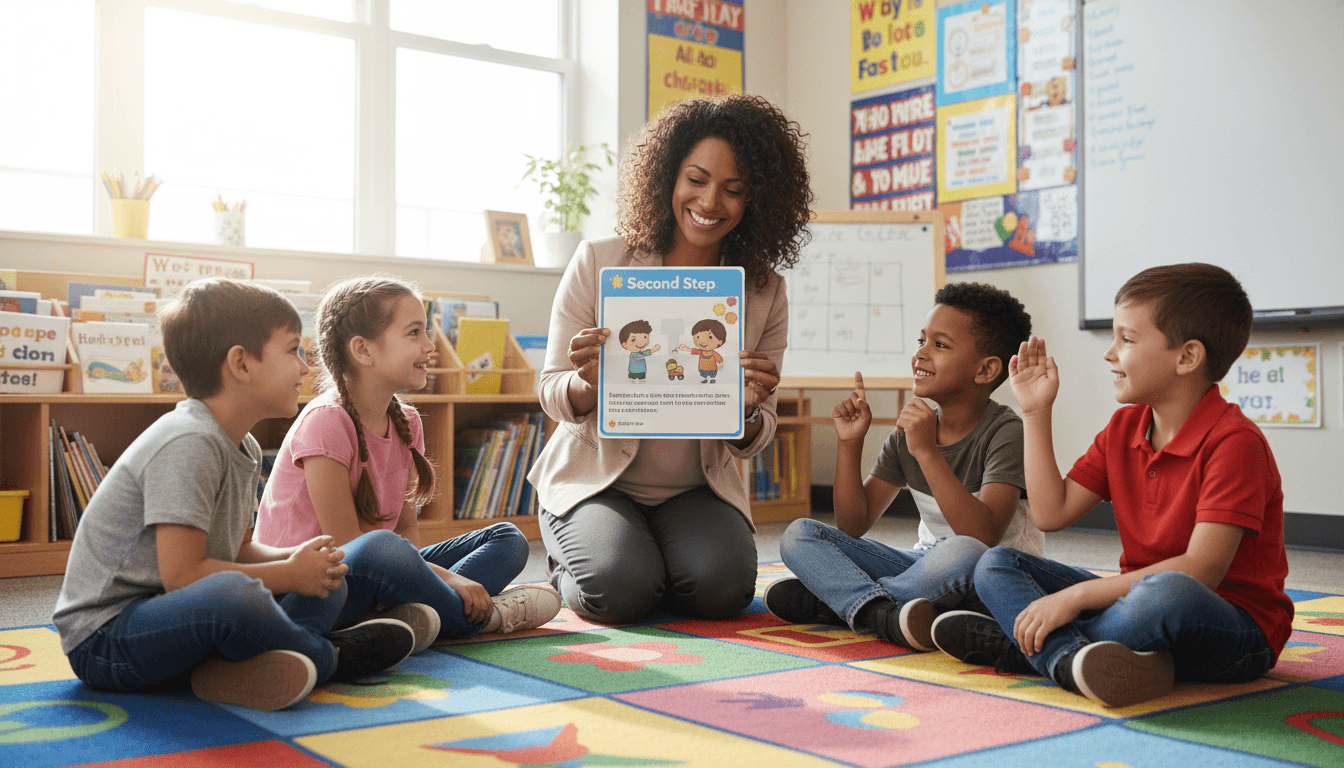
Describe the format in plain language. For K-2, that means the puppet, the songs, and the short story. "In our second lesson, your child will meet a puppet named Be-Leevable, who is trying to build a tower and keeps knocking it over. The class will help Be-Leevable figure out what to try instead of giving up. There is also a song called 'Try, Try Again' that I expect you will hear at home." For grades 3-5, name the video stories and the reflection questions. Parents now know what is happening in the room.
Why songs and puppets work
Short paragraph, one issue per year. "If you are wondering why we use puppets and songs to teach SEL skills, the short answer is that this is how five- and six-year-olds learn best. A puppet can demonstrate getting frustrated without putting a real child on the spot. A song repeats the skill name fifteen times in three minutes. By Friday, your child will hum it on the way home. That is the curriculum working."
Scope and sequence by grade, in one paragraph
"Second Step grows with your child. In kindergarten and first grade, lessons focus on naming feelings, listening, and following routines. In second and third grade, lessons move to managing strong feelings and problem-solving with peers. In fourth and fifth grade, lessons cover empathy, conflict resolution, and responsible decision-making. The same five skills come up year after year, in a way that fits the age."
The home page link
Every Second Step unit comes with a home-link page. Mention it directly. "There is a one-page home link for this unit that your child will bring home on Friday. It has the skill we are practicing, one question to ask at dinner, and a short activity that takes about five minutes. If the folder does not make it home in one piece, I will email a PDF as well." This is the line that turns the home link from a crumpled paper into something families actually use.
A worked example for a third-grade unit
This week starts our four-lesson Second Step unit on managing strong feelings. Your child will watch short video stories about a kid named Joe, who gets really frustrated with his sister, and the class will help him figure out what to do. The skill is called 'using your calm-down steps.' The three steps are: stop, name what you feel, and use your strategy. The strategies your child will be choosing from are deep breathing, counting, and asking for a break. At dinner tonight, you could ask your child what their go-to strategy is. They have already picked one.
The parent prompt
End every Second Step newsletter with a single specific prompt. "Ask your child to teach you the calm-down steps before homework tonight. Let them lead." This gives the skill a chance to live outside the classroom, which is where the curriculum is designed to land.
What to say if a parent asks about the research
Second Step has independent research backing across roughly twenty years of use in K-8 classrooms. If a parent asks, the short answer is yes, there is good research, and the publisher has a research summary on the program website. You do not need to memorize the studies. A clear "yes, here is where to read more" is enough. Anything longer makes the newsletter feel defensive.
The middle school adaptation, briefly
If your school continues Second Step into middle school, mention it once in a fifth-grade end-of-year newsletter so families know the work continues. The format shifts to peer scenarios and structured discussion. The skills are the same family of social-emotional competencies, just at a developmental stage where puppets would land flat and video stories with real teenagers land well.
How Daystage helps with Second Step newsletters
Daystage has a Second Step template with sections for the current unit theme, what kids will see in class, the home-link reminder, and the parent prompt. You add the unit theme and a couple of notes. Daystage drafts the parent newsletter in plain language with the right links and the right subject line. The unit announcement goes from an hour of writing to fifteen minutes.
Get one newsletter idea every week.
Free. For teachers. No spam.
Frequently asked questions
How do you explain Second Step without making parents read a curriculum doc?
Skip the structure of the curriculum. Tell parents what their child will hear and see in class: a story, a song, a puppet in younger grades, a video clip in older grades. Then say what the lessons are about this month. Save the full scope and sequence for the parents who ask.
Why do songs and puppets work for SEL in K-2?
Young kids learn through repetition and play, not direct instruction. A song that names three feelings sticks faster than a lecture about emotional vocabulary. A puppet named Be-Leevable can demonstrate a skill without putting a real child on the spot. The format is not babyish. It matches how five-year-olds learn.
What is the Second Step home page and should you mention it?
Most Second Step units come with a home-link page that families can use to practice the skill at home. Mention it once per unit, say what is on it, and link to it. Do not just say 'see the home link in your child's folder.' Half of those folders never make it home unbent.
Does Second Step look different by grade?
Yes. K-2 uses puppets and songs. Grades 3-5 use video stories with real kids and reflection questions. Middle school uses peer scenarios and discussion. The skills build across the grades. The format adapts to age.
Can Daystage produce a Second Step parent newsletter from a lesson plan?
Daystage has a Second Step template with sections for the current unit, the home page link, what kids will hear in class, and a parent prompt. You paste the unit theme and one or two notes from your lesson. Daystage drafts the parent newsletter in plain language with the home page link in the right spot.

Adi Ackerman
Author
Adi Ackerman is a former classroom teacher and curriculum writer with 8 years in K-8 schools. She writes about school communication, parent engagement, and what actually works in real classrooms.
More for Social-Emotional Learning
Ready to send your first newsletter?
3 newsletters free. No credit card. First one ready in under 5 minutes.
Get started free