
Kindergarten SEL Newsletter: A Template You Can Send Home
Kindergarten SEL newsletters are different from upper-elementary ones for one reason. The kids are five. Everything has to be smaller, more concrete, and tied to one real moment from the week. The good ones describe what happened in plain language and give parents one word to listen for at home.
The 5-minute morning meeting
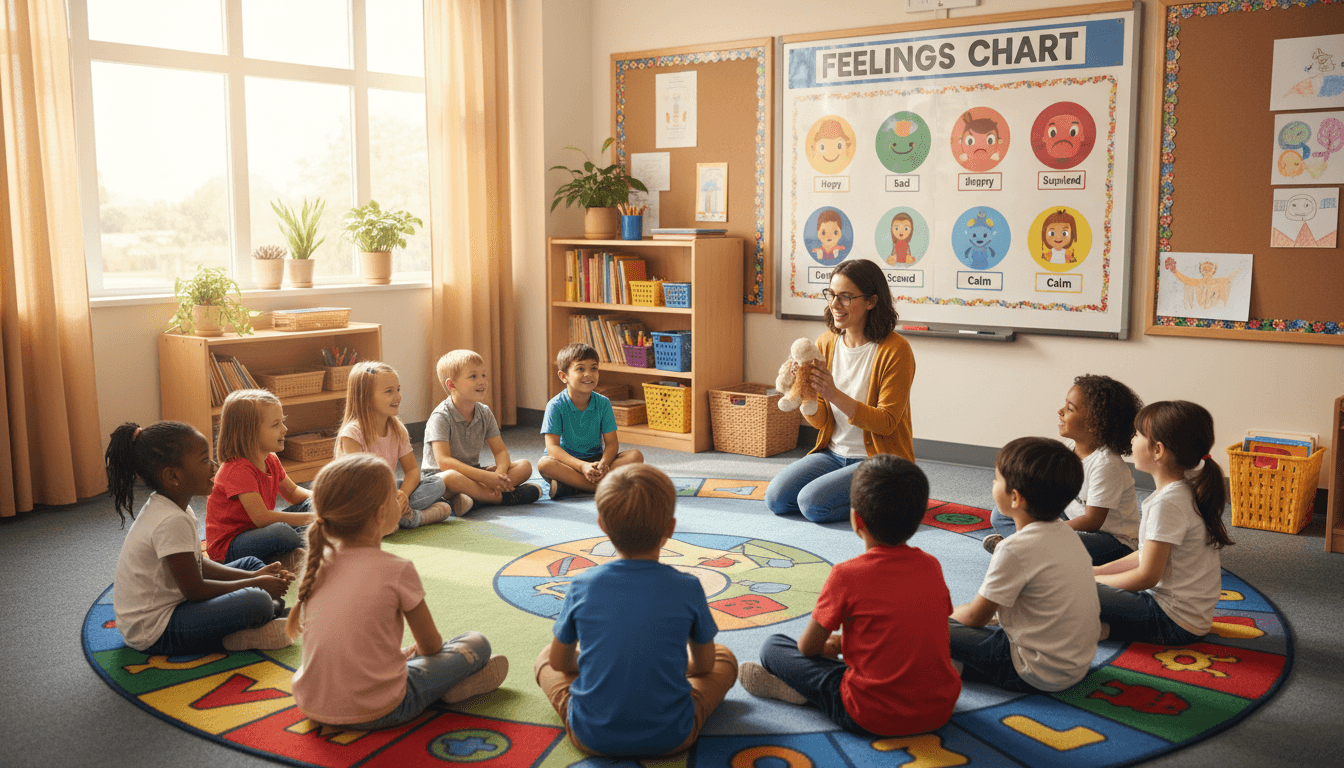
Morning meeting is the backbone of a kindergarten SEL program and the easiest thing to describe in a newsletter. Five minutes, every day. Each kid is greeted by name. Each kid shares one word about how they feel today. The class names what is happening today (centers, library, fire drill practice). Tell parents this. The structure is simple enough to copy at home for the first five minutes after the school day ends.
Year-one feelings vocabulary
Start with the big four. Happy. Sad. Angry. Scared. Add three more across the year. Frustrated. Excited. Embarrassed. That is the full list. Seven words is enough for a kindergartner to name almost anything. Each newsletter, mention the word your class learned that week, and how it showed up in a real moment. "We added the word 'frustrated' this week. On Tuesday during free choice, a student said 'I am frustrated because the puzzle will not fit,' and walked over to a different activity. That is the win."
Why "use your words" sometimes fails
"Use your words" is the kindergarten phrase most often misused. It assumes the words are already there. For a five-year-old in the middle of a hard moment, the vocabulary has not arrived yet. The teacher's job, and the parent's, is to put the word in. "You look frustrated. Is that right?" The kid nods. Now they have the word for next time. Tell parents this in the newsletter. They will stop saying "use your words" and start saying "I think you are feeling X."
One real classroom moment per issue
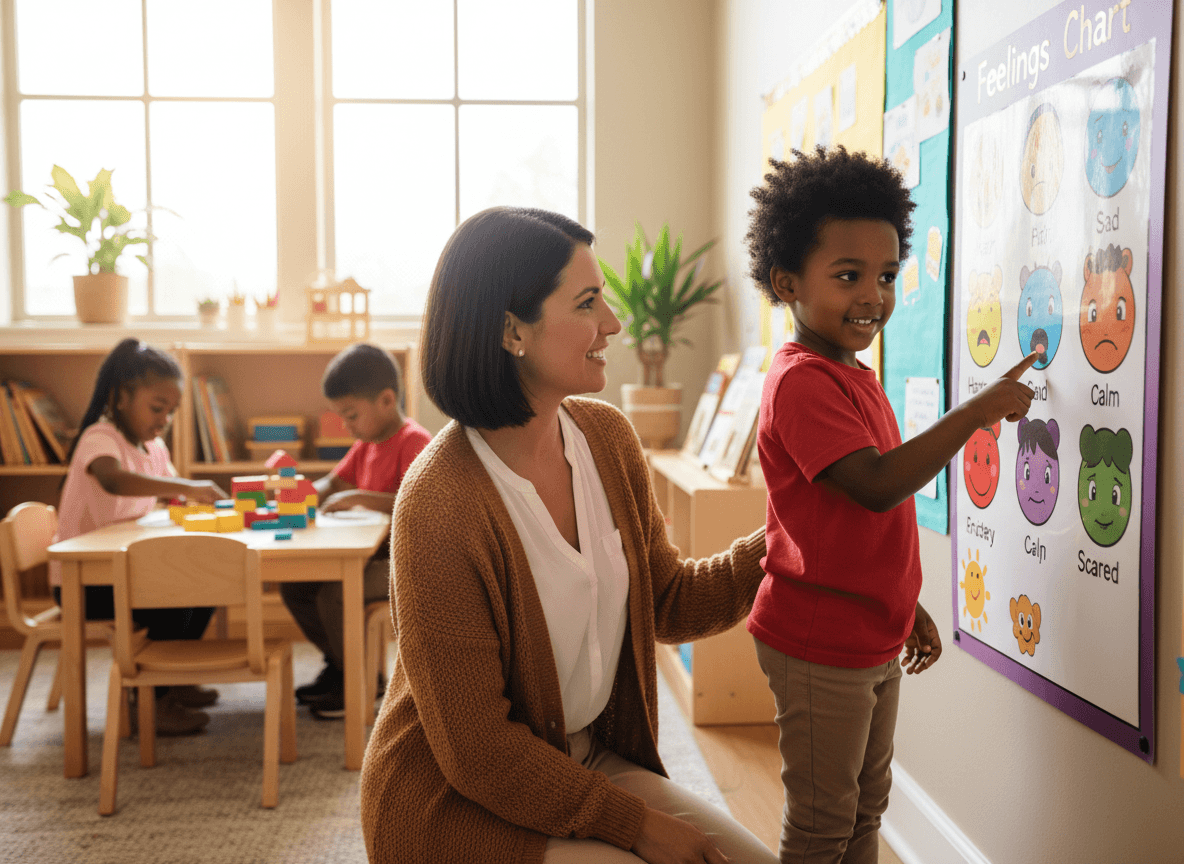
One moment, two sentences. "On Thursday morning, a student named Emma was upset because the marker she wanted was missing. She walked over to the feelings chart, pointed to the sad face, and came back ready to use a different color." That is the kind of moment that does the work. Parents see what the feelings chart is for and how their kid is using it.
A short example
Here is what a 150-word section sounds like:
This week we added a new word to our feelings chart: frustrated. On Wednesday during snack time, a student named Marco said, "I am frustrated because my zipper is stuck." That is the first time he has used that word. Until now he would have cried or pushed the jacket away. Saying the word is the skill we are building. After he said it, he asked a friend for help, and the friend helped him with the zipper. Two skills in one moment.
At home, listen for the new word this week. If your child says "I am frustrated," respond with "I hear you. What do you need?" That sentence does more than any chart on the fridge.
Keep the language at kindergarten level
Write the newsletter in the language you would use with a parent at pickup. No "co-regulation strategies." No "emotional literacy framework." Just "we are learning the word frustrated this week, here is what it sounded like in class."
How Daystage helps with kindergarten SEL newsletters
Daystage was built for teachers who are running a full kindergarten day and do not have an hour to write a newsletter. You type two lines about what happened. Daystage drafts a parent-ready newsletter in plain language, formats the email, and sends it to every family on your class list. The kindergarten template keeps sentences short and the feelings vocabulary front and center.
Get one newsletter idea every week.
Free. For teachers. No spam.
Frequently asked questions
What should a kindergarten SEL newsletter cover?
One feeling word your class learned that week, what your morning meeting looked like, one moment of a student using a new word in a real situation, and one short thing parents can try at home. Skip the curriculum talk. Five-year-olds learn through repetition of small concrete moments.
What is the 5-minute morning meeting?
A short daily ritual where every kid is greeted by name, shares one word about how they feel, and the class names what is happening today. Five minutes is the cap because longer than that and kindergartners drift. The structure is what carries it, not the length.
What feelings vocabulary should I teach in year one?
Start with the big four. Happy, sad, angry, scared. Add three more across the year. Frustrated, excited, embarrassed. Seven words is plenty. The goal is not vocabulary breadth, it is naming the feeling fast enough to do something with it. Mention each new word in the newsletter when you add it.
Why does 'use your words' sometimes not work?
Because the kid does not have the words yet. 'Use your words' assumes the vocabulary is already in place. For a five-year-old in the middle of a meltdown, naming the feeling is the work, not the starting point. Better to name it for them. 'You look frustrated. Is that right?' gives them the word to use next time.
Can Daystage help write a kindergarten SEL newsletter?
Daystage drafts a parent newsletter from a few short notes about what your class did this week, formats the email, and sends it to every family on your roster. The kindergarten template keeps language simple, includes the feelings chart vocabulary, and asks you for the specifics it can build around.

Adi Ackerman
Author
Adi Ackerman is a former classroom teacher and curriculum writer with 8 years in K-8 schools. She writes about school communication, parent engagement, and what actually works in real classrooms.
More for Social-Emotional Learning
Classroom Community Building Newsletter: What to Send the First 30 Days
Social-Emotional Learning · 6 min read
Character Education Newsletter Template Without the Cliches
Social-Emotional Learning · 6 min read
SEL Newsletter for Teachers: Communicating Without the Buzzwords
Social-Emotional Learning · 6 min read
Ready to send your first newsletter?
3 newsletters free. No credit card. First one ready in under 5 minutes.
Get started free