
First Grade SEL Newsletter: A Template With Examples
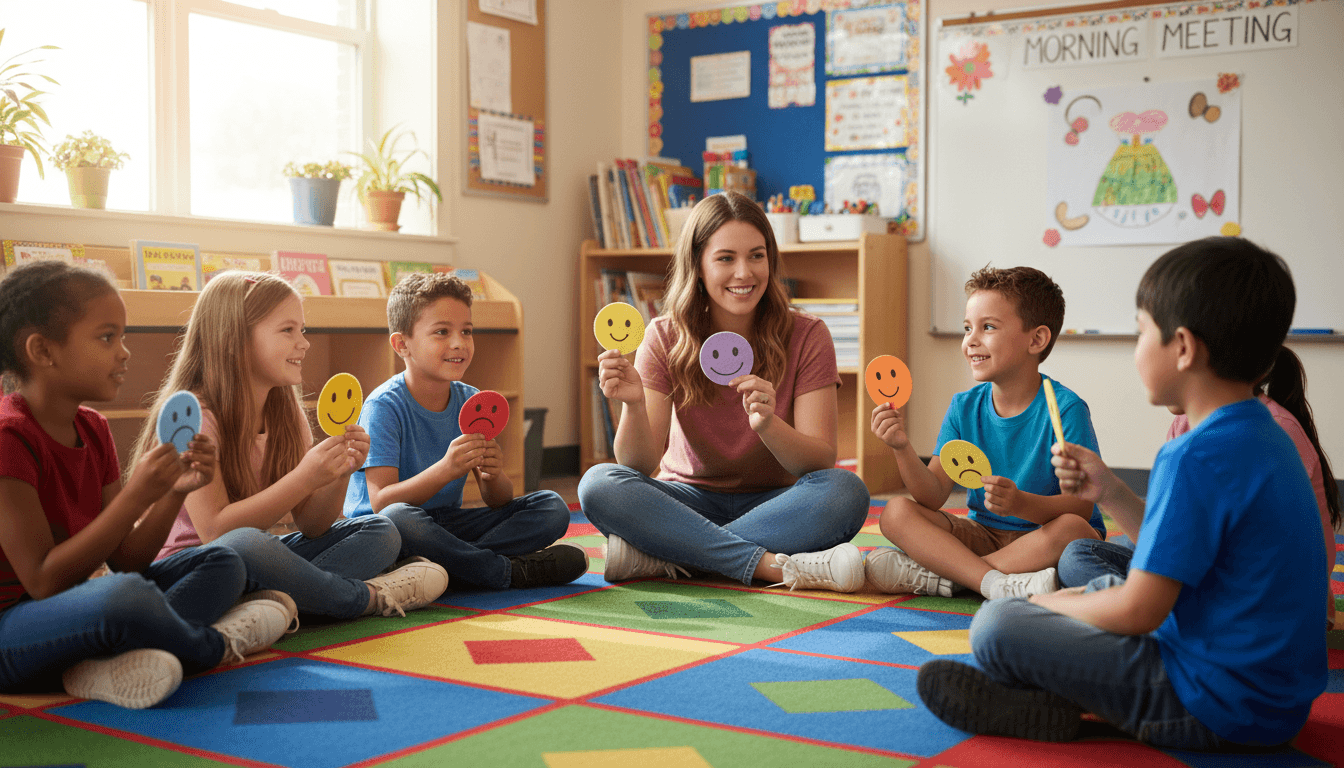
First grade SEL newsletters sit between two worlds. The kids are old enough to carry a skill across days but still young enough that the work is mostly about scripts and routines. The ones that work name a specific move, show it in action, and give parents the same words to use at home.
Friendship plays
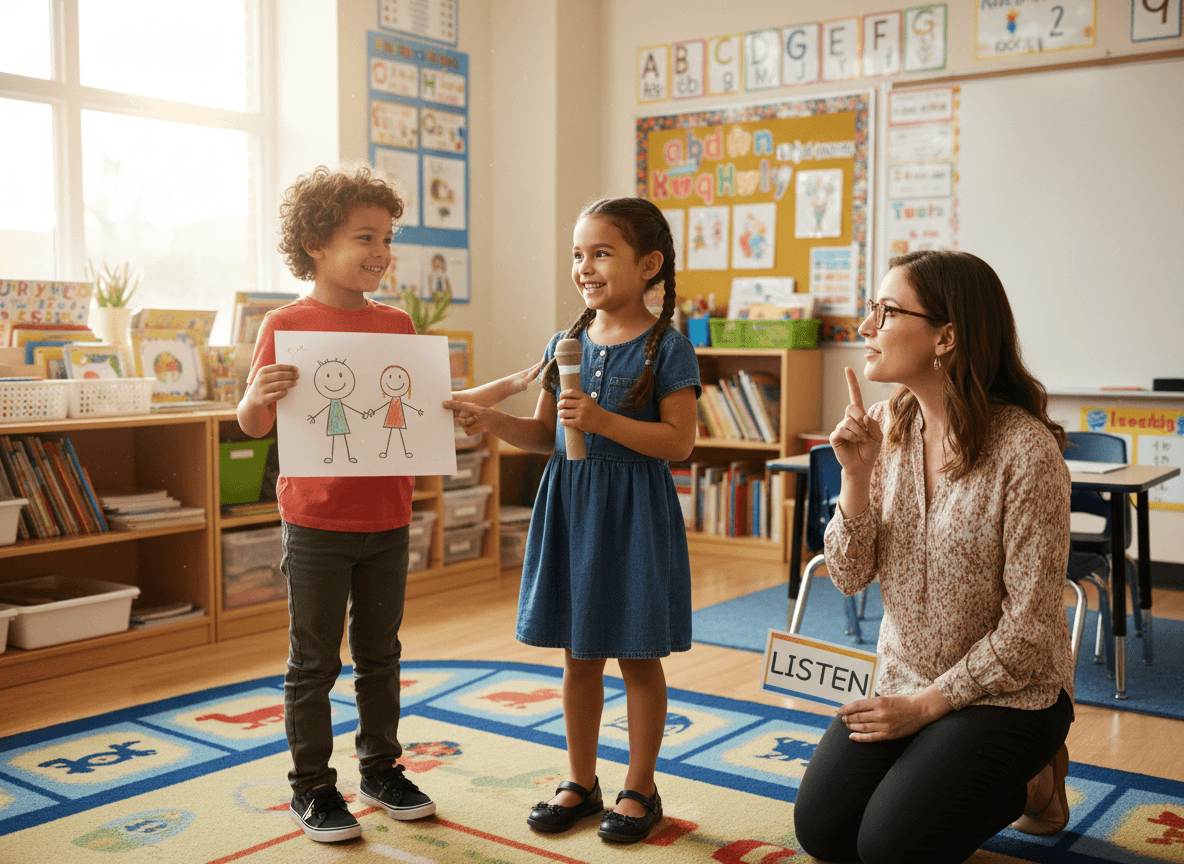
A friendship play is a small role-play. Two or three students practice a real social moment with no pressure. Joining a play group. Asking to share. Recovering after a no. The class watches and offers one tip after. The skill is built before the kid needs it on the playground. Tell parents what a friendship play is in two sentences. After that, you can refer to "the friendship play we did this week" without redefining the term.
The ask-first rule
Before you touch something a classmate is using, you ask. The sentence is "can I have a turn when you are done?" Not "can I have a turn now." The phrase "when you are done" is what makes the rule work. It gives the other kid permission to finish without rushing. Tell parents the script in the newsletter. They will use it during sibling fights over the iPad.
Sharing without forcing
Forced sharing teaches the wrong lesson. The kid who is loudest gets the toy. Real sharing teaches patience on one side and finishing on the other. The newsletter is the place to give parents the language. "When you are done, please pass it to her" is different from "give it to her now." The first sentence builds patience. The second one rewards interruption.
The Friday friendship share
A short Friday ritual where every kid names one classmate they sat with or played with that week. The goal is not praise. The goal is noticing. Over a month, the share teaches kids to track who they have included and who they have not. Mention this ritual in the newsletter so parents can ask about it. "Who did you sit with this week?" becomes a real weekend conversation.
A short example
Here is what a 200-word section sounds like:
On Tuesday at choice time, a student named Olivia walked over to a group building with blocks. She remembered the friendship play we did last week. She watched for a few seconds. She stood near the group, not in the middle. Then she asked, "Can I help build the tower?" Two of the builders said yes right away. By the end of choice time the tower was twice as tall.
At home, you can build this by asking your child how they would join a game on the playground. Have them say the exact sentence out loud. Practice beats reminders.
Keep the language honest
First graders notice when adults sugarcoat. If a hard moment happened this week, describe it without dressing it up. "Two students had a hard time at recess on Wednesday and we worked it out in a small meeting after." That sentence is more useful than "we had a learning opportunity around recess."
Keep it short
300 to 500 words. One skill named. One real moment. One script for home. Subject line that names the skill, not the week. "How a first grader joined a block-building group this week" gets opened. "First Grade SEL Update" does not.
How Daystage helps with first grade SEL newsletters
Daystage was built for teachers who write to families every couple of weeks and do not want to start from scratch each time. You type three short notes about what your class practiced. Daystage drafts a parent-ready newsletter in plain first grade language, formats the email, and sends it to every family on your class list. The first grade template keeps the friendship plays and the ask-first rule in the structure so each issue feels familiar.
Get one newsletter idea every week.
Free. For teachers. No spam.
Frequently asked questions
What should a first grade SEL newsletter cover?
One social skill your class practiced that week, one moment of a student using it in a real situation, and one short thing parents can do at home. First graders are old enough for slightly longer language than kindergarten, but the structure is the same. Skip the abstract framing.
What is a friendship play?
A short role-play where two or three students practice a real social moment under no pressure. Joining a play group. Asking to share. Recovering after a friend says no. The class watches and offers one tip. Friendship plays work because they let kids try the move before they need it.
What is the ask-first rule?
Before you touch something a classmate is using, you ask. 'Can I have a turn when you are done?' First grade is the year where this gets locked in. Without the rule, kids grab. With the rule, they grab less. Tell parents the exact words you use in class so they can use the same script at home.
What does sharing without forcing look like in first grade?
A child who is using something gets to finish before passing it on. Sharing is not 'give it to your sister now.' It is 'when you are done, please pass it to her.' That difference matters. Forced sharing teaches that whoever is loudest gets the toy. Real sharing teaches patience on one side and finishing on the other.
Can Daystage help write a first grade SEL newsletter?
Daystage drafts a parent newsletter from a few short notes about what your class practiced this week, formats the email, and sends it to every family on your roster. The first grade template keeps language short, includes the friendship plays structure, and uses the same scripts you use in class.

Adi Ackerman
Author
Adi Ackerman is a former classroom teacher and curriculum writer with 8 years in K-8 schools. She writes about school communication, parent engagement, and what actually works in real classrooms.
More for Social-Emotional Learning
Classroom Community Building Newsletter: What to Send the First 30 Days
Social-Emotional Learning · 6 min read
Character Education Newsletter Template Without the Cliches
Social-Emotional Learning · 6 min read
SEL Newsletter for Teachers: Communicating Without the Buzzwords
Social-Emotional Learning · 6 min read
Ready to send your first newsletter?
3 newsletters free. No credit card. First one ready in under 5 minutes.
Get started free