

Science Newsletter Written for Parents: What to Include
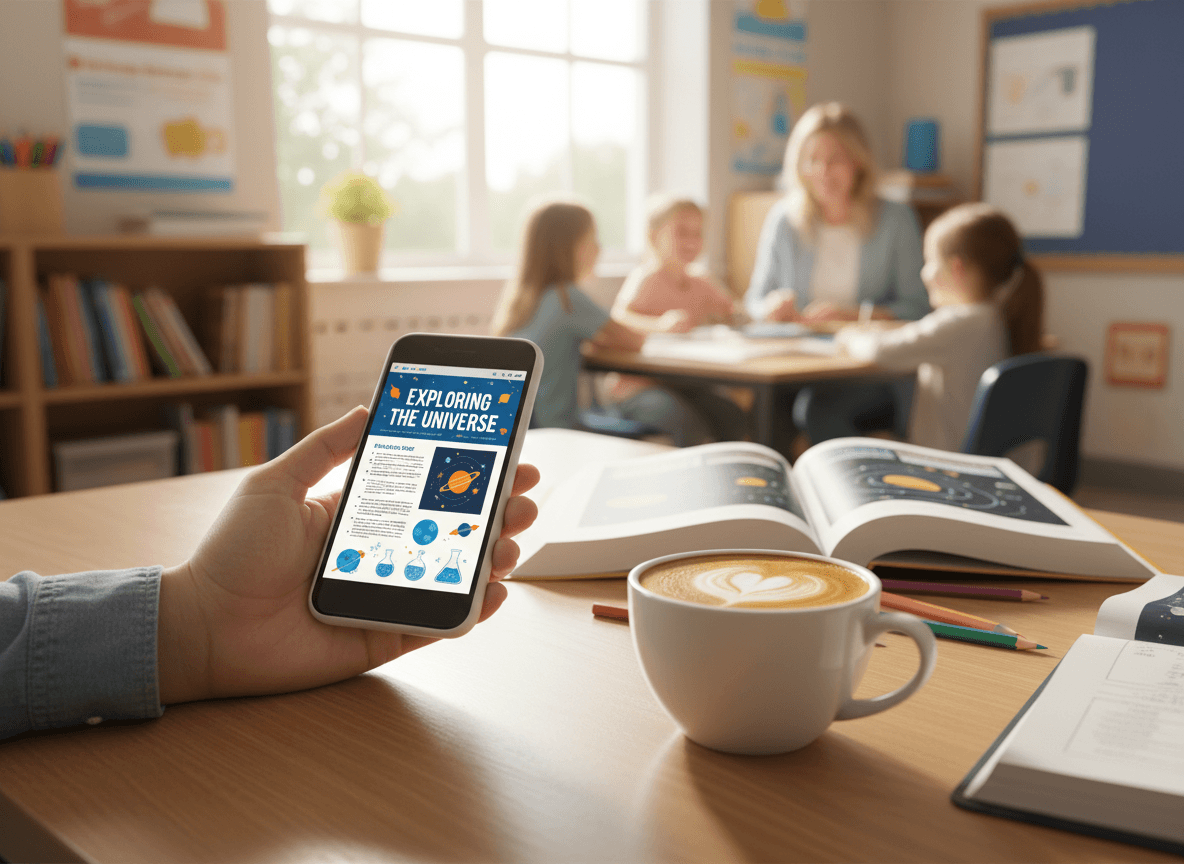
Most science newsletters try to talk to parents and students at once. They end up half jargon and half kid-friendly, and neither audience really gets what they need. A parent-only newsletter sounds different. Calmer. No acronyms. The dinner-table question is in the first scroll. Five sections, same order every time, under 300 words. Parents read it on the way to soccer practice and walk away knowing what their child is doing.
Section 1: What your child is studying right now
Two sentences. Plain language. "This week your child is learning how energy moves from one thing to another. We are looking at heat traveling through metal and plastic, and at sound traveling through a string." No acronyms. No standards codes. The point is that a parent who never took physics can read it and picture the classroom.
Section 2: Question for the dinner table
One question. Front and center. "Ask your child what surprised them this week. We had several 'aha' moments around the idea that metal feels cold because it pulls heat from your hand." This is the most-used section in the entire newsletter. Some parents read only this one. That is fine.
Section 3: One thing you can do at home (optional)
10 minutes, no supplies, never homework. "If you have a metal spoon and a wooden spoon in a drawer, put both in a glass of warm water for two minutes and have your child predict which will feel hotter and explain why." That is the whole section. Parents who try it tell you about it. Parents who do not are not behind.
Section 4: Heads-up
Calendar items only. "Quiz Friday on energy basics. Permission slip for the November science museum trip is in your child's backpack, due back by the 14th. Curriculum night is the 21st at 6:30." Three lines max. Anything else can wait for the next newsletter.
Section 5: How to reach me
One sentence. One channel. "The best way to reach me is reply to this newsletter. I read replies every weekday afternoon." That is it. No phone numbers, no portal, no second email. Pick the channel you check and tell parents that is the one.
Example: a 6th grade parent newsletter on energy
Studying: energy moving between things, with heat through metal and plastic, and sound through a string. Dinner question: what surprised your child this week, with the 'metal feels cold because it pulls heat from your hand' anchor. Optional home thing: the spoons in warm water. Heads-up: Friday quiz, museum permission slip due the 14th, curriculum night on the 21st. Reply to reach me. Total length: 220 words. A parent reads it in the carpool line and asks the right question at dinner.
Why this template works
Parents do not want a research summary. They want to feel like they know what is going on and have one good question to ask. Five sections, plain language, dinner question up top. By October, parents read every issue because they trust it will be short and useful. By February, they reply to ask follow-up questions, which is exactly the relationship you want.
How Daystage helps with parent-only science newsletters
Daystage keeps a separate parent mailing list, sends the plain-language newsletter as a real email, and lets parents reply directly to you. The structure stays consistent every week so parents learn where to look, and the reply-to inbox gives you one channel to manage instead of five.
Get one newsletter idea every week.
Free. For teachers. No spam.
Frequently asked questions
How is a parent-only newsletter different from the all-audience version?
Voice is calmer and explanatory. You assume the reader is not a science person and does not need to be. No acronyms (NGSS, CER, 5E), no jargon, and the dinner-table prompt is front and center because that is the part parents actually use.
What should you leave OUT of a parent newsletter?
Anything they cannot act on or care about. Lesson titles. Standards codes. Internal department news. Vendor or platform notes. If a parent cannot use it, ask about it, or sign it, it does not belong in the newsletter you send them.
Why does plain language matter so much?
Parents who feel talked down to stop reading. Parents who feel talked over also stop reading. Plain language lets every household read the same email and walk away with the same picture of what their kid is doing this week. That is the whole goal.
Should the parent newsletter have a question for the dinner table?
Yes, every time. It is the single most-used part of the email. 'Ask your child what surprised them in the energy unit this week' beats 'we are studying energy transfer' for every parent who reads it. The prompt does more work than the recap.
Can Daystage send a parent-only newsletter?
Yes. Daystage keeps a separate parent mailing list, sends a plain-language newsletter just to them, and lets parents reply directly to you. The structure stays the same every week so parents learn where to look for the dinner question.

Adi Ackerman
Author
Adi Ackerman is a former classroom teacher and curriculum writer with 8 years in K-8 schools. She writes about school communication, parent engagement, and what actually works in real classrooms.
More for Science Newsletter
Ready to send your first newsletter?
3 newsletters free. No credit card. First one ready in under 5 minutes.
Get started free