

Science Newsletter Written for Students: A Working Template
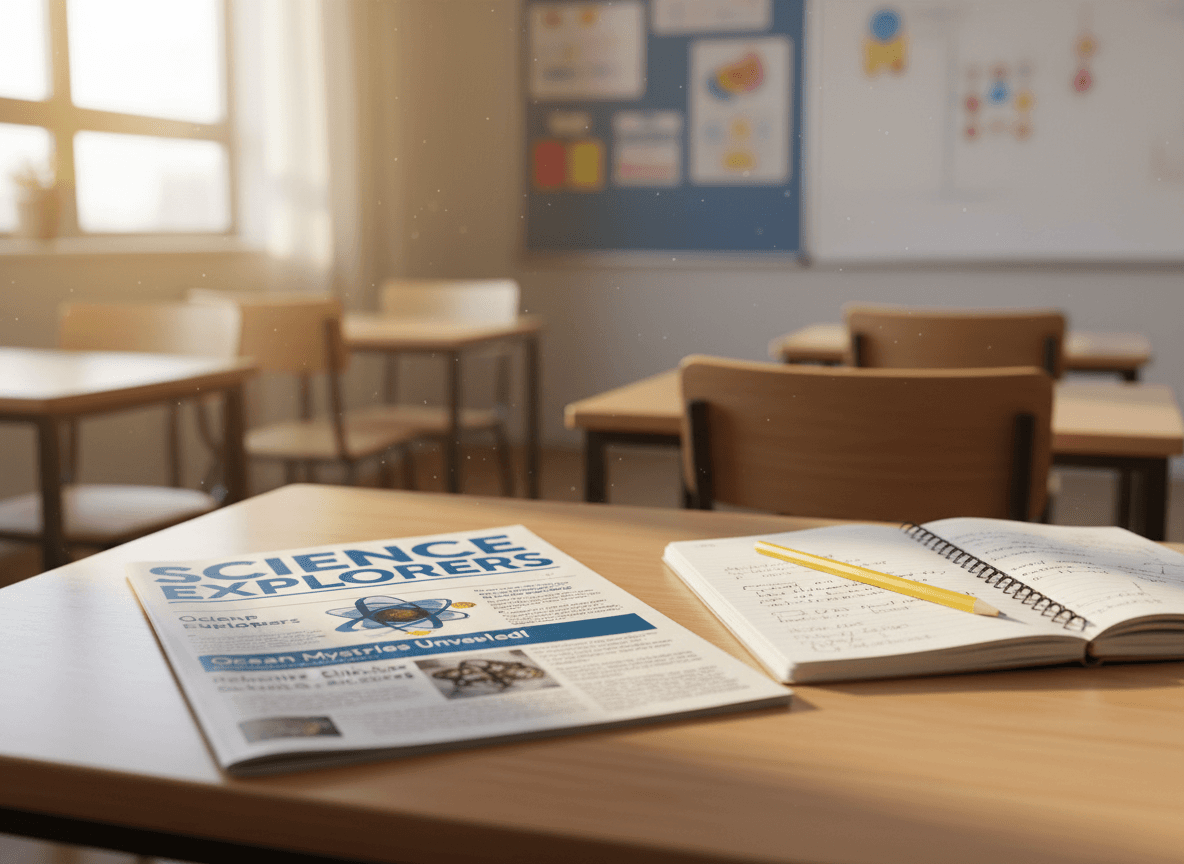
Almost every science newsletter is written to parents. The student is the subject, never the audience. This template flips that. It is a weekly newsletter written directly to students, in the voice they will read, with a challenge they can actually do and a 'did you know' that makes them curious. Five short sections. Sent Wednesday morning so they can use it during the week.
Section 1: What we are doing this week
Two sentences. In second person. "This week you are building a circuit using a battery, a wire, and a small bulb. By Friday you should be able to make the bulb light up and then explain why it works." Students read 'you' differently than they read 'students will'.
Section 2: This week's challenge
One thing, doable in 10 minutes, no supplies, optional. "Notice three things this week that involve electricity that is not obvious. The TV remote uses electricity. The dishwasher uses electricity. Find three more. Write them in your notebook." Not graded. Not checked. The students who do it will tell you about it on Friday and the ones who do not will hear about it.
Section 3: Did you know
One weird fact related to the unit. "Did you know that lightning is about five times hotter than the surface of the sun? The bolt itself is only a few centimeters wide but reaches 30,000 degrees Celsius for a fraction of a second." Pure curiosity bait. No lesson. No follow-up question.
Section 4: Heads-up
Three lines about what is coming. "Quiz Friday on circuit basics. Lab partner rotation happens Monday. The notebook check is the week after next, so this is a good time to organize yours." Short. Practical. The version of a heads-up parents would get, written to the actual person who needs to act on it.
Section 5: Question of the week
One open question students can answer in class on Friday. "If you could only have electricity for one hour a day, when would you use it and why?" The answers turn into a five-minute discussion that opens the period and reminds the class that science connects to real decisions.
Example: a 7th grade student newsletter on circuits
"This week you are building a circuit using a battery, a wire, and a small bulb. By Friday you should be able to make the bulb light up and then explain why it works. Challenge: find three things in your house that use electricity in a way that is not obvious. Did you know lightning is five times hotter than the surface of the sun? Heads-up: quiz Friday, lab partner rotation Monday, notebook check in two weeks. Question of the week: if you could only have electricity for one hour a day, when would you use it?" Total length: 180 words. Reading time: 90 seconds.
Why this template works
Students read what is written for them. The 'you' voice, the optional challenge, and the weird fact change the relationship with the newsletter. By November, students show up Friday with the challenge done unprompted, because it lives outside the grading system and inside the part of school that is actually fun.
How Daystage helps with student-only science newsletters
Daystage keeps a separate student mailing list, sends a tone-different newsletter only to them, and archives every past issue. A student who joined the class in October can read the last six weeks of newsletters in one sitting and catch up on every challenge, every quiz heads-up, and every weird fact they missed.
Get one newsletter idea every week.
Free. For teachers. No spam.
Frequently asked questions
How is a student-facing science newsletter different from a parent newsletter?
Shorter paragraphs, second-person voice ('you'), a challenge they can actually try, and content that includes the weird and the funny. Parents want updates. Students want something that does not feel like more homework.
Where do students read this newsletter?
Email or projected in class. Both work. If your school gives every student an account, send the newsletter to it and open class on Friday by reading the 'did you know' section together. That trains students to expect it and read it on their own by November.
What does a good weekly challenge look like?
Something they can do in 10 minutes, alone, without supplies. 'Notice three phenomena this week. Write one sentence about each in your notebook. Bring the best one to class Friday.' Not a project. Not a grade. Just a prompt.
Should the student newsletter mention grades or assessments?
Lightly. 'Next quiz is Friday on plate boundaries' is fine. Class-wide reminders. Anything individual stays out. The newsletter is a community thing, not a report card.
Can Daystage send a newsletter only to students?
Yes. Daystage lets you keep a separate student mailing list, send a tone-different newsletter just to them, and archive past issues so a student who joined late can catch up on what they missed.

Adi Ackerman
Author
Adi Ackerman is a former classroom teacher and curriculum writer with 8 years in K-8 schools. She writes about school communication, parent engagement, and what actually works in real classrooms.
More for Science Newsletter
Ready to send your first newsletter?
3 newsletters free. No credit card. First one ready in under 5 minutes.
Get started free