
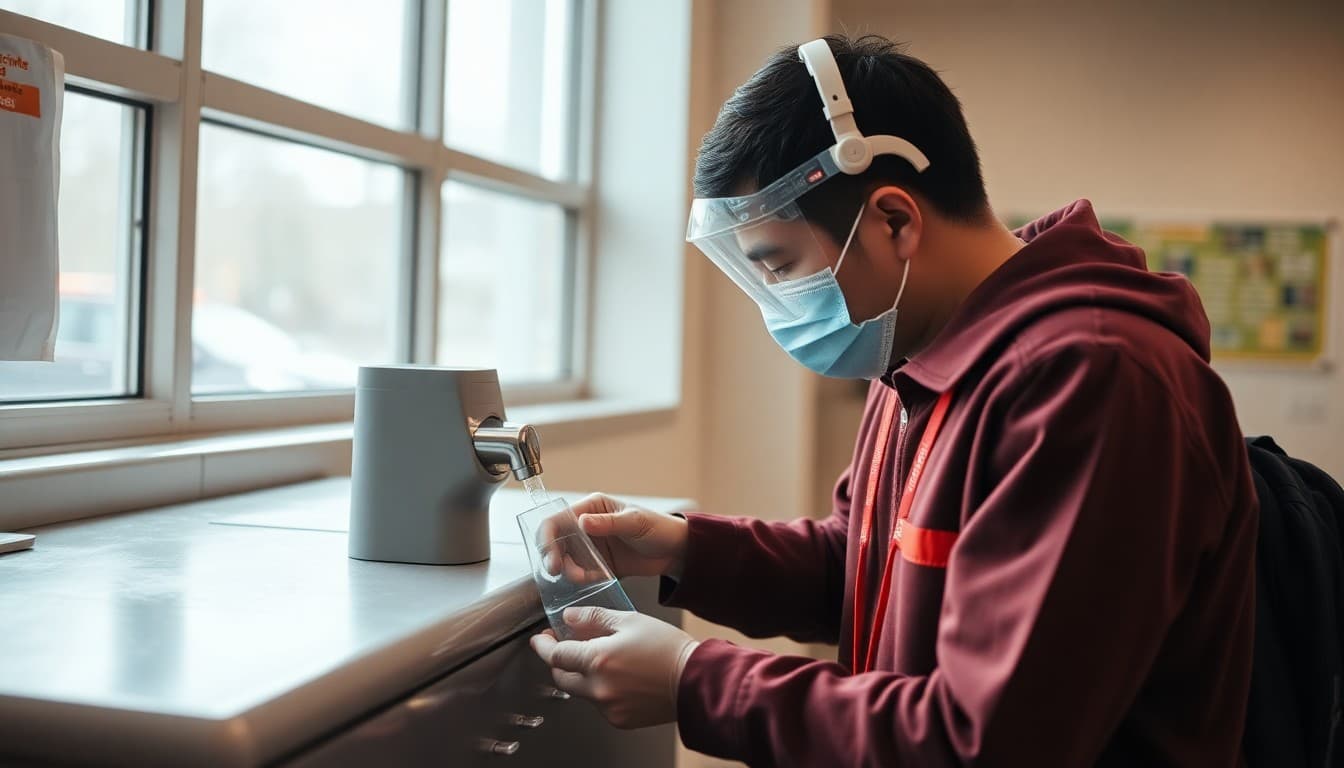
School Newsletter: Water Quality Testing Results and Next Steps

Water quality notifications carry specific weight because lead contamination and other water issues have been prominent in school news coverage in recent years. Families approach these communications with heightened vigilance. The school that communicates proactively, with complete data and a concrete remediation plan, builds trust. The school that minimizes or delays communication loses it.
Share Testing Results Promptly and Completely
As soon as water quality testing results are received, share them with families. Do not wait for remediation to be underway or for a communication strategy to be crafted. A prompt notification with the raw results, explained in plain language, signals that the school is not managing the information for optics, but sharing it because families have a right to know.
Explain What Was Tested and Where
Specify which fixtures or areas of the building were tested: drinking fountains, classroom sinks, cafeteria water supply. Families want to know whether their child used the specific fixtures that showed elevated results. The more location-specific the report, the more accurately families can assess their child's exposure.
Present the Results With Context
Report the measured levels and compare them to EPA or state action levels. For example: "The lead level measured at the third-grade hallway drinking fountain was X parts per billion. The EPA action level for school water is 15 parts per billion." This context helps families interpret the results rather than reacting to a number without a reference point.
Describe the Immediate Protective Actions Taken
If any fixtures showed elevated results, confirm that they have been shut off and that alternative drinking water is being provided. Families need to know that the school is not allowing students to continue using contaminated water while figuring out next steps. Immediate protective action is the most reassuring thing you can describe.
Outline the Remediation Plan
Describe the specific steps being taken to address elevated results: fixture replacement, pipe flushing, plumbing inspection, or a combination. Include the timeline for remediation and for follow-up testing to confirm that levels have returned to acceptable ranges.
Address Health Concerns and Medical Guidance
For lead specifically, provide guidance on whether blood lead level testing is recommended for students who may have consumed water from affected fixtures, and how families can arrange that through their child's physician or through district-supported health resources. Do not be dismissive about the health implications. Be honest about what the exposure level means and what the recommended medical response is.
Provide the Full Testing Report
Link to or attach the complete testing report so families who want the full data can access it. Transparency about the underlying documentation distinguishes a school that is managing this situation responsibly from one that is presenting a curated summary.
Water quality communication is one of the highest-stakes family notifications a school can send. Daystage templates allow you to produce a professional, thorough notification quickly, with attached or linked documentation and clear action steps. That combination of speed and completeness is what the situation demands.
Get one newsletter idea every week.
Free. For teachers. No spam.
Frequently asked questions
When are schools required to notify families about water quality issues?
Requirements vary by state, but federally, schools that serve as public water systems must comply with EPA notification standards. Many districts proactively notify families of any elevated lead or contaminant results even when not legally required. Early, transparent communication is always the better practice.
What should a water quality notification include?
Include the testing date, the specific locations tested, the contaminants measured, the results compared to federal or state action levels, the health implications of the levels found, and the specific remediation steps being taken.
How do you communicate elevated lead results without creating panic?
Present the data factually. State the measured level, the EPA action level for comparison, and what the health risk is at that level specifically. Avoid minimizing language, but also avoid catastrophizing. Families who receive accurate context can make rational decisions.
Should schools shut off water fountains while results are pending or remediation is underway?
Yes, as a precautionary measure. If testing reveals any elevated contaminant levels, shutting off affected fixtures and providing bottled water until remediation is complete is the appropriate and expected response. Describe this action explicitly in the notification.
How does Daystage support water quality communication?
Daystage lets you send a professional, well-organized water quality notification to all families with links to the full testing report, the remediation plan, and contact information for questions. Having the full documentation accessible from the newsletter builds credibility.

Adi Ackerman
Author
Adi Ackerman is a former classroom teacher and curriculum writer with 8 years in K-8 schools. She writes about school communication, parent engagement, and what actually works in real classrooms.
More for School Safety
Ready to send your first newsletter?
3 newsletters free. No credit card. First one ready in under 5 minutes.
Get started free