
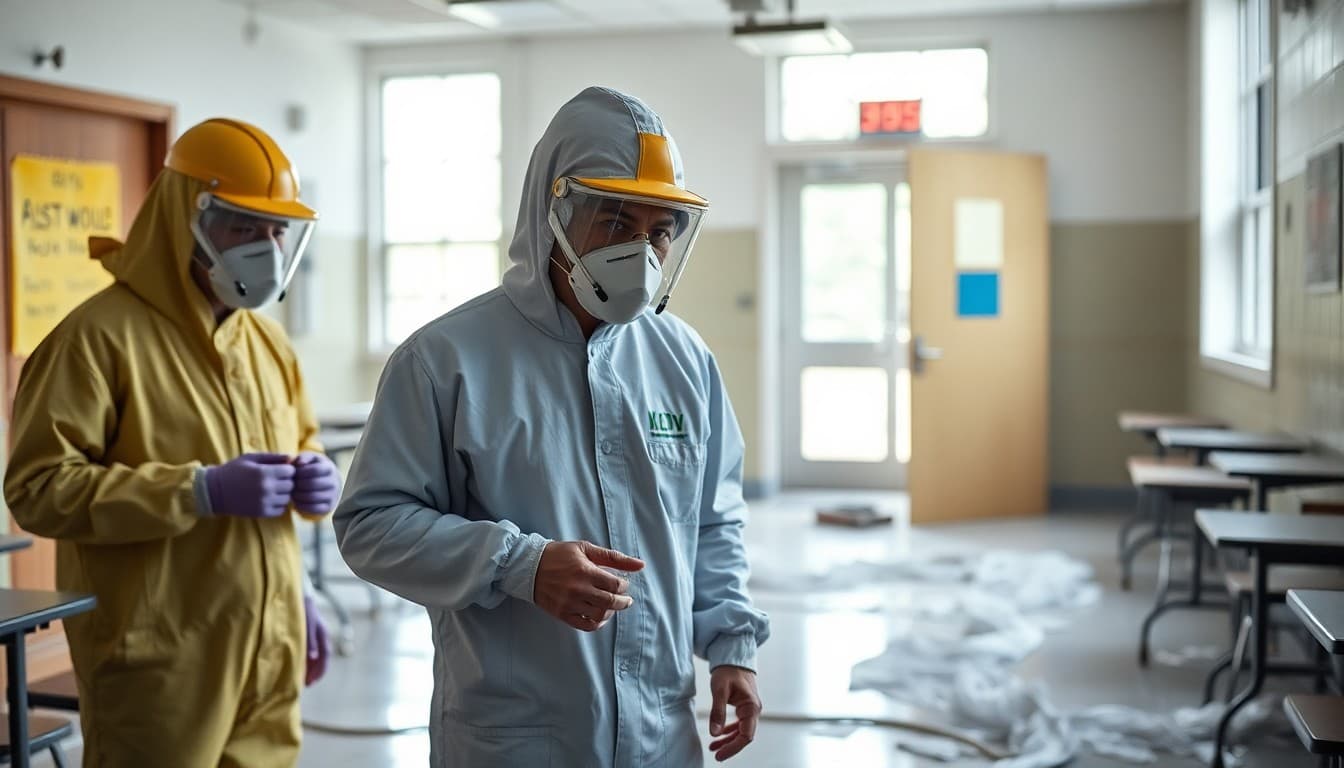
School Newsletter: Asbestos Notification and Remediation Plan

Asbestos notifications carry significant legal requirements and significant emotional weight. Families who hear "asbestos" immediately think of serious health risk, and the school's communication must both meet its legal obligations under AHERA and provide the context families need to understand the actual risk level. Both things matter, and the order matters too: lead with safety, then explain the context.
Understand Your AHERA Obligations
AHERA requires schools to notify parents and guardians annually about the availability of the asbestos management plan, and to provide specific notification when remediation activities are planned or underway. Work with your district's legal counsel or environmental health consultant to confirm that your notification meets federal requirements. The EPA provides guidance documents for schools available on its website.
Describe What Was Found and Where
Specify the type of asbestos-containing material identified, its location in the building, and its current condition. Intact asbestos floor tiles in a rarely accessed storage area present a different risk profile than damaged asbestos pipe insulation in an occupied classroom. Families who understand the specific circumstances can assess the situation accurately.
Explain the Risk in Accurate Terms
The key fact about asbestos risk is that it is associated with airborne fibers. Intact, undamaged asbestos-containing materials that are not disturbed do not release fibers and pose no immediate health risk. This is not a minimization. It is the scientific consensus. Communicating this context prevents unnecessary alarm while still taking the situation seriously.
Describe the Certified Contractor and Process
Name the certified asbestos abatement contractor who will conduct the work. Describe their credentials and the process they will follow. Asbestos remediation in schools is conducted under strict protocols: containment barriers, negative air pressure, air monitoring during work, and clearance testing before the area is reopened. Describing this process demonstrates that the work is being done safely.
Explain the Work Schedule
Describe when remediation will occur, whether during school hours, evenings, or school breaks, and whether any areas of the building will be inaccessible. If work is scheduled for a school break, confirm that the building will be cleared and inspected before students return.
Provide Access to the Management Plan
AHERA requires that the asbestos management plan be available to parents on request. Include information on how families can review the plan and who to contact to arrange access. Some districts post the plan on the district website, which simplifies this obligation significantly.
Invite Questions and Provide Contacts
Include the name and contact information for the district facilities director and the certified asbestos inspector. Families with specific health questions should be directed to their physician and to the EPA's school asbestos resources. Clear contacts reduce the number of calls to the front office from families who do not know where to direct their questions.
Daystage allows you to attach the management plan summary, link to the contractor's certification documentation, and include all required AHERA notification language in a single, professionally formatted newsletter. Documentation completeness and communication clarity both support the school's legal and reputational interests.
Get one newsletter idea every week.
Free. For teachers. No spam.
Frequently asked questions
What is AHERA and what does it require for school asbestos notification?
AHERA is the Asbestos Hazard Emergency Response Act. It requires schools to inspect for asbestos-containing materials, maintain management plans, re-inspect every three years, and notify parents and staff annually about the availability of the asbestos management plan. A discovery that requires remediation triggers additional notification requirements.
Should schools close during asbestos remediation?
Depends on the location and scope of the remediation. Asbestos work is typically done during non-school hours, on weekends, or during school breaks. If remediation must occur while school is in session, affected areas are sealed and work is done under controlled conditions by certified contractors. The decision is made with input from the certified asbestos contractor and the district.
How do you explain asbestos risk to families without causing panic?
Explain that asbestos is only a health risk when fibers are disturbed and become airborne. Intact, undamaged asbestos-containing materials that are managed properly pose no immediate risk. The risk context is critical. Families who understand this distinction respond differently than those who hear only 'asbestos found at school.'
What are the health implications families should know about?
Asbestos exposure over time is associated with lung disease. Brief, isolated exposure at the levels typical of a school discovery is generally considered low risk. Refer families to their physician for health concerns and to the EPA or local health department for authoritative information.
How does Daystage support asbestos notification communication?
Daystage allows schools to send a detailed, professionally formatted asbestos notification with links to the AHERA management plan, the contractor's credentials, and follow-up update schedule. Comprehensive documentation in the newsletter demonstrates that the school is managing the situation by the book.

Adi Ackerman
Author
Adi Ackerman is a former classroom teacher and curriculum writer with 8 years in K-8 schools. She writes about school communication, parent engagement, and what actually works in real classrooms.
More for School Safety
Ready to send your first newsletter?
3 newsletters free. No credit card. First one ready in under 5 minutes.
Get started free