
School Visitor Policy Newsletter: Who Can Enter Our Building
Every school has a visitor policy, but most families only learn about it when they're standing at the front desk without the right ID. A visitor policy newsletter solves that problem before it happens. It explains your procedures clearly, sets expectations in advance, and helps families understand that controlled access is one of the most basic and effective safety measures a school can implement.
Start with Why Visitor Policies Exist
Open by explaining the purpose rather than jumping straight to the rules. Controlled entry means that every adult on campus is known, verified, and has a legitimate reason to be there. Schools with strong visitor management reduce the risk of unauthorized adults accessing students. Most families support these policies once they understand the reasoning. Lead with safety, then move to procedures.
Define Who Counts as a Visitor
Not all adults on campus are visitors. Clarify the distinctions. Visitors are adults who are not regularly employed at the school and who need to enter the building for a specific purpose. Regular volunteers who have completed background checks may have a different check-in process than one-time visitors. Parents picking up a sick student follow a different path than a community member attending an event. Define each category and what is required.
Walk Through the Check-In Process Step by Step
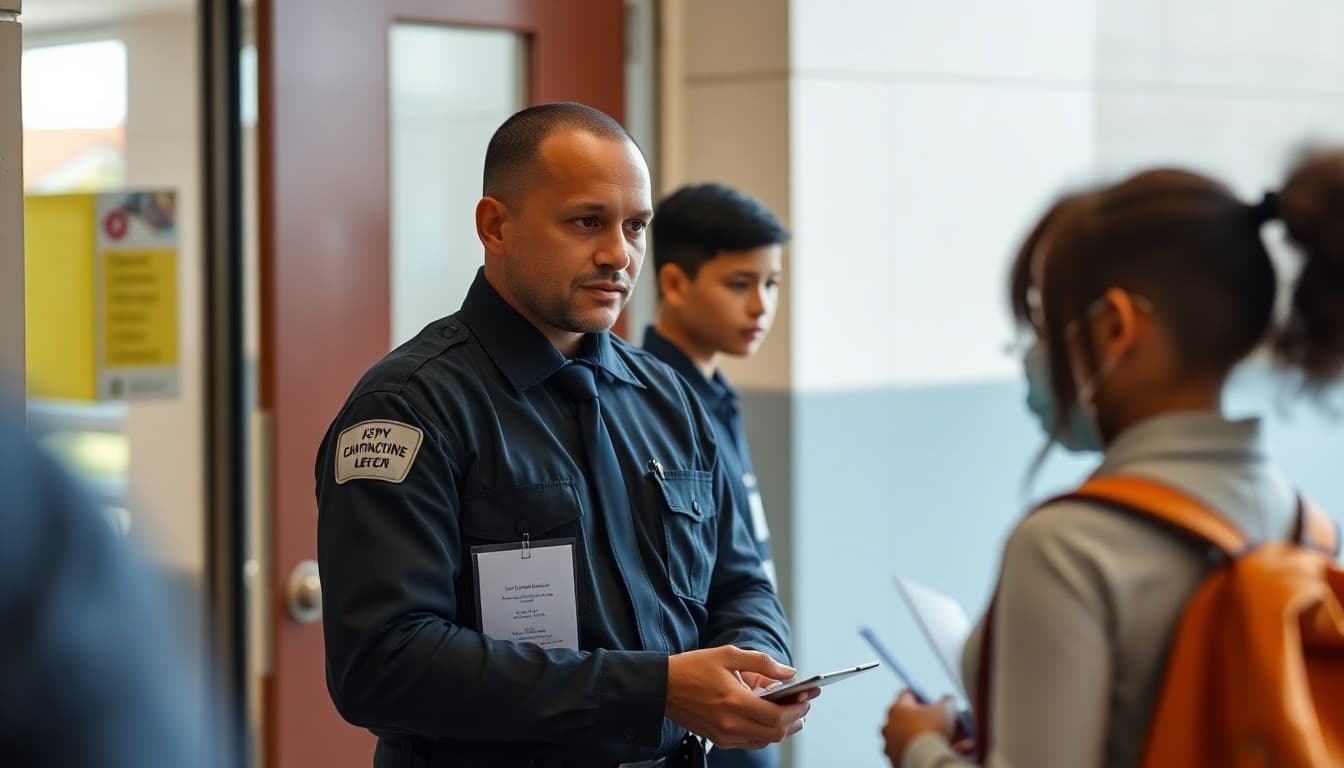
Describe exactly what happens when a visitor arrives. They enter through the single point of entry, which should be identified by name or location. They present a government-issued photo ID to the front office staff. The ID is scanned or checked against the district's visitor management system. A visitor badge is printed and must be worn visibly at all times. The visitor proceeds only to their approved destination and is escorted in restricted areas. After the visit, the badge is returned or deactivated at sign-out.
Explain Your ID Verification System
If your school uses a visitor management system like Raptor, VeriScan, or Lobby Guard, name it and briefly explain what it does. Most of these systems check the visitor's name against a national sex offender registry and flag any matches for administrator review. This explanation reduces the discomfort some visitors feel when their ID is scanned. "We run a brief background check for everyone's protection" is a complete and sufficient explanation.
Use a Template Section for Common Visitor Scenarios
Here is a section that works for any visitor policy newsletter:
"Authorized visitors include: parents and guardians picking up or dropping off students, approved volunteers with completed background clearance, vendors and service providers with scheduled appointments, and guests attending approved school events. All visitors must present a valid photo ID at the front office. Visitors without ID will be asked to reschedule. Visitors who need to enter classrooms or restricted areas must be accompanied by a staff member."
Address Unscheduled and Unauthorized Arrivals
Tell families what happens when someone arrives without an appointment or identification. They are not permitted to enter the building beyond the lobby. Staff will offer to contact the relevant teacher or administrator to address the visit's purpose by phone or scheduled appointment. This boundary should be stated clearly. Families who know the policy in advance are far less likely to be frustrated when it's enforced.
Explain How to Schedule a Campus Visit
Parents who want to observe a classroom, meet with a teacher, or volunteer should know the process. Typically this means contacting the front office at least 24 hours in advance, stating the purpose of the visit, and confirming that the receiving teacher or administrator has approved the visit. Explain any documentation volunteers need, such as a completed background check authorization form, and how long that process typically takes.
Close with Contact Information for Visitor Policy Questions
End with a direct contact for families who have questions or who want to schedule a visit. "To schedule a campus visit, contact [name] at [phone or email]. For volunteer clearance information, visit [link or contact the office at [number]]." Make the next step as clear and low-friction as possible. A family who knows exactly who to call is more likely to go through the proper channel rather than just showing up.
Get one newsletter idea every week.
Free. For teachers. No spam.
Frequently asked questions
Why do schools need a written visitor policy newsletter?
Without a published policy, families sometimes show up expecting unrestricted access, which creates conflict at the front door and safety gaps during the school day. A newsletter sets expectations in advance, explains the reasoning behind each requirement, and reduces friction when staff enforce the policy. It also signals to the broader community that your school takes access control seriously.
What should a school visitor policy cover?
Cover who qualifies as an authorized visitor, how visitors check in, what ID is required, how long a visitor badge is valid, where visitors may go on campus, who must accompany a visitor in secure areas, and how to schedule visits in advance. Also cover what happens when someone arrives without identification or an appointment.
How do you handle parents who push back on visitor ID requirements?
Address this in the newsletter before it happens. Explain that ID requirements protect every child on campus, including theirs. When the policy is communicated in advance as a safety measure rather than a personal inconvenience, most parents accept it. The newsletter should acknowledge that the process takes a moment and thank families for their patience. Staff enforcement becomes easier when the community has already been informed.
What identification do schools typically require from visitors?
Most schools require a government-issued photo ID such as a driver's license, state ID card, or passport. Some districts run visitor IDs through a sex offender registry check using systems like Raptor or VeriScan. The newsletter should name whatever system your school uses and explain what the check involves so families aren't surprised when their ID is scanned.
Can Daystage help schools send visitor policy updates to specific groups?
Yes. Daystage lets you send to the full school community or to specific segments, such as families of incoming kindergartners who may be less familiar with school procedures. Targeted visitor policy newsletters for new families at the start of the year reduce first-week friction at the front entrance significantly.

Adi Ackerman
Author
Adi Ackerman is a former classroom teacher and curriculum writer with 8 years in K-8 schools. She writes about school communication, parent engagement, and what actually works in real classrooms.
More for School Safety
Ready to send your first newsletter?
3 newsletters free. No credit card. First one ready in under 5 minutes.
Get started free