
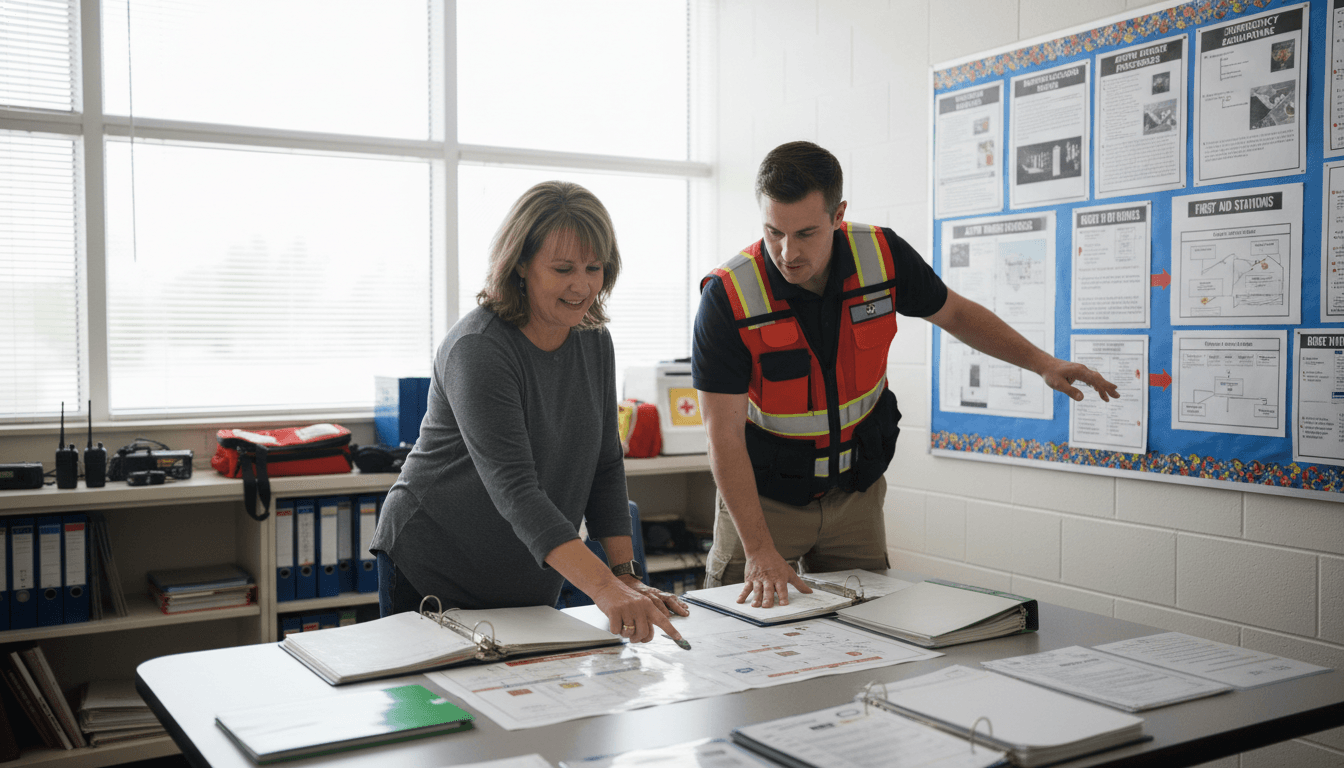
School Safety Team Newsletter: Coordinating Roles, Training, and Communication Across Your Safety Team
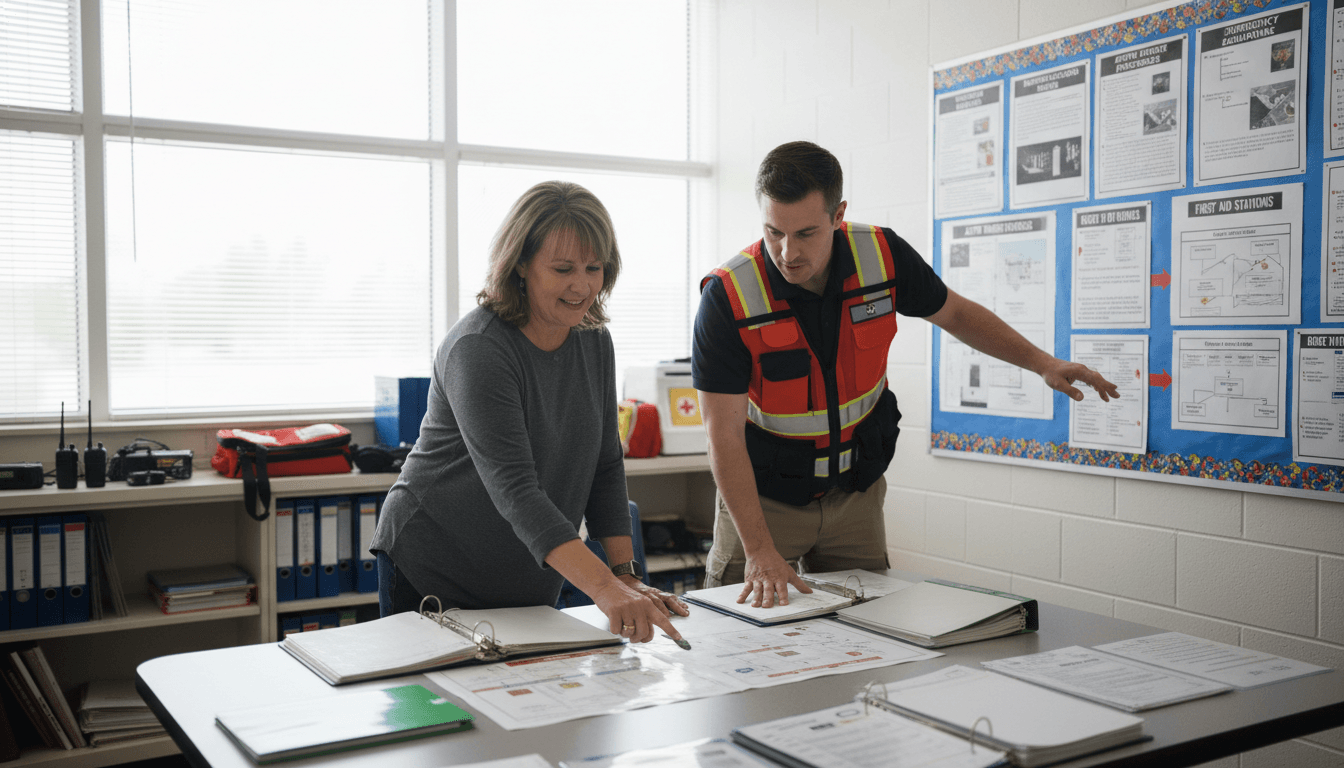
School safety teams are responsible for a school's emergency preparedness, but they often operate without structured internal communication. Members know their general roles but may be unclear on current protocols, upcoming training requirements, or what changed in the emergency plan since the last annual review. A brief monthly newsletter keeps the team coordinated without adding more meetings.
Role Clarity Section
Every safety team member has a specific role in each type of emergency response. But roles change as personnel change, and even experienced team members can forget specific responsibilities that are rarely exercised.
A standing section in the newsletter that rotates through role reminders keeps emergency responsibilities fresh without requiring annual recertification for every procedure. In October, remind team members of their roles in a medical emergency. In November, cover their roles in a lockdown. In January, cover severe weather. This rotation ensures that every team member sees every role reminder at least once per year.
Training and Certification Tracking
Many safety team members are required to maintain specific certifications: CPR/AED, Stop the Bleed, crisis intervention, or threat assessment training. The newsletter is a simple way to track upcoming expiration dates and available training opportunities.
A brief section listing which team members have certifications expiring in the next 90 days, along with available training sessions, keeps the team compliant without requiring a separate certification management system.
Post-Drill Debrief Summary
After each drill, the newsletter captures what worked, what did not, and what the team will do differently next time. This documented learning cycle is what improves drill quality over time.
Most safety teams conduct a verbal debrief after drills, but the conversation is not documented and the insights do not persist. The newsletter creates the institutional memory that allows the team to reference what they learned in a previous drill when planning the next one.
Communication Protocol Reminders
One section per issue that reinforces a specific communication protocol. How to initiate a lockdown announcement. What information to collect before calling 911. How to document an incident. The reunification process sequence. These reminders are brief and serve as regular muscle-memory maintenance for procedures that are exercised infrequently.
Get one newsletter idea every week.
Free. For teachers. No spam.
Frequently asked questions
Who is on the school safety team and who receives the safety team newsletter?
The safety team typically includes the principal, assistant principal, safety coordinator, school resource officer, nurse, head custodian, and a teacher representative. The newsletter goes to all team members and should be kept within the team rather than shared school-wide. Safety team communication often includes operational details that are not appropriate for general staff distribution.
How often should a school safety team newsletter go out?
Monthly during the school year, with additional issues before and after major drills. The team needs consistent communication to maintain readiness without requiring monthly face-to-face meetings that may not fit everyone's schedule.
What should a post-drill safety team newsletter include?
The drill type and date, how many students and staff participated, any procedural gaps identified, corrective actions planned with owners and timelines, and the next drill scheduled. The post-drill newsletter creates an accountability record that the team can reference when planning future training.
What training updates should appear in a safety team newsletter?
Any new state or district safety requirements, upcoming training opportunities like ALICE or STOP THE BLEED, changes to the emergency operations plan, and reminders about role-specific responsibilities for each team member.
Can Daystage be used for safety team internal communication?
Yes. Safety coordinators use Daystage for their internal team newsletters as well as family-facing communications. The ability to maintain separate mailing lists for different audiences is important for keeping operational safety details within the team.

Adi Ackerman
Author
Adi Ackerman is a former classroom teacher and curriculum writer with 8 years in K-8 schools. She writes about school communication, parent engagement, and what actually works in real classrooms.
More for School Safety
School Evacuation Site Newsletter: Making Sure Every Family Knows Where to Go
School Safety · 5 min read
Safe School Ambassador Newsletter: How Peer Leaders Make Schools Safer and What Families Should Know
School Safety · 5 min read
Threat Assessment Communication Newsletter: What Families Need to Know About School Threat Reporting
School Safety · 6 min read
Ready to send your first newsletter?
3 newsletters free. No credit card. First one ready in under 5 minutes.
Get started free