
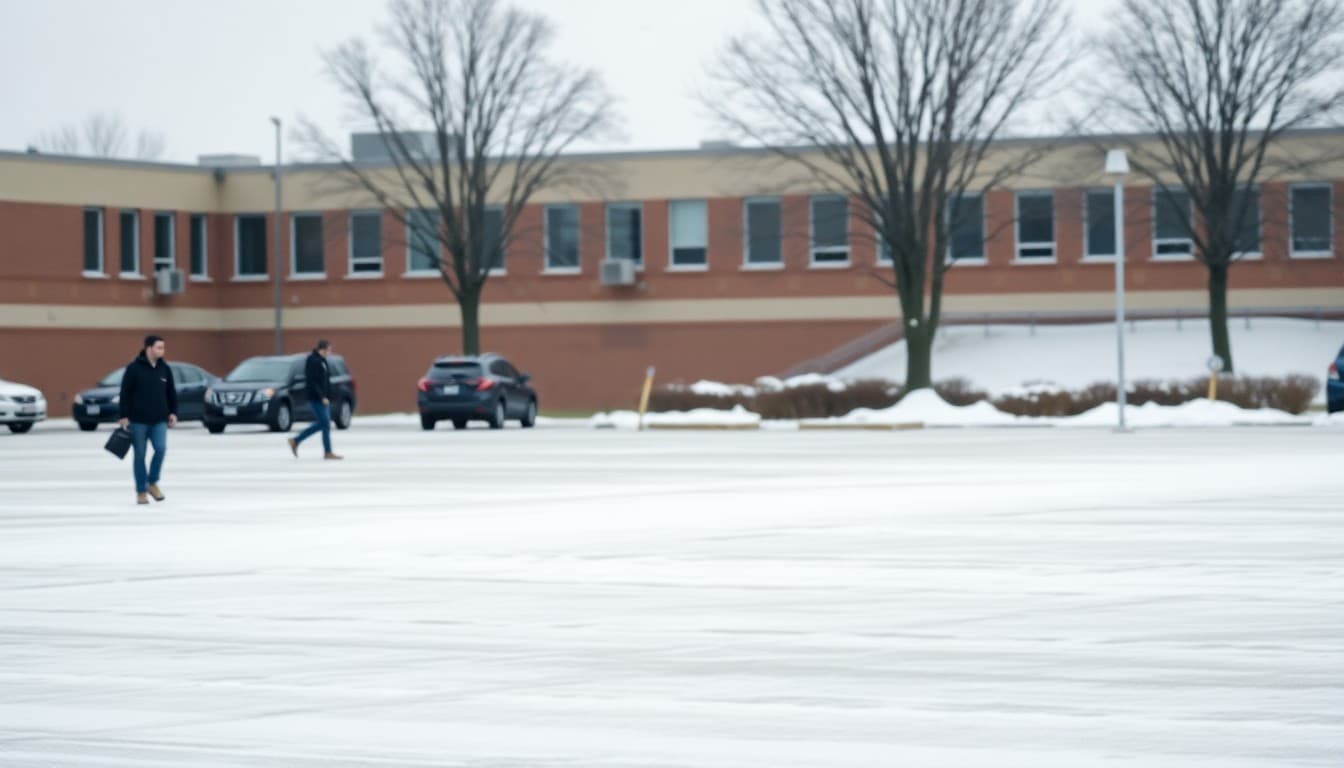
School Newsletter: School Closure Due to Inclement Weather
Weather closure notifications have one simple standard: get the right information to every family before they need to act on it. Families who wake up at 6 AM, check email, and find a closure notification can adjust their day. Families who don't hear until 7:15 AM are already in the car or at a childcare dropoff. Speed and clarity are the entire job of a weather closure communication.
Make the Decision Early and Send Immediately
The earlier the decision is made, the better for families. Most districts aim to decide by 5:30 AM for full closures and communicate immediately after. If you are using a two-hour delay, that decision typically needs to be out by 6 AM. Administrators who wait for more certainty about road conditions frequently find they have given families less time to plan. The cost of an early call that turns out conservative is low. The cost of a late call is high.
State the Decision Clearly in the Subject Line and First Sentence
"School is closed today" or "Two-hour delay today" should be the first thing families read, in the subject line and in the first sentence of the notification. Families scanning their phone at 6 AM do not read paragraphs before they get to the news. Put the decision first, every time.
Explain the Decision Briefly
A one-sentence explanation of why the school is closed is appropriate. "Road conditions and forecast temperatures have led us to close for the safety of students and staff" is sufficient. A detailed weather analysis is not necessary. Families who want to know more about road conditions have other sources for that information.
Describe Remote Learning Expectations
If the district has a remote learning policy for weather days, describe it specifically. State whether participation is expected or optional, which platform students should use, what the expected work involves, and whether it will be graded. Vague guidance such as "students may log in if they choose" leaves families uncertain. Be specific about the expectation, even if it is only that students are expected to spend one hour on reading.
Address Makeup Day Expectations
Let families know how the missed day will be handled in the school calendar. Whether makeup days are already built into the end-of-year calendar, whether the state has a waiver process for weather days, or whether the schedule will be adjusted later. Give families what you know and commit to a date for the full calendar update.
Describe After-School Program and Activity Status
If after-school programs, sports, or activities are also canceled for the day, confirm that explicitly. Families of student-athletes or after-school program participants need separate confirmation that these activities are not happening, not just the school closure information.
Confirm How the Reopening Decision Will Be Communicated
For multi-day weather events, families need to know when and how the reopening decision will be announced. Confirm the communication channel and the timing. For example: "We will announce the status for tomorrow by 9 PM tonight through this newsletter and the school's automated phone system."
Daystage weather closure templates are ready to send in under five minutes. Update the date, confirm the reason, and check the remote learning section. The message goes to every family simultaneously, with no risk that some families hear through the phone tree and others miss it entirely.
Get one newsletter idea every week.
Free. For teachers. No spam.
Frequently asked questions
What time should a weather closure notification go out?
As early as possible once the decision is made, ideally by 5:30 to 6:00 AM for same-day closures. Families need time to arrange childcare, adjust work schedules, and prepare children who may be disappointed or who had plans that depended on being in school.
What should the closure notification include?
Confirm the closure, state the reason briefly, explain whether remote learning is expected, describe the communication channel for reopening decisions, and note how the missed day will be accounted for on the school calendar.
How do you communicate remote learning expectations on a snow day?
Be specific: whether it is optional or required, which platform to use, what the expected completion time is, and how it will be graded or tracked. Ambiguous remote learning expectations produce significant parent confusion on weather days.
How should schools communicate about makeup days?
Explain whether makeup days are built into the calendar, whether the state has a waiver process, and when a formal announcement about the calendar adjustment will be made. Families who plan around the school calendar appreciate early, specific information about how snow days are handled.
How does Daystage support weather closure communication?
Daystage allows administrators to schedule weather closure notifications in advance or send them from a phone in the early morning hours when the decision is made. Templates built for weather closures mean the message is ready to send with minimal updates needed.

Adi Ackerman
Author
Adi Ackerman is a former classroom teacher and curriculum writer with 8 years in K-8 schools. She writes about school communication, parent engagement, and what actually works in real classrooms.
More for School Safety
School Newsletter: Natural Disaster School Closure Communication
School Safety · 6 min read
School Newsletter: Power Outage Communication and School Status
School Safety · 6 min read
School Weather Emergency Communication: What Families Need to Know Before a Storm Closes School
School Safety · 5 min read
Ready to send your first newsletter?
3 newsletters free. No credit card. First one ready in under 5 minutes.
Get started free