
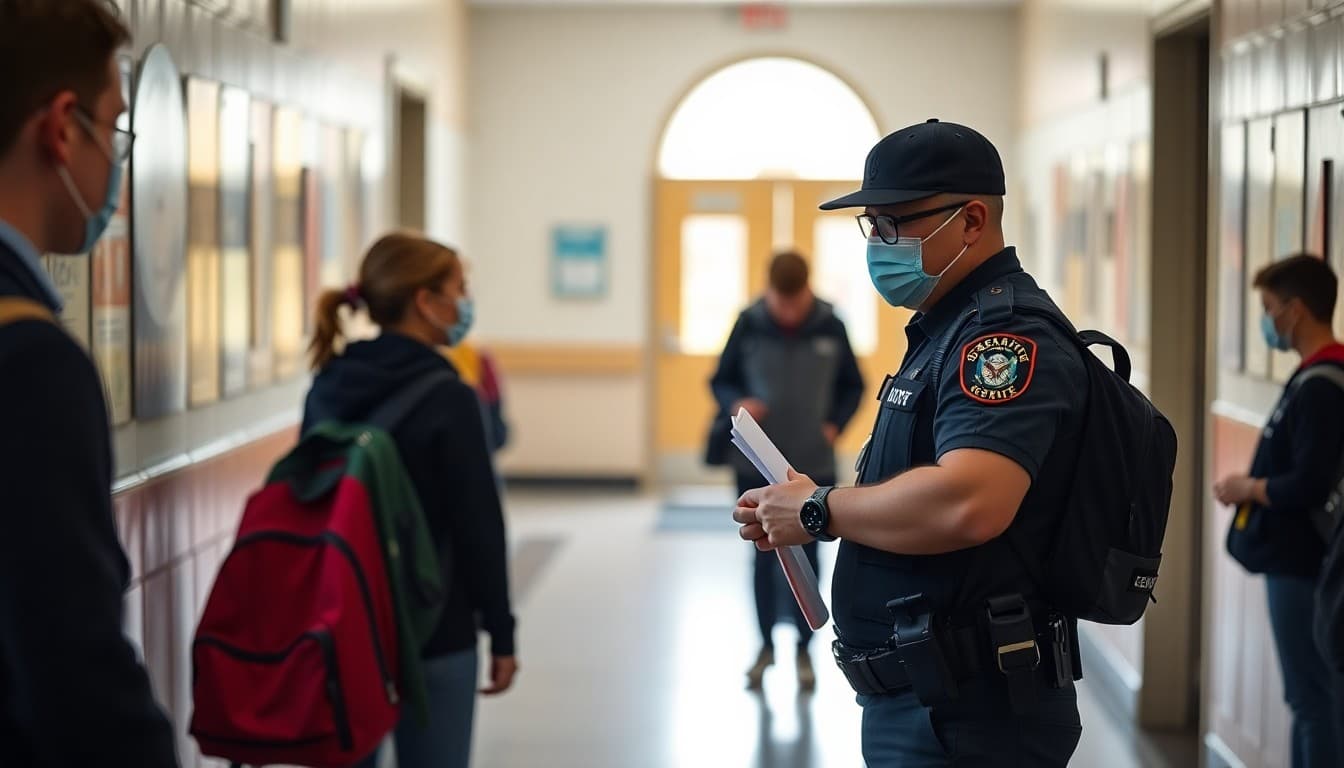
School Bag Search Policy Newsletter: Our Screening Procedures

Bag searches are among the most visible and sometimes contentious safety measures a school can implement. A clear, proactive newsletter that explains your policy, its legal basis, and what it means for students reduces pushback significantly and prepares families before a search affects their child.
Open with the Safety Purpose
Start by stating what bag searches are designed to accomplish. They are one layer in a multi-layered campus safety system designed to prevent weapons, drugs, and other prohibited items from entering the building. Schools that have never had a serious incident often have never had one in part because policies like this one create deterrence. Frame searches as a protection for every student, not a punishment for individuals.
Explain the Legal Basis for School Searches
Families sometimes believe their child has the same Fourth Amendment protections at school that an adult would have with law enforcement. Explain the actual standard clearly. The Supreme Court established in 1985 that school officials need only reasonable suspicion, not a warrant or probable cause, to search a student's belongings. This applies to both targeted searches based on specific concerns and random searches conducted under a published policy. Knowing the legal framework helps families understand that your policy is grounded in established law.
Describe When Searches Are Conducted
Be transparent about the triggers. Name the types of searches your school conducts: random searches at building entrances on selected days, targeted searches when a staff member has reasonable suspicion, searches prompted by an anonymous tip, and searches following an incident. Explain how random searches are conducted, for example by selecting every fifth student entering through a particular door, to demonstrate that the process is structured rather than arbitrary.
List What Is Prohibited in Student Bags
Here is a template section you can adapt:
"The following items are prohibited in student bags, backpacks, purses, and personal belongings at all times: weapons of any kind including replicas and toys that resemble weapons, drugs and drug paraphernalia, tobacco, e-cigarettes, and vaping devices, alcohol, items that could be used to cause harm, and any items prohibited by the student code of conduct. The complete prohibited items list is available at [link or location]."
Explain What Happens When a Prohibited Item Is Found
Families want to know the consequences before their child is involved in a search. Walk through the sequence: the item is confiscated, the student is held with a staff member, the principal or administrator is notified, parents are called, and depending on the item, law enforcement may be contacted. For items in a gray area, such as a pocket knife brought for a legitimate purpose, explain how the context is assessed. Clear consequences established in advance reduce surprise and defensiveness when they're applied.
Address Student Dignity and Privacy During Searches
Searches should be conducted professionally and with as much privacy as reasonably possible. Explain that searches are done by a staff member of the same gender when feasible, that students are not asked to undress, and that personal medical items such as insulin devices or prescription medications will be handled with care. Families who trust that searches are conducted with dignity are more accepting of the policy.
Clarify What Students Should Do During a Search
Tell students and families exactly what is expected. Students should remain calm, keep their hands visible, open bags when requested, and answer questions truthfully. They should not argue, walk away from the search in progress, or contact parents during the search before it's complete. Give students the language to ask questions appropriately: "Can I speak with an administrator?" is always acceptable.
Provide Contact Information for Policy Questions
Close with the direct contact for families who have questions about the bag search policy: the principal, the assistant principal for student affairs, or the district's student services office. Tell families where to find the full written policy. Transparency about where the rules come from and who enforces them builds confidence in the process.
Get one newsletter idea every week.
Free. For teachers. No spam.
Frequently asked questions
Can schools legally search student bags without a warrant?
Yes. Under the 1985 Supreme Court ruling in New Jersey v. T.L.O., school officials can search a student's belongings without a warrant if they have reasonable suspicion that the search will reveal evidence of a violation of school rules or law. The standard is reasonable suspicion, which is lower than the probable cause required for law enforcement. Random searches conducted under a clearly published policy have also been upheld by courts in many states.
Do schools need to notify parents before searching a student's bag?
Generally no, as long as the search falls within the school's published search policy and is conducted by school officials. However, parents are typically notified afterward if a search results in a disciplinary finding, confiscation of prohibited items, or law enforcement involvement. Notification procedures should be spelled out in your policy and communicated in the newsletter.
What items are typically prohibited in school bags?
Prohibited items vary by district but commonly include weapons of any kind, drugs and drug paraphernalia, alcohol, tobacco and e-cigarettes and vaping devices, items that could be used as weapons, stolen property, and any items specifically prohibited by the student code of conduct. The newsletter should include a clear list so there is no ambiguity.
How should schools handle bag searches to avoid bias and inconsistency?
Random searches should be conducted using a documented randomization process, such as a randomly generated list of lockers or bag numbers, rather than staff discretion. Document each search including the basis for targeted searches. Train all staff who conduct searches on the legal standard and proper procedure. The newsletter can mention that your school's search policy includes staff training and documentation requirements.
How can Daystage help communicate bag search policy updates to families?
Daystage lets you send policy updates to specific groups quickly. If your district revises the bag search policy mid-year, you can update the newsletter and send it the same day without waiting for a newsletter cycle. You can also include links to the full student code of conduct so families can read the complete policy rather than just the summary in the newsletter.

Adi Ackerman
Author
Adi Ackerman is a former classroom teacher and curriculum writer with 8 years in K-8 schools. She writes about school communication, parent engagement, and what actually works in real classrooms.
More for School Safety
Ready to send your first newsletter?
3 newsletters free. No credit card. First one ready in under 5 minutes.
Get started free