

Oregon School Safety Newsletter: Earthquakes, Wildfires, and Family Communication
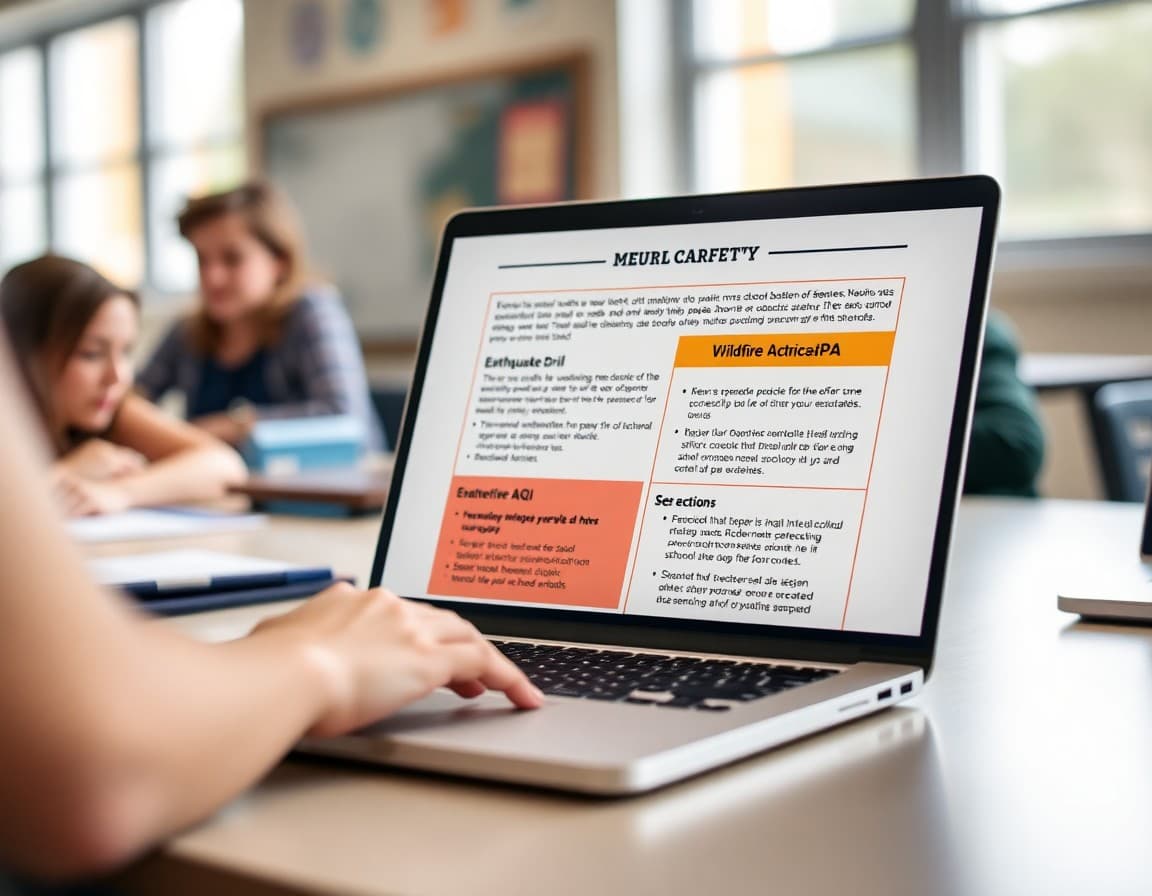
Oregon school safety communication has to reckon with the Cascadia Subduction Zone. Scientists have described a major Cascadia earthquake as one of the most predictable large disasters in the United States, and Oregon schools, particularly those on the coast, have been building earthquake and tsunami preparedness programs for years. At the same time, wildfire smoke from summer and fall fires now affects school operations statewide almost every year. A safety newsletter that skips either of these is missing Oregon's most significant long-term safety realities.
Here is how Oregon school administrators can build safety communication that addresses both.
Earthquake Drill Communication and Cascadia Preparedness
Oregon participates in the Great Oregon ShakeOut every October. Send a notification before the drill covering the drop-cover-hold-on procedure, what students will practice, and how this drill connects to the statewide ShakeOut. For coastal Oregon schools, include tsunami evacuation procedures in this communication: the evacuation route, the high-ground assembly point, and how families will be notified once students are safe.
A sample line for coastal schools: "Because our school is in a tsunami hazard zone, our earthquake drill includes evacuation practice. Students will walk the route to [high-ground site] and practice assembly procedures. Parents should not attempt to pick up students during an earthquake evacuation. You will receive a message once students are confirmed safe."
Wildfire and Smoke Season Communication
Oregon wildfire and smoke season now regularly affects school operations from late July through October. Send a wildfire and AQI protocol notice before school starts. Cover the AQI threshold that modifies outdoor operations, what modifications look like, how families will receive notifications, and the procedure for students with respiratory conditions.
Include guidance on what "unhealthy for sensitive groups" versus "unhealthy for all groups" means for school activities. Oregon families in fire-affected areas want to understand the school's specific threshold, not just know that air quality is being monitored.
Winter Storm and Flooding Communication
Western Oregon schools face winter flooding from atmospheric river events and sustained heavy rain. Eastern Oregon schools face blizzards and ice storms. Send weather-specific protocol communications before each relevant season. Cover the decision criteria, the notification timeline, and the alternate routes and reunification sites for schools in flood-prone areas.
Lockdown Drill Communication
Send advance notice before every lockdown or active threat drill. Include the date, what students will practice, that teachers prepare students beforehand, and counselor availability. Oregon families in both urban Portland-area schools and rural communities benefit from advance drill communication.
Visitor Policy and Campus Access
When your visitor policy changes, communicate it in writing with a brief explanation. Oregon school communities, including progressive urban communities where safety measures are sometimes questioned, respond better to policies with clear rationale than to policies implemented without explanation.
Reunification Communication
Cover your reunification protocol in at least one newsletter per year. For coastal Oregon schools in tsunami zones, include the high-ground site and the procedure for family notification once students are safe. For schools in wildfire-affected areas, include the alternate site if the primary is inaccessible due to fire or smoke.
Daystage for Oregon School Safety Communication
Oregon principals who use Daystage for safety newsletters maintain consistent communication across a multi-hazard calendar that spans earthquake drills, wildfire season, and winter storm protocols. A reliable platform keeps every family informed throughout the year.
Get one newsletter idea every week.
Free. For teachers. No spam.
Frequently asked questions
What safety topics should Oregon school newsletters address?
Oregon schools face Cascadia Subduction Zone earthquake and tsunami risk for coastal communities, wildfire and smoke risk across the eastern and southern parts of the state, flooding from winter storms and snowmelt, and the standard security drill calendar. Safety newsletters should address the specific hazards relevant to each school's region, with earthquake and wildfire protocols required for most Oregon schools.
How should Oregon schools communicate earthquake drill procedures to families?
Oregon participates in the Great Oregon ShakeOut annually. Send a notification before each earthquake drill covering the drop-cover-hold-on procedure, the drill schedule, and what families can do at home to complement school preparedness. For coastal Oregon schools, include tsunami evacuation procedures and explain the relationship between an earthquake event and a tsunami warning.
How do Oregon schools address wildfire and smoke protocols in safety communication?
Oregon schools in the Willamette Valley, southern Oregon, and eastern Oregon face wildfire and smoke risk from late July through October. Send a wildfire and AQI protocol communication before school starts. Cover the AQI threshold that modifies outdoor operations, what modifications look like, and how families will receive notifications during rapidly changing fire situations.
What Oregon school safety requirements affect family communication?
Oregon schools must maintain emergency operations plans and conduct required drills including earthquake exercises. The Oregon Department of Education provides guidance on school safety planning. Safety newsletters should reflect current plan procedures and drill schedules, and align with any district or county emergency management requirements.
What platform helps Oregon schools send safety newsletters consistently?
Oregon principals and safety coordinators use Daystage to send structured safety newsletters with consistent format throughout the year. For schools managing multiple hazard types across diverse geography, a reliable communication platform ensures safety messages reach every family on schedule.

Adi Ackerman
Author
Adi Ackerman is a former classroom teacher and curriculum writer with 8 years in K-8 schools. She writes about school communication, parent engagement, and what actually works in real classrooms.
More for School Safety
School Safety Newsletter Guide: What Principals and Safety Coordinators Should Be Communicating All Year
School Safety · 7 min read
Earthquake Preparedness Newsletter: Communicating Drop-Cover-Hold On Procedures to School Families
School Safety · 5 min read
School Weather Emergency Communication: What Families Need to Know Before a Storm Closes School
School Safety · 5 min read
Ready to send your first newsletter?
3 newsletters free. No credit card. First one ready in under 5 minutes.
Get started free