

March Safety Update Newsletter for School Families
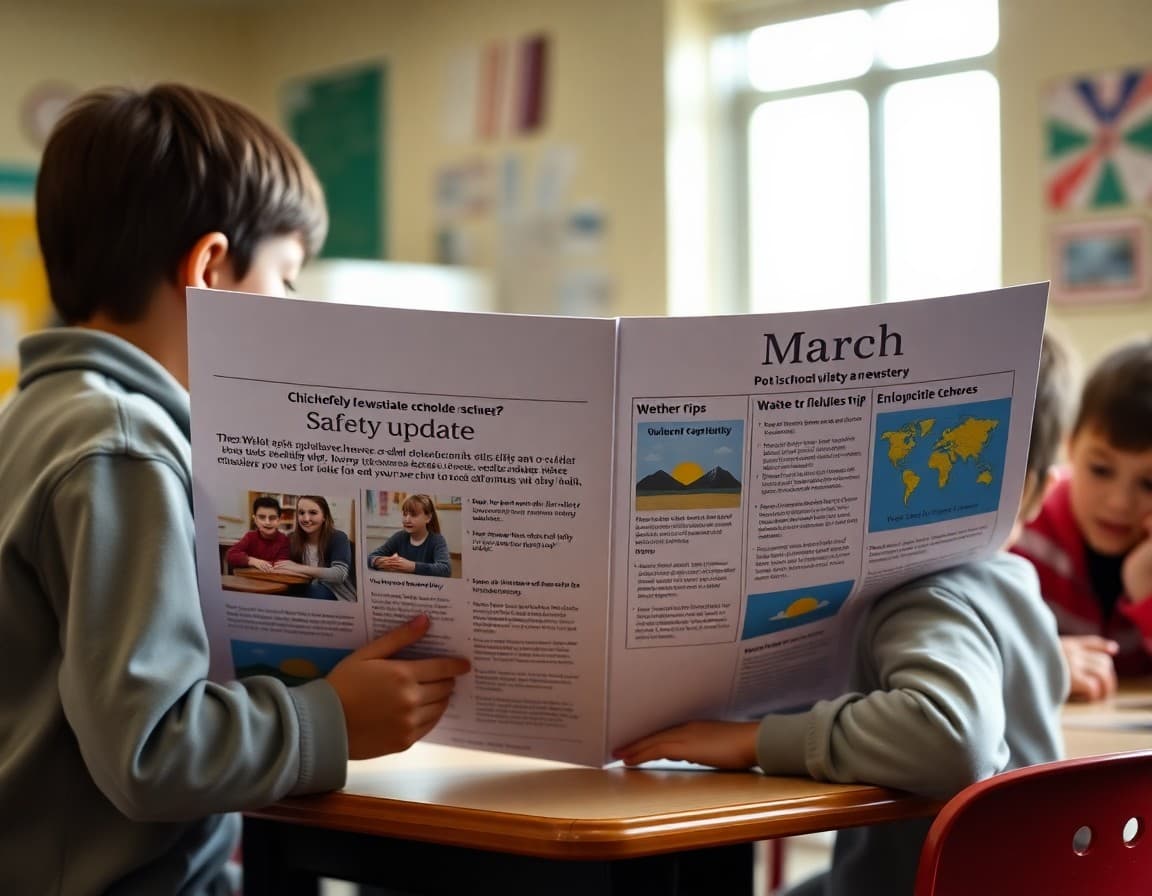
March is a transition month in the school year. Spring break is approaching, field trips are being scheduled, and severe weather season is starting in many parts of the country. A March safety newsletter gives families practical information for all three without being overwhelming.
Preview Spring Break Schedule and Procedures
Confirm the last day before break, the first day back, and any early dismissal times. Describe the pickup process for the last day of school before break, which often differs from the standard schedule. If the school office will have limited staff available during break for urgent inquiries, include that contact information.
Address Online Safety Over Spring Break
Students spend more unsupervised time on devices during school breaks. A short paragraph pointing families to age-appropriate monitoring tools, conversation starters for talking about online safety, and what to do if a student encounters something concerning provides value without lecturing. If the school has a digital citizenship curriculum, reference it here.
Explain Field Trip Safety Policies
Spring is field trip season. Before the first trips depart, explain how emergencies are handled off campus, what the adult-to-student supervision ratio is, how medical needs are managed, and how families can reach staff during a trip. A clear, confident explanation reduces family anxiety and prevents the flood of calls that comes when families have questions the permission slip does not answer.
Prepare Families for Severe Weather Drills
March through May is peak severe weather season in many regions. Let families know if a tornado or severe weather drill is planned, where students shelter in the building, and how families are notified if dismissal is delayed or modified due to weather. Include the procedure for pickup if a student is sheltering in place when the school day ends.
Update on Testing Period Security Protocols
If standardized testing is approaching, briefly describe any protocol changes during that period. Some schools restrict visitor access, modify dismissal procedures, or change the device policy during testing windows. Families who know these changes in advance are less likely to be frustrated by them.
Recap Drills Completed in the Second Semester
A brief recap of any drills already completed in January and February tells families the school is keeping up with its drill schedule and that students are prepared. Include any follow-up actions or adjustments the school made based on drill observations.
Remind Families to Report Concerns Before Break
Before spring break, specifically remind families that if they hear about any planned incidents, threats, or concerning conversations among students, they should report that information to the school or tip line before the break begins. Early reporting prevents situations from developing over the break period.
Build the March newsletter in Daystage by updating the seasonal sections of your standard safety template. Add the field trip policies, the severe weather shelter information, and the spring break schedule. A newsletter that covers these specific March concerns shows families the school is thinking ahead, not just reacting.
Get one newsletter idea every week.
Free. For teachers. No spam.
Frequently asked questions
What safety topics belong in a March school newsletter?
March typically covers spring break procedures, field trip safety policies, severe weather drill preparation, and a reminder about online safety as students spend more time on devices during break. It is also a good time to preview any testing-period security protocols.
How should schools communicate field trip safety to families?
Explain what the supervision ratio is, how emergencies are handled during off-campus events, and what families should do if they cannot reach their child during a trip. Covering these details proactively reduces anxiety and builds confidence in how the school manages off-campus activities.
Should March newsletters address spring break device and internet safety?
Yes. Students spend significantly more unsupervised time online during spring break. A brief section pointing families to monitoring tools, conversation starters about online safety, and what to do if a student encounters something concerning gives parents practical guidance.
How do schools prepare for severe weather season in the safety newsletter?
Remind families of the school's severe weather procedures, where students shelter during a tornado warning, and how families are notified if dismissal is delayed due to weather. March through May is peak tornado and thunderstorm season in many regions.
How does Daystage help schools manage March safety communication?
Daystage makes it straightforward to send a March newsletter with embedded links to permission slips, field trip safety guides, and weather alert signup pages. Families get everything they need in one organized message.

Adi Ackerman
Author
Adi Ackerman is a former classroom teacher and curriculum writer with 8 years in K-8 schools. She writes about school communication, parent engagement, and what actually works in real classrooms.
More for School Safety
Ready to send your first newsletter?
3 newsletters free. No credit card. First one ready in under 5 minutes.
Get started free