
Hawaii School Safety Newsletter: Tsunamis, Volcanic Hazards, and Family Communication
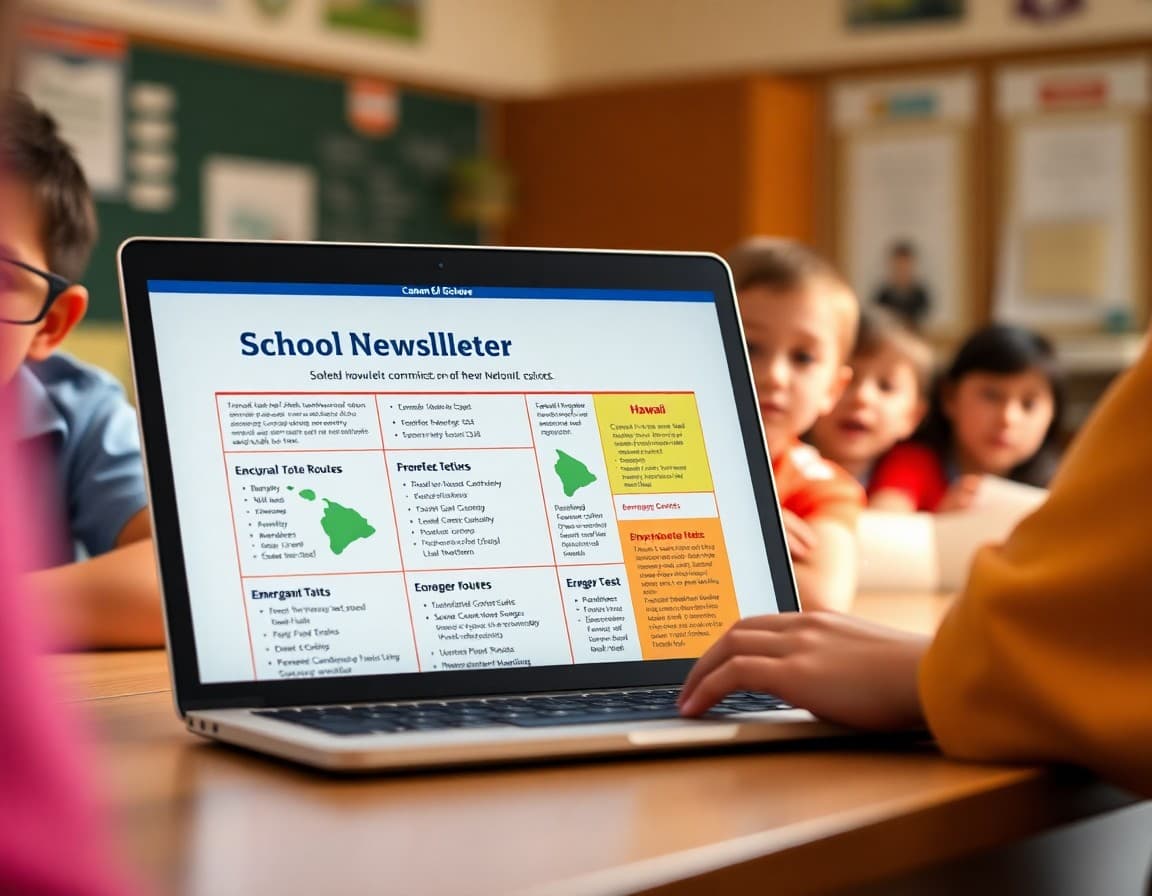
Hawaii school safety communication operates in a category of its own. No other state requires school administrators to address tsunami evacuation, volcanic air quality, and hurricane preparedness in the same safety calendar. These are not hypothetical scenarios. They are documented, recurring events that have affected Hawaii schools and will again.
Here is how Hawaii school safety newsletters can address these realities clearly and without unnecessary alarm.
Tsunami Evacuation Procedures Every Family Should Know
Every school in a tsunami inundation zone should include evacuation procedures in its annual back-to-school safety newsletter. Name the assembly point. Describe the evacuation route. Explain what triggers an evacuation order versus a warning and how students are moved during school hours. Tell families how they will be notified once students are safe at the high-ground assembly site.
A sample line: "In the event of a tsunami warning, students will evacuate on foot to [assembly point] via [route]. Staff are trained in the route and timing. Families should not attempt to pick up students during an evacuation. You will receive a message once students are confirmed safe at the assembly site."
Volcanic Emissions and VOG Protocol
Schools on the Big Island and in communities affected by Kilauea or other volcanic activity should send a VOG protocol communication each year. Cover the air quality index threshold that modifies outdoor activities, how ventilation systems are managed during elevated VOG, what families should do if a student has respiratory sensitivities, and how families will be notified if sudden volcanic activity requires a change to the school day.
Hurricane Season Communication
Hawaii hurricane season runs June through November. Send a hurricane communication before June 1 each year. Explain how school closure decisions are made, the notification timeline and channels, and what to do if a storm develops during school hours. Reference Hawaii Emergency Management Agency as the authoritative source for evacuation zone information.
Lockdown and Active Threat Drill Notification
Hawaii schools conducting lockdown or ALICE drills should send advance notice before each drill. State the drill type, the date, what students will practice, and that teachers prepare students beforehand. Note counselor availability. Hawaii families, like families everywhere, approach active threat drill notifications with a range of emotions. A calm, direct, specific notice is the most helpful communication.
Visitor Policy and Campus Access
Communicate any changes to your visitor policy clearly in writing. Hawaii school communities are often tight-knit, and access policies that seem impersonal can create friction without a clear explanation. A brief rationale, tied to your school's safety plan, is usually enough to maintain family cooperation with new procedures.
Reunification in a Multi-Island Context
Hawaii families who live or work on different parts of the same island, or who have family networks spread across islands, may face logistical challenges during reunification. Cover your reunification procedures clearly: the site, the identification required, the check-in process, and how to handle situations where a listed guardian cannot be reached in time.
Using Daystage to Keep Communication Consistent
Hawaii principals who use Daystage for safety newsletters report that the consistent format helps families recognize safety communications across a complex hazard calendar. When a tsunami warning, VOG event, and hurricane season overlap, having a familiar, trusted communication format matters.
Prepare Before the Hazard Activates
The safety newsletters sent before any emergency occurs are the ones that make emergency communication work. Hawaii families who have read the tsunami evacuation procedure, the VOG protocol, and the hurricane communication before any of those events happen are significantly better prepared when they do.
Get one newsletter idea every week.
Free. For teachers. No spam.
Frequently asked questions
What unique hazards should Hawaii school safety newsletters address?
Hawaii schools face hazards that are rare or absent in most other states: tsunamis, volcanic eruptions and volcanic air quality issues (VOG), hurricanes, and in some areas, lava flow risk. Safety newsletters should address the specific hazards relevant to each island and community, alongside standard lockdown, shelter-in-place, and reunification protocols.
How should Hawaii schools communicate tsunami evacuation procedures to families?
Every school in a tsunami hazard zone should include its evacuation route and assembly point in the annual safety newsletter. Explain what triggers a tsunami warning, how students are moved, and how families will be notified once students are at the safe assembly site. Name the specific high-ground location and the route students take to reach it.
How do Hawaii schools address volcanic air quality in safety communication?
Schools on the Big Island and in areas affected by volcanic emissions should send a VOG protocol communication annually. Cover the air quality threshold that triggers modified school operations, what modifications look like for outdoor activities and ventilation, and how families will be notified during elevated VOG events. Include guidance for students with asthma or respiratory sensitivities.
How do Hawaii schools communicate hurricane preparedness to families?
Send a hurricane season communication before June 1 covering closure decision criteria, the notification timeline and channels, and what families should do if a storm threatens during school hours. Reference Hawaii Emergency Management Agency guidance so families know where to find additional information beyond what the school provides.
What platform do Hawaii schools use to send consistent safety newsletters?
Hawaii principals and safety coordinators use Daystage to build and send structured safety newsletters with consistent format throughout the year. For schools managing multiple hazard types across a diverse school community, a reliable communication platform ensures all families receive clear safety information.

Adi Ackerman
Author
Adi Ackerman is a former classroom teacher and curriculum writer with 8 years in K-8 schools. She writes about school communication, parent engagement, and what actually works in real classrooms.
More for School Safety
School Safety Newsletter Guide: What Principals and Safety Coordinators Should Be Communicating All Year
School Safety · 7 min read
School Weather Emergency Communication: What Families Need to Know Before a Storm Closes School
School Safety · 5 min read
Hurricane and Tornado Preparedness Newsletter: What School Families Need to Know Before Storm Season
School Safety · 5 min read
Ready to send your first newsletter?
3 newsletters free. No credit card. First one ready in under 5 minutes.
Get started free