
Alaska School Safety Newsletter: Communicating Safety in Remote and Rural Schools
Alaska schools operate under safety conditions that do not appear in most national school safety guides. A principal in Bethel is not managing the same risk profile as a principal in Phoenix. Earthquakes, tsunamis, extreme cold, and response times measured in hours rather than minutes are part of the planning reality for many Alaska schools. The safety newsletter needs to reflect that reality.
Here is how Alaska schools can build safety communication that actually fits their context.
Lead With What Families in Your Community Actually Face
Generic safety language does not build confidence in communities that know their specific risks. A family in Kodiak knows earthquake and tsunami preparedness matters. A family in Fairbanks knows extreme cold weather protocols matter. A family in Juneau knows what a landslide warning looks like. Start your safety communication with the risks your community recognizes, not with a national template.
This specificity signals to families that the safety plan was built for their school, not copied from a state handbook.
Earthquake and Tsunami Protocol Communication
Schools in seismically active or coastal areas should include earthquake and tsunami procedures in their annual safety newsletter. Cover the drop-cover-hold-on procedure, the criteria for initiating a tsunami evacuation, the designated evacuation route and assembly point, and how families will be notified once students are accounted for.
Name the specific high-ground site if your school has one. Families who know that students will shelter at the community center on the hill have a mental map they can act on during an actual event.
Cold Weather Emergency Procedures
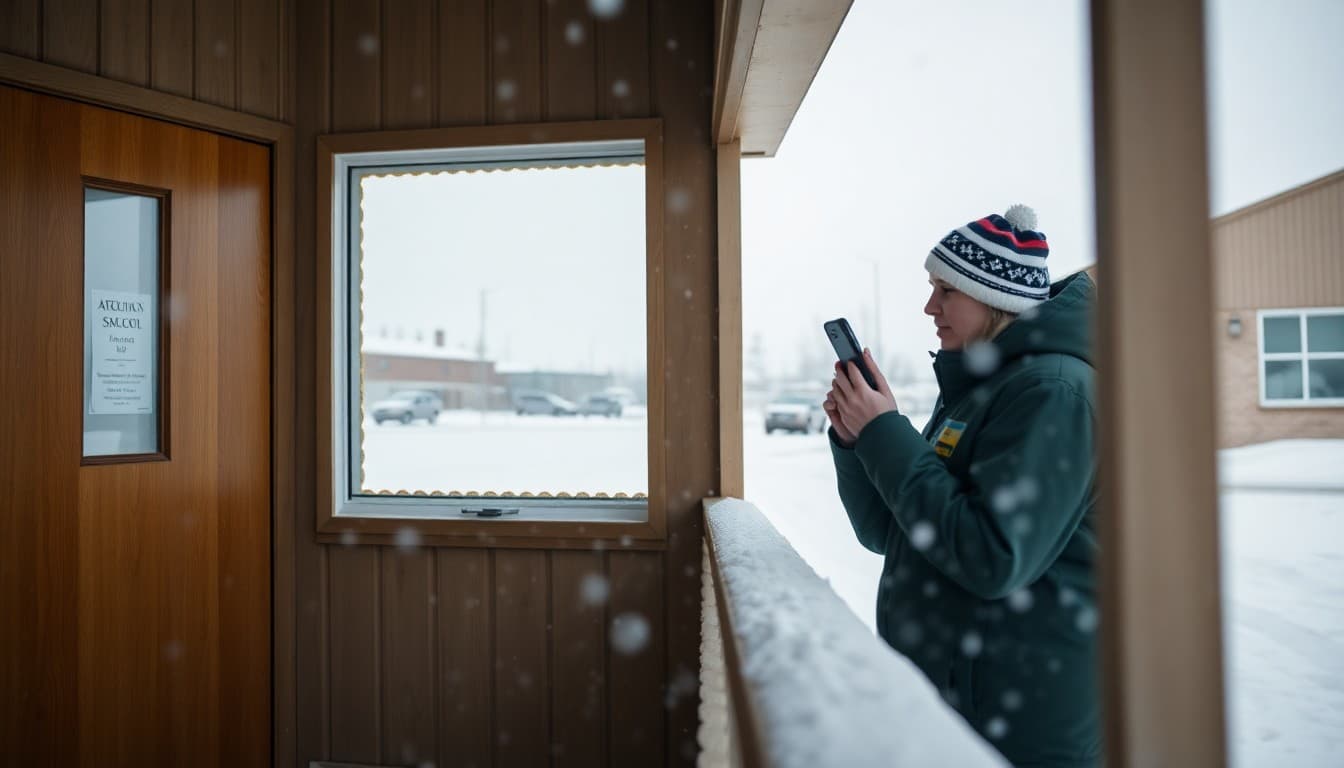
Alaska schools should communicate cold weather emergency procedures clearly at the start of every school year. What happens if the heating system fails? What is the threshold for early dismissal due to cold? How are families notified if school is canceled or delayed due to weather? What should students wear and bring during winter months?
These are questions families have every fall. Answering them in a safety newsletter before the first cold snap removes uncertainty and reduces the volume of calls administrators receive when weather worsens.
Communication Channels in Remote and Rural Communities
In rural Alaska, the assumption that every family has reliable internet access is wrong. Your safety newsletter should state which communication channels you use for different types of messages: email and digital platforms for routine updates, phone trees or radio for emergency notifications when connectivity is uncertain, and physical notices posted at community gathering points when needed.
Tell families explicitly: "If you do not receive our digital messages reliably, contact the office so we can add you to our phone notification list." This is not a failure of the system. It is an honest acknowledgment of local conditions.
Extended Response Times Require Extended Family Preparation
In communities where emergency medical or law enforcement response may take hours, families need to know that the school has trained first responders on staff, that the school has medical supplies appropriate to the distance from the nearest hospital, and that they will receive updates even when the situation is unresolved.
This is not alarming information. It is reassuring. Families who know the school has planned for delayed external response are more confident in the institution's ability to manage a situation until help arrives.
Wildlife Safety in Rural Communities
Some Alaska schools need to address wildlife encounters in their safety communication. If your school is in an area where students may encounter bears, moose, or other wildlife on the way to school or during outdoor activities, include your protocol in writing. Parents want to know what the school teaches students to do, what staff are trained for, and who to contact if an animal is spotted near school grounds.
Building a Template That Works for Alaska Conditions
A good Alaska school safety newsletter template includes: the school's primary and backup communication channels, seasonal safety protocols for the current time of year, emergency contacts including any local tribal, borough, or village safety resources, and one specific action families can take to prepare at home.
Daystage gives administrators a structured platform to build and send these newsletters consistently, even when managing the demands of a small staff and a community with complex needs.
Consistency Signals Competence
In small communities, trust in institutions is built person by person. When families receive consistent, clear safety communication from the school throughout the year, they arrive at emergencies with less panic and more confidence. That trust starts with the newsletter that arrives before anything goes wrong.
Get one newsletter idea every week.
Free. For teachers. No spam.
Frequently asked questions
What unique safety topics should Alaska school newsletters address?
Alaska schools face safety challenges that schools in most other states do not: extreme cold weather, earthquake and tsunami risk in coastal communities, remote locations with limited emergency response times, and transportation delays due to weather. Safety newsletters should address each of these with specific protocols rather than generic emergency language.
How should Alaska schools communicate about earthquake and tsunami drills?
Explain the drill type, the specific actions students will take, and the evacuation route if the school is in a tsunami hazard zone. Families in coastal communities should know the school's designated high ground evacuation site and how they will be notified once students are safe. Annual notification of these procedures is essential for new families.
How do remote Alaska schools communicate with families who have limited connectivity?
Multi-channel communication is critical in rural Alaska. Schools should use whatever combination of email, text, radio, and community boards reaches their specific families. Safety newsletters should state clearly which channels will be used for emergencies and which require an internet connection, so families know what to expect if connectivity is down.
How often should Alaska schools send safety newsletters?
Four times per year at minimum, with additional communications before major drill seasons and at the start and end of winter when weather-related procedures are most relevant. Schools in high-seismic or tsunami-risk areas should send earthquake and tsunami protocol reminders annually at the start of the school year.
What tool helps Alaska schools send consistent safety newsletters?
Daystage allows principals and safety coordinators to write, format, and send safety newsletters to their entire school community from any device. For schools with staff managing multiple responsibilities, having a reliable platform means safety communication does not fall through the cracks during busy periods.

Adi Ackerman
Author
Adi Ackerman is a former classroom teacher and curriculum writer with 8 years in K-8 schools. She writes about school communication, parent engagement, and what actually works in real classrooms.
More for School Safety
School Safety Newsletter Guide: What Principals and Safety Coordinators Should Be Communicating All Year
School Safety · 7 min read
School Weather Emergency Communication: What Families Need to Know Before a Storm Closes School
School Safety · 5 min read
School Emergency Plan Newsletter for Families: Sharing What Parents Need to Know Without Overwhelming Them
School Safety · 6 min read
Ready to send your first newsletter?
3 newsletters free. No credit card. First one ready in under 5 minutes.
Get started free