
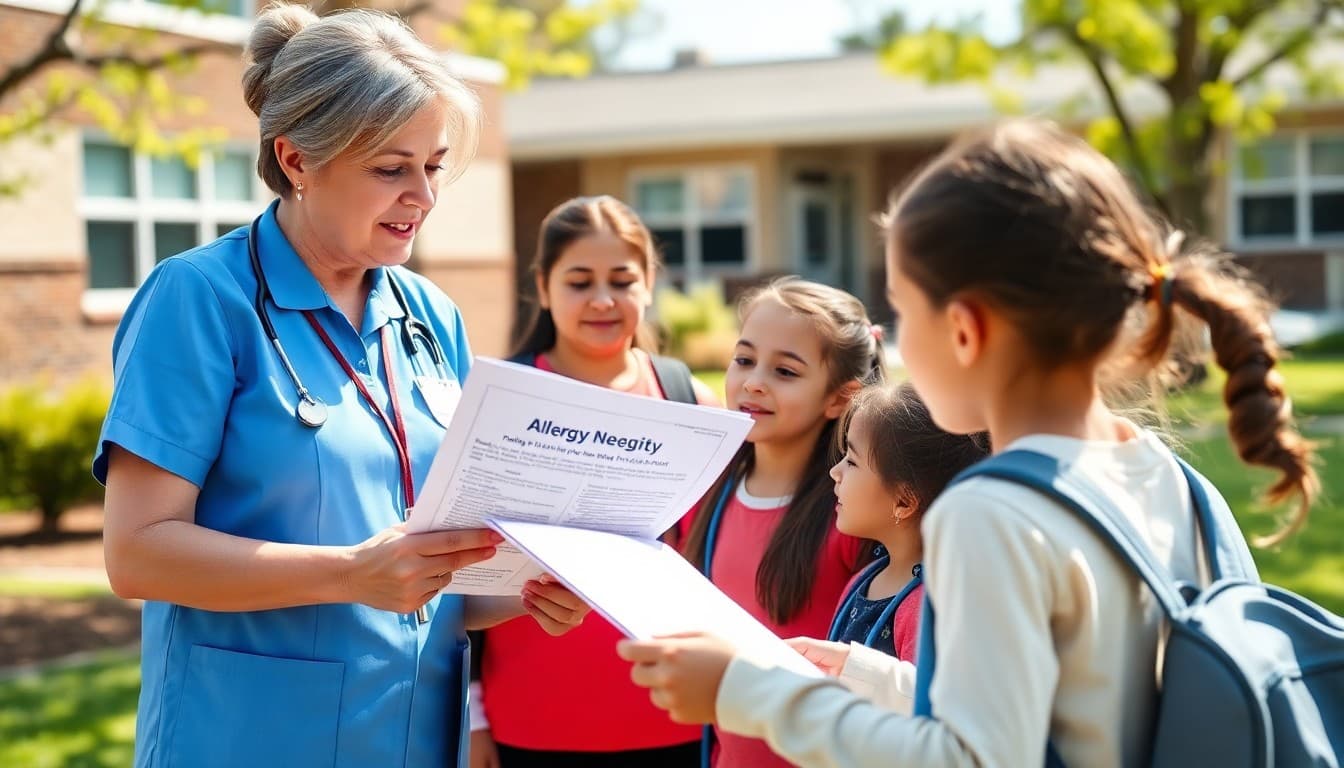
School Nurse Spring Newsletter: Allergies and Warm Weather Tips

Spring in schools brings pollen, ticks, field days, and students who are eager to be outside after months of cold weather. A spring health newsletter that addresses all of these at once gives families the practical information they need for the busiest outdoor season of the school year and prepares the school community for the health forms and immunization updates due before fall enrollment.
Address Seasonal Allergy Management Specifically
Tree pollen peaks in April and May in most regions, and grass pollen peaks in May and June. Students with known allergies to these triggers often experience their worst symptoms of the year during spring outdoor recess and field trips. Encourage families to give daily allergy medication in the morning before school rather than waiting for symptoms to become severe. If a student's allergy medication is changing or a new antihistamine prescription is being added, remind families that any new prescription medication given at school requires updated authorization.
Explain the School's Sunscreen Policy
Be specific about what the school permits. If students can bring their own sunscreen and self-apply before going outside, state that. If sunscreen application requires parent authorization on file, include the form link. Note any products that are not permitted (aerosol sprays near other students, for example). For younger students who cannot self-apply reliably, suggest families apply sunscreen before the school day begins, particularly on outdoor field day or physical education days. SPF 30 or higher with broad-spectrum protection is the standard recommendation for outdoor school activities.
Cover Tick and Insect Prevention for Outdoor Activities
Spring field trips, outdoor education programs, and extended outdoor recess in wooded or grassy areas increase tick exposure. Encourage families to apply EPA-registered insect repellent before school on relevant days. Remind students to tuck pants into socks for field-based activities. Describe the school's tick removal procedure: if a tick is found on a student during the school day, the nurse removes it, documents the location and time, and sends a note home. Families should monitor the site for the next 30 days and contact a physician if a rash or fever develops.
Promote Hydration as Temperatures Rise
Students who are mildly dehydrated show measurable declines in concentration and physical performance. Encourage families to send water bottles daily as spring temperatures increase. Note the specific places in the school where students can refill bottles. If your school has a water bottle fill station, mention it. For students with certain medical conditions or taking specific medications that increase dehydration risk, the nurse may have provided a specific recommendation; families should ensure their child's water access plan is in place before outdoor season begins.
Template Excerpt: Spring Outdoor Health Reminder
Here is a section you can adapt:
"With warmer weather and more time outdoors, a few reminders: Send your student with a labeled water bottle every day. Apply sunscreen (SPF 30 or higher) before school on outdoor education days. If your student takes daily allergy medication, give it at home before school on high-pollen days. If your student found a tick or was in a heavily wooded area this weekend, please let the nurse know at drop-off so we can monitor throughout the day."
Remind Families of End-of-Year Health Form Requirements
Spring is the right time to notify families that any health forms required for fall enrollment, such as updated immunization records, annual sports physical clearances, or physician-signed medication authorization renewals, should be scheduled now rather than in August. Pediatric offices book up quickly in July and August before school starts. A reminder in the spring newsletter reduces the scramble of incomplete health records at fall registration.
Note the Immunization Requirements for the Following Year
Some grade transitions require additional immunizations: typically entry into seventh grade (Tdap booster and meningococcal vaccine) and entry into kindergarten (full vaccine series verification). Send the specific list for your state's requirements and the school year's grade transitions. Include a link to the state health department's immunization schedule. Families who learn about a required booster in May have time to schedule it before summer ends.
Close With Outdoor Event Dates and the Nurse's Contact
End with the dates for any outdoor school events: field day, outdoor ed, science garden planting, or spring track and field. Include a one-line health reminder for each event (bring water, apply sunscreen, wear closed-toe shoes). Close with the nurse's phone number and email. A spring health newsletter that ends with something families can calendar and act on is more useful than one that fades out into generic wellness advice.
Get one newsletter idea every week.
Free. For teachers. No spam.
Frequently asked questions
What should a school nurse spring newsletter cover?
Cover seasonal allergy management (medications, triggers, when to stay home), outdoor safety rules for warmer temperatures, tick and insect prevention for outdoor recess and field trips, sunscreen policy and whether students can self-apply at school, hydration expectations as temperatures rise, and any end-of-year health form requirements or immunization updates needed before next fall. Spring is a transition season with multiple distinct health concerns.
Can students bring and apply their own sunscreen at school?
Sunscreen policies vary by district. In many states, sunscreen is classified as an over-the-counter drug and requires a signed parent authorization form before the nurse or a teacher can apply it. Students who can self-apply (typically third grade and older) may be permitted to do so independently. State your school's specific policy clearly in the newsletter so families know what to send with their child on outdoor field day or outdoor ed days.
What tick prevention guidance should schools give families?
Encourage families to apply EPA-registered insect repellent before school on days with outdoor recess in grassy or wooded areas. Remind students to wear closed-toe shoes and tuck pants into socks when walking through tall grass. After outdoor activities, families should do a tick check at home. If a tick is found attached at school, the nurse will remove it and send a note home describing the location and time of removal. Lyme disease risk varies by region; reference your local health department's guidance.
How do I communicate about spring allergies without alarming families unnecessarily?
Use a matter-of-fact tone and focus on practical management: if your child takes daily allergy medication, give it in the morning before school. If your child wears contact lenses, glasses may be more comfortable on high pollen days. Antihistamines like cetirizine are non-sedating and appropriate for most students. Direct families to their child's physician for prescription options if over-the-counter options are not working. Avoid overstating the severity of typical seasonal allergies.
Can Daystage help nurses send spring health newsletters that include outdoor day schedules?
Yes. Daystage lets school nurses embed field day schedules, outdoor ed permission form links, and sunscreen policy details directly in the spring newsletter. Families receive everything they need in one place rather than receiving three separate paper forms on the same day.

Adi Ackerman
Author
Adi Ackerman is a former classroom teacher and curriculum writer with 8 years in K-8 schools. She writes about school communication, parent engagement, and what actually works in real classrooms.
More for School Nurses
Allergy Awareness Newsletter: How to Communicate Food and Environmental Allergies to School Families
School Nurses · 6 min read
School Nurse Back-to-School Health Newsletter: Everything to Cover in August
School Nurses · 7 min read
Chronic Condition Management Newsletter: Communicating Asthma, Diabetes, and Epilepsy Protocols
School Nurses · 6 min read
Ready to send your first newsletter?
3 newsletters free. No credit card. First one ready in under 5 minutes.
Get started free