
School Nurse Scoliosis Update Newsletter: Screening and Referral
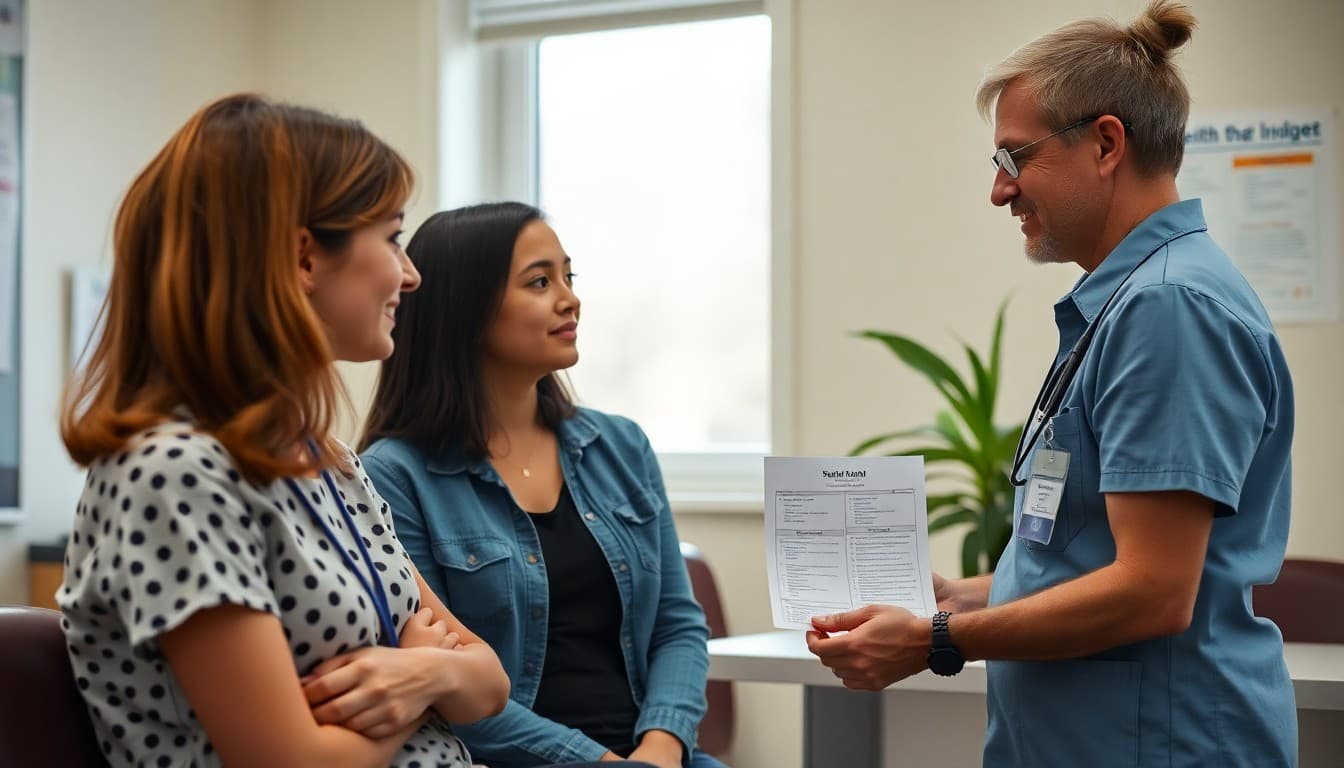
A scoliosis referral letter arriving in the mail surprises most families, particularly those with no family history of spinal curvature. The gap between "the school sent home a notice" and "what this actually means for my child" is wide enough to cause significant unnecessary anxiety. A clear nurse newsletter that explains the screening process and puts a referral in context serves both the families who receive a positive screen and the broader school community who are about to find out their child will be screened.
Explain What Scoliosis Is
Scoliosis is a lateral curvature of the spine of 10 degrees or more, often developing during the adolescent growth spurt. The most common type is adolescent idiopathic scoliosis, which has no identifiable cause. Many people have a very slight spinal curve without it causing any symptoms or requiring treatment. Severe curves can affect posture, rib cage position, and in very advanced cases, lung and heart function. The goal of school screening is to catch curves early when treatment options are most effective, not to alarm families about a condition that is often mild.
State Which Grades Will Be Screened and When
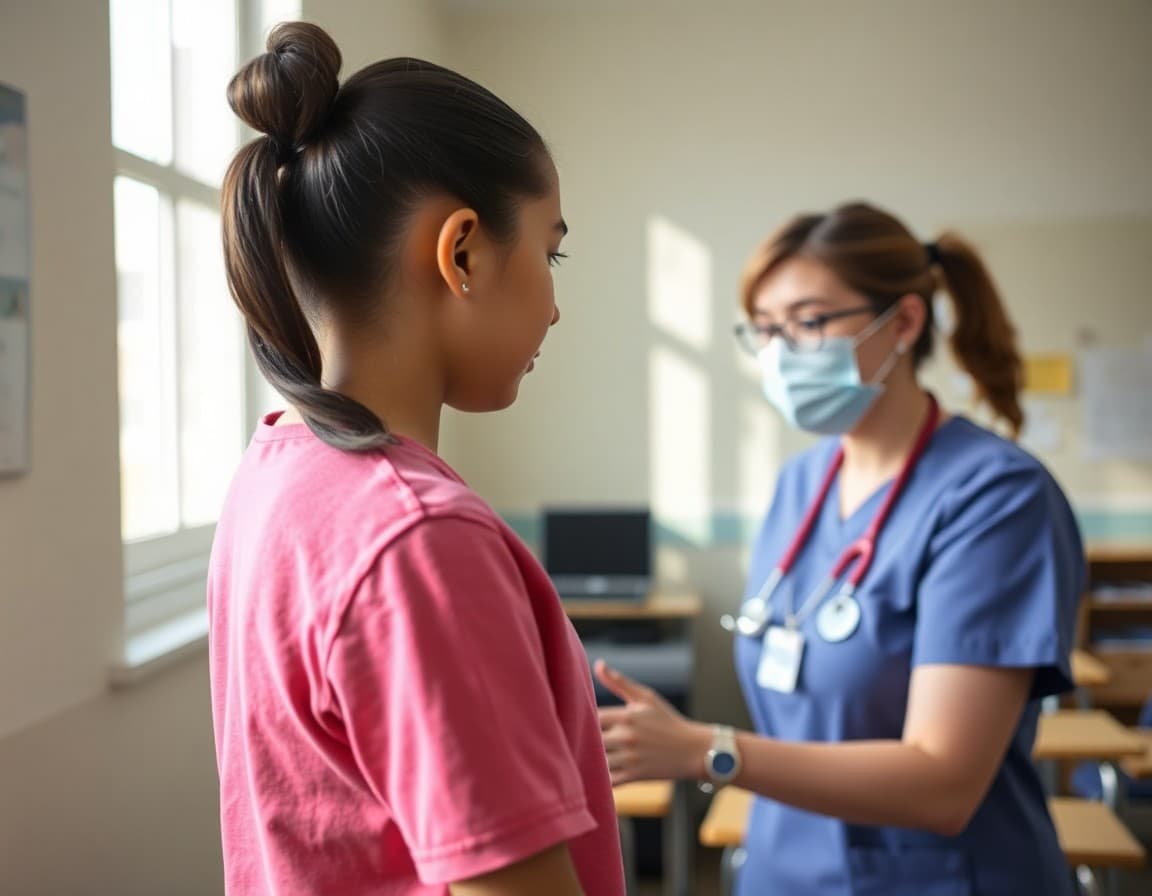
Name the specific grades and the approximate timeframe for screening. If students are screened in PE class or during a scheduled nurse visit, note the location and whether families need to do anything to prepare. Students are screened with a shirt removed or in a gown to allow visualization of the back. Note this in the newsletter so families can communicate it to their student in advance if helpful. No preparation beyond normal school attendance is required.
Describe the Adams Forward Bend Test
During the test, the student bends forward at the waist with both arms extended toward the floor and knees straight. The nurse observes from behind for asymmetry in the rib cage or back, which appears as one side being raised higher than the other when the student bends forward. The nurse may use a scoliometer, a small inclinometer that measures the angle of trunk rotation. A measurement of 7 degrees or more on the scoliometer typically triggers a referral. The test takes approximately two minutes per student.
Explain What a Referral Does and Does Not Mean
A positive school scoliosis screen does not mean the student has scoliosis or needs treatment. It means a spinal asymmetry was noted during a screening test and warrants further evaluation by a physician. Approximately 30 to 40 percent of students referred after school screenings are found not to have clinically significant scoliosis on X-ray evaluation. A referral is a recommendation for a closer look, not a diagnosis. Families should receive this context with the referral letter rather than discovering it after spending two weeks in unnecessary concern.
Template Excerpt: Scoliosis Referral Letter
Here is a referral letter section you can adapt:
"During our school scoliosis screening on [DATE], your student was found to have a spinal asymmetry that warrants follow-up evaluation. This is not a diagnosis of scoliosis. We recommend scheduling an appointment with your student's pediatrician or a pediatric orthopedic specialist. Please bring this letter to the appointment and ask the provider to complete the enclosed follow-up form and return it to the school nurse at nurse@school.edu. Questions? Contact Nurse Johnson at (555) 314-4200."
Describe the Physician Follow-Up Process
The physician will examine the spine physically and will typically order a standing full-spine X-ray if they identify clinical signs of scoliosis. The X-ray allows measurement of the Cobb angle, the standard measure of spinal curvature. Curves under 10 degrees are not classified as scoliosis. Curves between 10 and 24 degrees are monitored with X-rays every six to twelve months during active growth. Curves of 25 degrees or more may prompt referral to a pediatric orthopedic specialist for bracing evaluation. Curves that progress to 45 degrees or more may require surgical consultation.
Cover Signs Families Can Watch for at Home
Signs that may indicate scoliosis that families can observe at home include: one shoulder appearing higher than the other; one shoulder blade protruding more than the other; the head appearing off-center; one hip appearing higher or more prominent; uneven waistline; or the student reporting back pain. These signs do not confirm scoliosis but suggest a conversation with the pediatrician is warranted. Families should not ask their student to perform the forward bend test at home as an informal screen; visual assessment by a trained provider is needed for accuracy.
Close With Follow-Up Documentation and Nurse Contact
End with the follow-up documentation requirement: families should return the completed physician evaluation form to the nurse's office after the follow-up appointment. Give the nurse's phone number and email. Note that the nurse keeps a record of all screening results and follow-up documentation and that families can request a copy of their student's screening record at any time. A nurse who is organized, accessible, and clear about the process earns the community's cooperation in completing the screening program each year.
Get one newsletter idea every week.
Free. For teachers. No spam.
Frequently asked questions
What should a school nurse scoliosis newsletter include?
Cover what scoliosis is and why early detection matters, which grades are screened and when, how the Adams forward bend test works, what a referral means and does not mean, what follow-up evaluation looks like, and how families should respond to a referral letter. Include the follow-up form the school requires after the physician evaluation. Families who receive a scoliosis referral often panic without understanding what the result actually implies.
Which grades are typically screened for scoliosis?
Most state mandates for scoliosis screening focus on the grades when adolescent idiopathic scoliosis most commonly presents: fifth or sixth grade for girls and seventh or eighth grade for boys, reflecting the typical onset timing relative to pubertal growth spurts. Some states screen additional grades or discontinue school-based screening in accordance with updated medical society guidelines. Check your state's current requirements and list the specific grades screened in the newsletter.
What does the Adams forward bend test check?
The Adams forward bend test asks the student to bend forward at the waist with arms hanging freely toward the floor. The nurse observes from behind for a rib hump or a raised area on one side of the back, which can indicate spinal rotation associated with scoliosis. A scoliometer may be used to measure the angle of trunk rotation. This test is a screening, not a diagnostic procedure. A positive screen means the student should be evaluated by a physician to determine whether a spinal curve is present and how large it is.
What happens after a scoliosis referral?
After receiving a school referral, families should schedule an appointment with the student's pediatrician or a pediatric orthopedic specialist. The physician will examine the spine and typically order a standing anteroposterior spinal X-ray to measure the Cobb angle (the degree of curvature). A curve of less than 10 degrees is not considered scoliosis. A curve between 10 and 25 degrees is typically monitored with periodic X-rays. A curve of 25 degrees or greater may require treatment, which ranges from observation to bracing to surgery for severe curves.
Can Daystage help nurses send scoliosis referral notices to specific families?
Yes. Daystage lets nurses send targeted scoliosis referral letters to only the families of students with a positive screen result, with the follow-up form attached and links to local pediatric orthopedic resources included. The digital message is more reliably received than a paper note, and the nurse can track whether the message has been opened.

Adi Ackerman
Author
Adi Ackerman is a former classroom teacher and curriculum writer with 8 years in K-8 schools. She writes about school communication, parent engagement, and what actually works in real classrooms.
More for School Nurses
School Nurse Back-to-School Health Newsletter: Everything to Cover in August
School Nurses · 7 min read
Chronic Condition Management Newsletter: Communicating Asthma, Diabetes, and Epilepsy Protocols
School Nurses · 6 min read
Allergy Awareness Newsletter: How to Communicate Food and Environmental Allergies to School Families
School Nurses · 6 min read
Ready to send your first newsletter?
3 newsletters free. No credit card. First one ready in under 5 minutes.
Get started free