

School Nurse Ringworm Newsletter: Protocol and Treatment
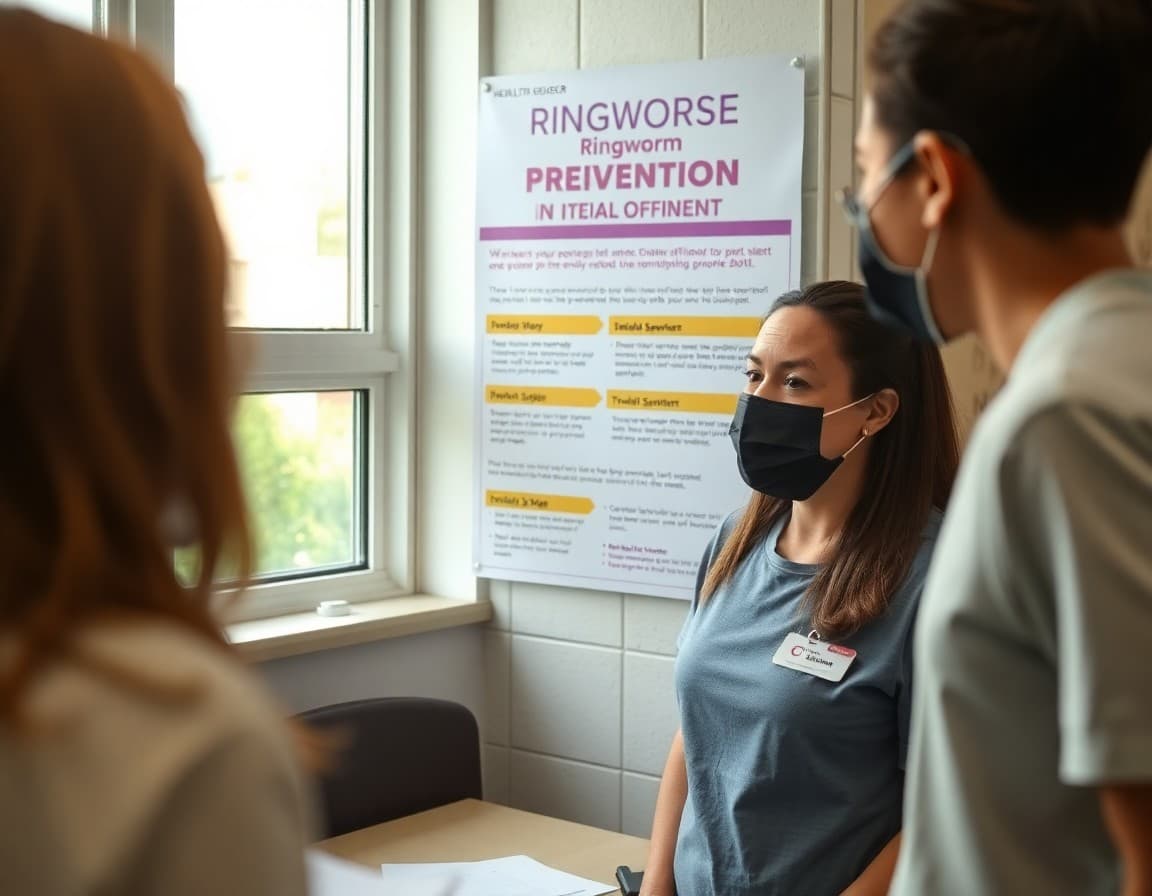
The name "ringworm" reliably produces alarm in parents who picture a parasitic worm, which is not what it is. Ringworm is a fungal skin infection caused by the same class of fungi responsible for athlete's foot and jock itch. It is common, contagious through contact, and treatable with over-the-counter antifungal products in most cases. A clear nurse newsletter removes the alarm and replaces it with the specific information families need to manage it.
Clarify What Ringworm Actually Is
Ringworm (tinea) is a fungal infection of the skin caused by dermatophyte fungi. There is no worm involved. The name comes from the characteristic ring-shaped rash the infection often produces. Tinea corporis refers to ringworm on the body, tinea capitis to ringworm of the scalp, tinea pedis to athlete's foot, and tinea cruris to jock itch. They are all the same class of fungal infection in different locations. Clearing up this misconception at the start of the newsletter reduces the emotional charge families bring to the conversation.
Describe What the Rash Looks Like
Body ringworm typically appears as a circular or oval rash with a slightly raised, scaly border and a clearer center that gives it the ring appearance. The border may be red or pink and the rash may be itchy. On the scalp, it may present as circular patches of hair loss or scaling. The rash is not always perfectly circular, and it can be confused with eczema or psoriasis. Families who are unsure whether a rash is ringworm should have a physician look at it, particularly before starting treatment, to confirm the diagnosis.
Explain How It Spreads
Ringworm spreads through direct skin-to-skin contact with an infected person, contact with an infected animal (dogs and cats are common carriers), or contact with contaminated surfaces or objects. In school settings, common transmission routes include wrestling or other contact sports, shared towels or sports equipment, shared combs or hats, and contact with infected animals at school events. It does not spread through the air, through normal classroom contact, or through shared school desks.
State the Exclusion and Return Policy
Most current public health guidance, including CDC recommendations, does not require excluding students with covered body ringworm lesions. A student whose ringworm is covered by clothing or a bandage and who is beginning antifungal treatment may attend school. Scalp ringworm is handled differently by some districts due to the difficulty of covering it completely; state your district's specific policy. If your school requires a physician note to return after ringworm, include that requirement and how to submit it.
Template Excerpt: Ringworm Parent Notification
Here is a section you can use as a classroom notification:
"A case of ringworm (a fungal skin infection) has been identified in our school. Ringworm appears as a circular, scaly rash and is spread through skin contact, not through the air. Please check your student for any new circular or ring-shaped rashes, particularly on the arms, legs, torso, or scalp. Treatment is available over-the-counter at most pharmacies. A physician visit is recommended for scalp ringworm. Students with covered body lesions who are beginning treatment may attend school per our district policy."
Explain Treatment Options
Body ringworm typically responds well to over-the-counter antifungal creams: clotrimazole, miconazole, or terbinafine applied to the affected area twice daily for two to four weeks. The rash often improves visibly within one to two weeks, but treatment should continue for the full course to prevent recurrence. Scalp ringworm requires prescription oral antifungal medication (typically griseofulvin or terbinafine tablets) because topical creams do not penetrate the hair follicle. Families with scalp ringworm should schedule a physician appointment rather than attempting home treatment.
Describe Prevention Measures for the School Community
Practical prevention steps include not sharing personal items like towels, clothing, combs, hats, or sports equipment; showering after contact sports or shared gym equipment use; cleaning shared athletic equipment with an antifungal or disinfectant spray; and checking household pets for skin lesions if ringworm is identified in the family. Remind students who participate in wrestling or judo that direct skin-to-skin contact with a visibly infected area of skin should be avoided and that wearing a rash guard or long sleeves provides some physical barrier protection.
Close With the Nurse's Contact and a Note on Follow-Up
End with the nurse's phone number and email. Note that families with questions about whether a specific rash is ringworm can email the nurse a photo for a preliminary assessment before scheduling a physician appointment. Confirm that the school monitors identified cases through treatment and that a return visit note may be required depending on your district policy. A nurse who is responsive and accessible during a communicable condition situation builds lasting trust with the school community.
Get one newsletter idea every week.
Free. For teachers. No spam.
Frequently asked questions
What should a school nurse ringworm newsletter include?
Cover what ringworm is (a fungal infection, not a worm), what it looks like, how it spreads in school settings, the school's exclusion and return-to-school policy, how families should treat it at home, and when a physician visit is warranted versus when over-the-counter treatment is sufficient. Many families react with alarm to the name 'ringworm' and need reassurance that it is a common, treatable fungal skin condition.
Does a student with ringworm have to stay home from school?
Exclusion policies for ringworm vary by district. Most health authorities, including the CDC, do not recommend excluding students with ringworm as long as the affected area is covered with clothing or a bandage and the student is beginning treatment. Some districts require physician clearance before return. State your school's specific policy clearly in the newsletter. A student who is being treated and whose lesion is covered poses minimal risk to classmates.
How does ringworm spread in school settings?
Ringworm spreads through direct skin contact with an infected person or animal, or through contact with contaminated surfaces like gym mats, shared towels, combs, or sports helmets. In school, it most commonly spreads through contact sports, shared athletic equipment, or shared personal care items. It does not spread through casual contact like sharing a desk or sitting near an infected student.
What is the recommended treatment for ringworm?
Most ringworm infections on the body (tinea corporis) or scalp (tinea capitis) respond well to antifungal treatment. Body ringworm can typically be treated with over-the-counter antifungal creams like clotrimazole or terbinafine applied twice daily for two to four weeks. Scalp ringworm requires prescription oral antifungal medication because topical creams do not penetrate the hair follicle effectively. Families whose child has ringworm on the scalp should see a physician for a prescription.
Can Daystage help nurses send ringworm notifications to a class or school community?
Yes. When ringworm is identified, a class-level or school-wide notification can be sent quickly through Daystage with information about what to look for, how to prevent spread, and the school's return-to-school policy. A calm, informative notification sent the same day reduces panic and replaces it with practical guidance.

Adi Ackerman
Author
Adi Ackerman is a former classroom teacher and curriculum writer with 8 years in K-8 schools. She writes about school communication, parent engagement, and what actually works in real classrooms.
More for School Nurses
Communicable Disease Outbreak Newsletter: What Schools Should Communicate During Active Outbreaks
School Nurses · 6 min read
School Nurse Back-to-School Health Newsletter: Everything to Cover in August
School Nurses · 7 min read
Allergy Awareness Newsletter: How to Communicate Food and Environmental Allergies to School Families
School Nurses · 6 min read
Ready to send your first newsletter?
3 newsletters free. No credit card. First one ready in under 5 minutes.
Get started free