

School Nurse Pink Eye Newsletter: Signs, Treatment, and Return
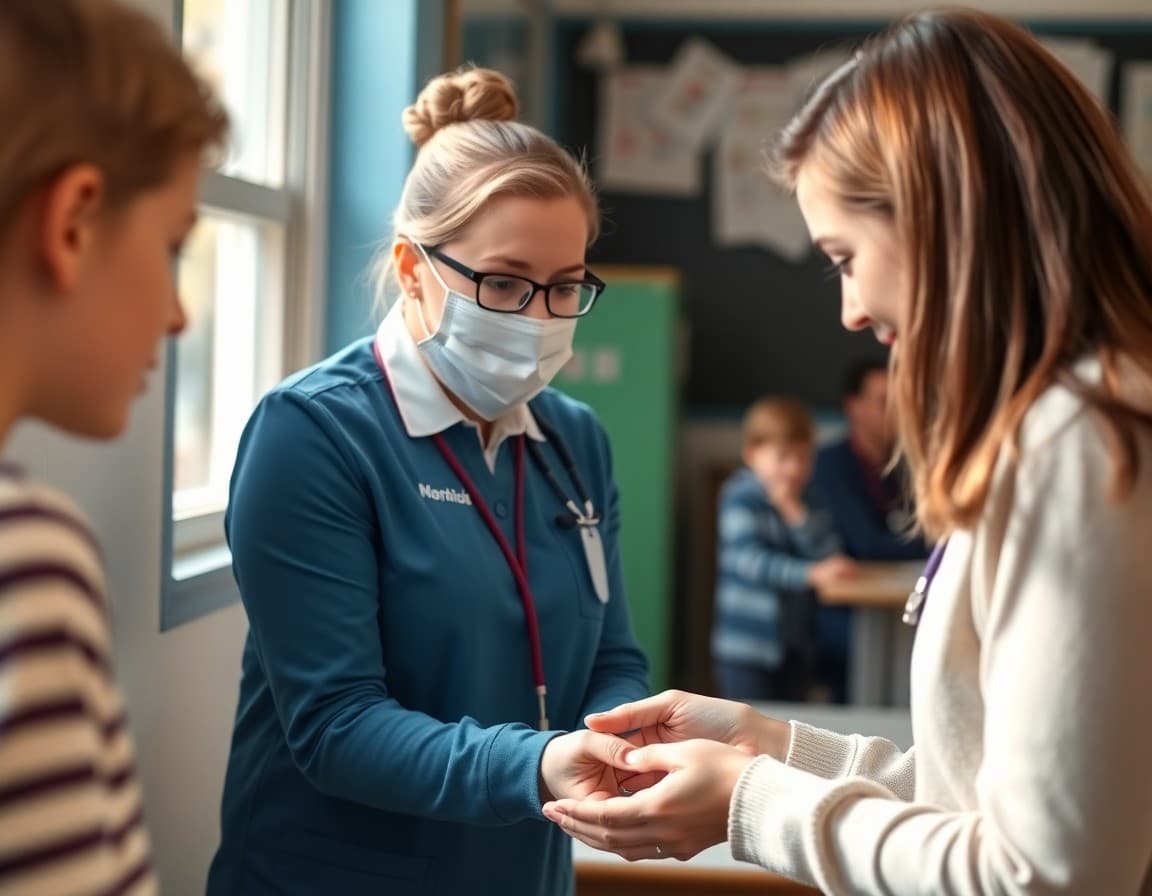
Pink eye is one of the most common reasons parents call the school nurse in the morning asking whether to send their child in. A clear newsletter that explains the difference between bacterial, viral, and allergic conjunctivitis, states the school's exclusion policy for each type, and describes the return criteria gives families the information they need to make the call at home rather than relying on the nurse's judgment over the phone at 7:30 AM.
Explain the Three Types of Conjunctivitis
Bacterial conjunctivitis is caused by bacteria and produces thick yellow or green discharge, crusting around the eye, and redness. It is contagious through direct or indirect contact with the discharge. Viral conjunctivitis is caused by a virus (often adenovirus or the virus associated with a common cold) and produces watery or clear discharge with redness, often alongside cold symptoms. It is also contagious. Allergic conjunctivitis is caused by allergen exposure and produces itchy, watery, red eyes that are not contagious. Only bacterial conjunctivitis responds to antibiotic eye drops.
State the School's Exclusion Policy for Each Type
Be specific. For bacterial conjunctivitis: students should stay home until they have completed 24 hours of antibiotic eye drop treatment and discharge is resolved or significantly reduced. For viral conjunctivitis: check your district's policy, as some districts do not require exclusion for viral pink eye with clear discharge if the student can maintain hand hygiene. For allergic conjunctivitis: no exclusion is necessary. Note that the nurse cannot diagnose the type of conjunctivitis; a physician's diagnosis and prescription determine the type and guide the return-to-school decision.
Describe the Signs Families Should Watch For at Home
Give families specific things to look for in the morning: thick yellow or green discharge or crusting around the eye that was not there the previous day; one or both eyes appearing redder than usual; the child rubbing their eye repeatedly and reporting itching or burning; light sensitivity; or a gritty or scratchy feeling described by older students. Any of these overnight changes warrants a call to the pediatrician before school rather than sending the child in and waiting to see how the day goes.
Explain How Pink Eye Spreads in School Settings
Bacterial and viral conjunctivitis spread through direct contact with discharge from an infected eye or through touching a contaminated surface and then touching the eyes. In school, the most common transmission routes are shared towels, goggle straps in PE, shared face coverings, and hand-to-face contact after touching shared surfaces. Remind families that the affected student should not share towels or pillowcases at home, should wash hands after touching their face, and should avoid rubbing their eye in class if they return before the discharge has fully resolved.
Template Excerpt: Pink Eye Classroom Notification
Here is a section you can adapt for a classroom-level notice:
"A case of conjunctivitis (pink eye) has been identified in your student's classroom. Students who develop symptoms (red eye, discharge, or crusting) should stay home and see a physician before returning to school. Students who do not have symptoms should attend as usual. Please remind your student to wash hands frequently, avoid touching their face, and not share personal items. Contact Nurse Rivera at nurse@school.edu with any questions."
Clarify When Antibiotic Eye Drops Are Necessary
Many families assume any case of pink eye requires a physician visit and antibiotic eye drops. This leads to unnecessary use of prescription antibiotics and pressure on families to get a same-day appointment. Clarify that viral and allergic conjunctivitis do not respond to antibiotic drops. Bacterial conjunctivitis, identified by thick colored discharge, does benefit from antibiotic treatment. A physician can usually diagnose the type during a brief office visit or telehealth appointment. Families who understand this distinction make better use of their healthcare resources.
Address Contact Lens Wearers Specifically
Students who wear contact lenses and develop any form of conjunctivitis should switch to glasses until the infection or irritation resolves. Contact lens wear during conjunctivitis significantly increases the risk of corneal involvement and potential vision complications. Include this brief note in the newsletter, particularly relevant for middle and high school students who may not tell a parent about mild eye redness if they are concerned about being told not to wear contacts.
Close With the Return Criteria and Nurse Contact
End with the specific criteria for returning to school: for bacterial conjunctivitis, 24 hours of antibiotic treatment completed and discharge reduced; for viral conjunctivitis, follow your district policy and physician guidance; for allergic conjunctivitis, no exclusion required. Give the nurse's phone number and email and note that families can send a photo of the eye to the nurse's email for a preliminary assessment before driving to the doctor's office. This small service builds significant goodwill and often prevents unnecessary physician visits.
Get one newsletter idea every week.
Free. For teachers. No spam.
Frequently asked questions
What should a school nurse pink eye newsletter include?
Cover the signs of conjunctivitis, the difference between bacterial and viral types, the exclusion and return-to-school policy for each type, how to prevent spread in the classroom, what treatment looks like, and when antibiotic eye drops are and are not necessary. Families often assume all pink eye requires antibiotics and prescription drops; clarifying this reduces unnecessary doctor visits and antibiotic overuse.
What are the symptoms of bacterial versus viral conjunctivitis?
Bacterial conjunctivitis typically produces thick yellow or green discharge, crusting that seals the eye shut overnight, and redness in one or both eyes. Viral conjunctivitis often produces watery or clear discharge, redness, and is frequently associated with an upper respiratory infection or recent cold. Allergic conjunctivitis produces itchy, watery eyes without discharge and is typically bilateral. Only bacterial conjunctivitis responds to antibiotic eye drops.
Does a student with pink eye need to stay home from school?
School exclusion policies for pink eye vary by district and by type. Many districts require exclusion for bacterial conjunctivitis until 24 hours of antibiotic treatment has been completed. Viral conjunctivitis may not require exclusion if the student can control hand-to-face contact and the eyes are not excessively weeping. Allergic conjunctivitis does not require exclusion. State your school's specific policy so families are not calling the nurse on the morning of to ask.
How should schools prevent pink eye from spreading in a classroom?
The most effective prevention steps are: handwashing before and after touching the face, not sharing personal items like towels, pillowcases, makeup, or goggles, wiping shared surfaces with an appropriate disinfectant, and excluding visibly symptomatic students until the exclusion criteria are met. In a classroom where a case has been identified, a brief reminder to students about not sharing personal items and increasing handwashing frequency is appropriate.
Can Daystage help schools send pink eye notifications to a specific classroom?
Yes. When pink eye is identified in a classroom, Daystage lets the nurse or teacher send a targeted notification to just those families with a prevention reminder and return-to-school policy summary. A classroom-level communication is more appropriate than a school-wide blast and avoids unnecessary alarm among families whose students were not exposed.

Adi Ackerman
Author
Adi Ackerman is a former classroom teacher and curriculum writer with 8 years in K-8 schools. She writes about school communication, parent engagement, and what actually works in real classrooms.
More for School Nurses
Communicable Disease Outbreak Newsletter: What Schools Should Communicate During Active Outbreaks
School Nurses · 6 min read
School Nurse Back-to-School Health Newsletter: Everything to Cover in August
School Nurses · 7 min read
Allergy Awareness Newsletter: How to Communicate Food and Environmental Allergies to School Families
School Nurses · 6 min read
Ready to send your first newsletter?
3 newsletters free. No credit card. First one ready in under 5 minutes.
Get started free