

School Nurse Hearing and Vision Newsletter: Screening Results
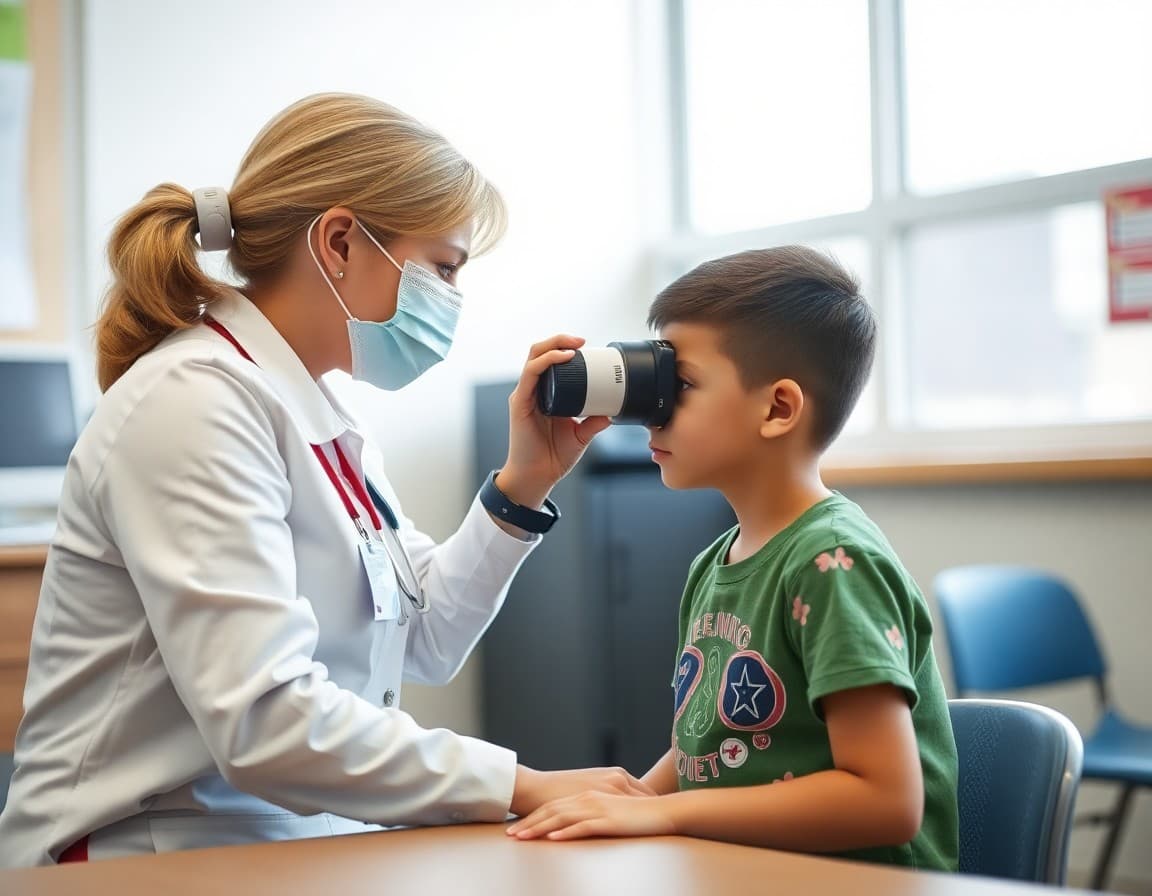
School vision and hearing screenings identify a significant number of students who have undiagnosed sensory issues affecting their ability to learn. A first-grader who consistently struggles to read from the board may have a refractive error, not a reading difficulty. A student who seems distracted in class may be mishearing instruction rather than not paying attention. The nurse newsletter on screenings is the communication that connects the test result to the appropriate next step for families who may not know what to do with a referral.
Explain When and Why Screenings Are Conducted
State the specific grades being screened this year and the month the screenings will occur. Explain briefly why regular screening matters: children often do not recognize or report vision and hearing difficulties because they have no comparison point for what normal sight or hearing should feel like. A child who has always had blurred distance vision assumes that is how everyone sees. Routine school screenings catch problems that might otherwise go unidentified for years.
Describe the Screening Procedures
The vision screening typically includes a visual acuity test using a letter or symbol chart at 20 feet (or the equivalent digital format), and may include a test for color vision deficiency in certain grades. The hearing screening uses an audiometer to present tones at different frequencies and volumes. Students respond by raising their hand or pressing a button when they hear the tone. The screening takes approximately 5 to 10 minutes per student and does not require any preparation from the student or family.
Clarify What the Screening Does Not Diagnose
School screenings are not comprehensive eye exams or full audiological evaluations. The vision screening checks for visual acuity at a specific distance and does not evaluate near vision, binocular vision, eye teaming, or ocular health. The hearing screening checks for responses to specific frequencies at standard thresholds and does not diagnose the cause of any hearing loss. A student who passes the school screening may still have visual or auditory processing issues that require further evaluation. A student who fails should see a specialist, not assume the screening was an error.
Explain How Results Are Communicated
Describe the communication process: families of students who pass will typically receive no notification, or a brief note that the student passed. Families of students who do not meet the screening criteria will receive a referral letter specifying whether the issue was vision, hearing, or both, and recommending follow-up evaluation. Include the expected timeline for results to reach families after screening day. If the district sends referral forms through the parent portal rather than paper notes, explain how to access them.
Template Excerpt: Hearing and Vision Referral Notice
Here is a referral letter section you can adapt:
"Your student did not pass our vision screening conducted on [DATE]. This is a referral recommendation, not a diagnosis. Please schedule an appointment with an eye doctor (optometrist or ophthalmologist) within the next 30 days. Bring this letter to the appointment. Ask the provider to complete the enclosed follow-up form and return it to the school nurse at nurse@school.edu. If cost is a barrier, please contact the nurse's office for information about free and low-cost vision services in our area."
Address Follow-Up Return Requirements
Many states require that the result of a physician follow-up evaluation after a school referral be returned to the school nurse for documentation. Include the specific form families should bring to the physician appointment and the deadline for returning the completed form to the nurse. Note that without the follow-up documentation on file, the school cannot confirm that the referral was addressed and may be required to re-refer the student in subsequent years.
Provide Resources for Families With Cost Barriers
Eye exams, glasses, and audiological evaluations can be costly for families without comprehensive health insurance. Name specific resources in your area: state children's health insurance programs (CHIP), Lions Club International's free glasses programs, the InfantSEE program, or local community health centers with sliding-scale fees. A referral that ends in non-action because a family could not afford the follow-up appointment has failed the student. Including access resources in the referral letter significantly increases follow-up rates.
Close With the Make-Up Screening Process and Nurse Contact
End with the process for students who were absent on screening day: the nurse will re-screen absent students within two to four weeks of the scheduled date, or families can request a make-up appointment by contacting the nurse's office. Give the nurse's phone number and email. Include a sentence reminding families that the screening is free, takes less than 10 minutes, and could identify an issue that has been affecting their child's school experience without anyone knowing why.
Get one newsletter idea every week.
Free. For teachers. No spam.
Frequently asked questions
What should a school nurse hearing and vision screening newsletter include?
Cover when screenings will be conducted, which grades are screened, what the screening tests for (and what it does not diagnose), how results are communicated to families, what a referral means and what families should do next, what to do if a student was absent on screening day, and why early identification of hearing and vision problems matters for academic performance. Families whose students have not previously needed glasses or hearing aids are often surprised by a referral.
Which grades typically receive hearing and vision screenings at school?
Screening requirements vary by state, but most state mandates require vision and hearing screenings at kindergarten entry, then periodically through the grade levels, typically in first, third, fifth, seventh, and tenth grades. Some states add additional years. Schools screen every student who is new to the district regardless of grade. Check your state's specific requirements and list the grade levels affected in the newsletter.
What does a referral from a school vision screening actually mean?
A referral means the student's screening results suggest possible visual acuity, depth perception, or color vision differences that warrant evaluation by an optometrist or ophthalmologist. It does not mean the student has a confirmed vision problem, and it does not mean the student needs glasses. Approximately 25 to 30 percent of students referred after school screenings are found not to need corrective lenses after a complete eye examination. A referral is a flag for follow-up, not a diagnosis.
What should families do after receiving a vision or hearing referral?
Schedule an appointment with an eye doctor (optometrist or ophthalmologist) for a vision referral, or an audiologist or ear, nose, and throat physician for a hearing referral. Bring the school screening referral form to the appointment. Most states require the result of the follow-up exam to be returned to the school nurse for documentation. Check whether your district provides a follow-up referral form for the physician to complete and return.
Can Daystage help nurses send hearing and vision screening result notifications to families?
Yes. Daystage lets nurses send screening result notifications to specific families rather than using paper notes home in backpacks. For referral notifications, the nurse can include the follow-up form as an attachment and provide links to state assistance programs for families who need financial support for glasses or hearing evaluations.

Adi Ackerman
Author
Adi Ackerman is a former classroom teacher and curriculum writer with 8 years in K-8 schools. She writes about school communication, parent engagement, and what actually works in real classrooms.
More for School Nurses
School Nurse Back-to-School Health Newsletter: Everything to Cover in August
School Nurses · 7 min read
Chronic Condition Management Newsletter: Communicating Asthma, Diabetes, and Epilepsy Protocols
School Nurses · 6 min read
Allergy Awareness Newsletter: How to Communicate Food and Environmental Allergies to School Families
School Nurses · 6 min read
Ready to send your first newsletter?
3 newsletters free. No credit card. First one ready in under 5 minutes.
Get started free