

School Nurse EpiPen Newsletter: Allergy Emergency Preparation
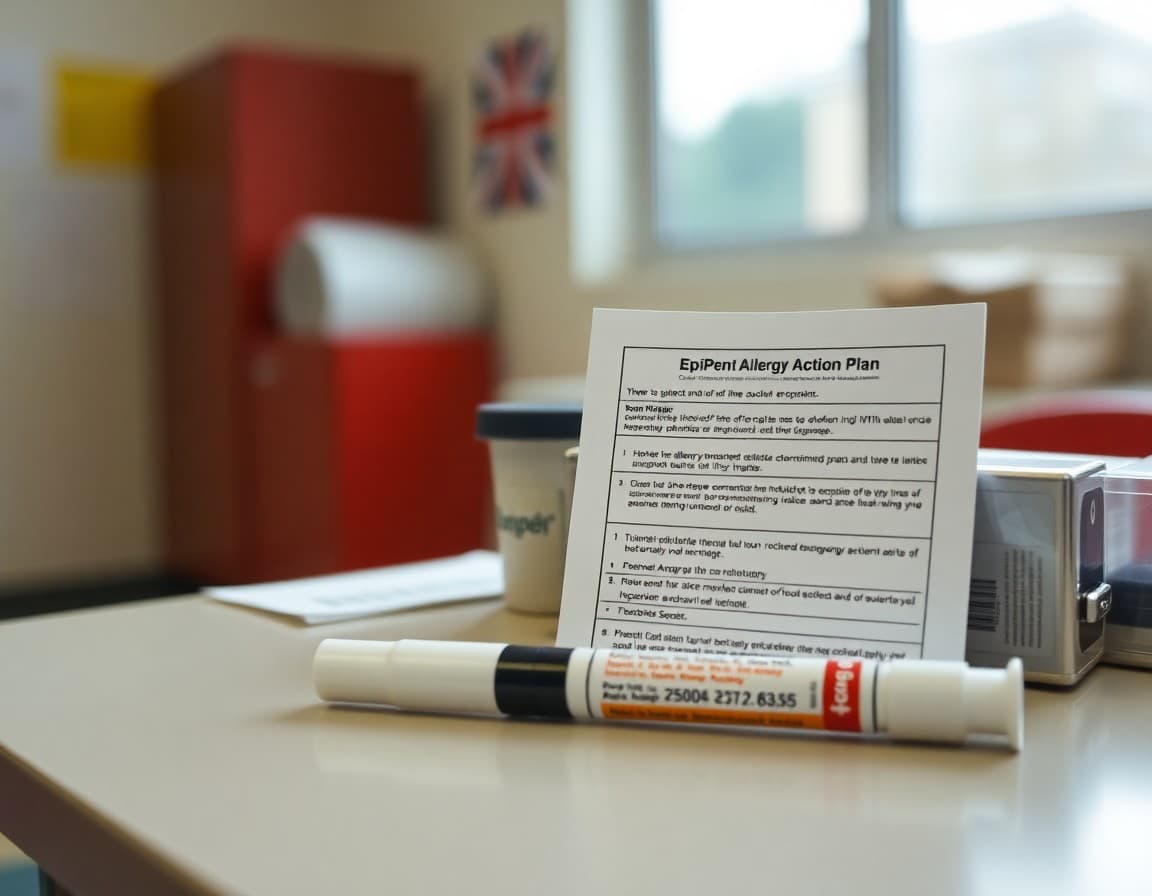
Anaphylaxis moves fast. A student who eats a peanut-containing item at lunch may show severe symptoms within five to thirty minutes. When the trained adult present knows exactly what to see and exactly what to do, the outcome is a child who receives epinephrine in time and is transported to a hospital. When the trained adult hesitates, the window closes. This newsletter exists to eliminate hesitation.
Describe the Difference Between a Mild Reaction and Anaphylaxis
Staff need to make this distinction accurately and quickly. A mild reaction is hives or itching in one area of the body without other symptoms. Anaphylaxis involves two or more body systems at once, or a severe reaction involving the airway or cardiovascular system. Key symptoms to act on immediately: throat tightening or feeling of swelling in the throat; difficulty breathing or wheezing; a weak or rapid pulse; pale or bluish skin; sudden drop in blood pressure; or a combination of skin symptoms with vomiting and dizziness. When in doubt, use epinephrine. Undertreating anaphylaxis is far more dangerous than giving epinephrine unnecessarily.
State the Epinephrine First Rule Clearly
Antihistamines like diphenhydramine (Benadryl) do not stop anaphylaxis. They slow the allergic cascade but cannot reverse a reaction that is affecting the airway or cardiovascular system. Epinephrine is the only medication that stops anaphylaxis. The protocol is: administer the prescribed epinephrine auto-injector to the outer thigh, call 911, have someone stay with the student, and do not allow the student to stand up. Do not wait to administer epinephrine while debating whether the reaction is severe enough.
Explain What Families Must Submit
Families of students with a prescription epinephrine auto-injector must submit an allergy action plan signed by the prescribing physician before the first day of school. The plan specifies the allergens, the threshold for epinephrine use, the dose, and the parent emergency contacts. The auto-injector itself must be kept at school in an accessible, staff-accessible location. EpiPens expire and must be replaced when the expiration date passes. Families should check the device's expiration date in late summer each year and replace it before school starts if needed.
Describe the Self-Carry Authorization Process
Students who have been trained by their physician or allergist to self-administer epinephrine may be authorized to carry their auto-injector with them during the school day rather than relying on the nurse's office. Self-carry requires a signed physician statement, parent authorization, and nurse assessment of the student's competency. For students in middle and high school, self-carry is generally preferred because immediate access matters more than age. Include the authorization form link and submission instructions in the newsletter.
Template Excerpt: Anaphylaxis Response Reminder for Staff
Here is a procedure reminder you can adapt:
"Signs of anaphylaxis requiring immediate EpiPen use: throat tightening, difficulty breathing, hives spreading rapidly, weak pulse, dizziness or loss of consciousness. Steps: (1) Administer epinephrine to the outer thigh. (2) Call 911. (3) Have someone call the parent. (4) Stay with the student. (5) A second dose can be given after 5-15 minutes if symptoms do not improve. Do not give Benadryl as a substitute for epinephrine. The student must go to the ER after epinephrine even if they feel better."
Cover Stock Epinephrine and Undesignated Access
If your school or district has implemented a stock epinephrine program, explain it in the newsletter. Stock (undesignated) epinephrine can be used for any student experiencing anaphylaxis, not only those with a prior prescription on file. This is critical because a significant percentage of fatal anaphylaxis cases occur in individuals without a prior diagnosis. If stock epinephrine is available at your school, name the location and confirm that trained staff know how to access it during an emergency on the playground, in the cafeteria, and on field trips.
Explain the Post-Epinephrine Protocol
Every student who receives epinephrine must be transported to an emergency room, even if they appear to have fully recovered. Biphasic reactions, in which anaphylaxis symptoms return hours after the initial treatment, occur in approximately 20 percent of cases. This is not optional or subject to parental override. Include this clearly in the newsletter so families understand why a school calls 911 even when their child seems fine after the injection.
Close With Staff Training Confirmation and Family Contact
End with a note that all staff who supervise a student with a known severe allergy are trained in EpiPen use before working with that student. Families can request confirmation of staff training from the nurse. Give the nurse's direct phone number and email for questions, form submission, and appointment scheduling. A school that is transparent about its preparation earns the trust of families managing life-threatening allergies every single day.
Get one newsletter idea every week.
Free. For teachers. No spam.
Frequently asked questions
What should a school nurse EpiPen newsletter include?
Cover the recognition of anaphylaxis versus a mild allergic reaction, the protocol for using an epinephrine auto-injector, the timing rule (epinephrine first, then call 911), who is trained to administer epinephrine at school, the self-carry authorization process for eligible students, the supply requirements families must submit, and whether the school stocks stock epinephrine for use in cases where a student does not have a known allergy diagnosis.
How do you recognize anaphylaxis versus a mild allergic reaction?
A mild allergic reaction typically involves hives, itching, or redness limited to one area of the body without other symptoms. Anaphylaxis involves two or more body systems: hives plus throat tightening, hives plus vomiting, difficulty breathing, a drop in blood pressure, or cardiovascular symptoms like a rapid weak pulse. Any reaction involving throat tightening, difficulty breathing, or cardiovascular symptoms requires epinephrine and 911 regardless of whether a prior severe reaction has occurred.
What is the timing rule for epinephrine administration?
Epinephrine is always the first-line treatment for anaphylaxis. Antihistamines like Benadryl do not stop anaphylaxis and take too long to work. The rule is: use epinephrine first, call 911 immediately after. A second dose can be given if symptoms return or do not improve after 5 to 15 minutes and a second auto-injector is available. The student must be transported to an emergency room after epinephrine use even if they appear to recover, because biphasic reactions can occur hours later.
Does every school need to stock epinephrine for students without a known diagnosis?
As of recent legislation in most U.S. states, schools are permitted or required to stock undesignated epinephrine auto-injectors for use in any student experiencing anaphylaxis, including cases where the student had no prior known allergy diagnosis. Check your state's specific law. If your school stocks undesignated epinephrine, describe the protocol for its use in the newsletter so families are aware that emergency coverage exists even for students without a prescription on file.
Can Daystage help nurses send EpiPen preparedness information to families and staff?
Yes. Daystage lets nurses send a targeted allergy emergency newsletter to families of students with known severe allergies. The newsletter can include links to the allergy action plan form, the EpiPen self-carry authorization, the school's anaphylaxis protocol document, and a video walkthrough of EpiPen technique, all in one formatted message.

Adi Ackerman
Author
Adi Ackerman is a former classroom teacher and curriculum writer with 8 years in K-8 schools. She writes about school communication, parent engagement, and what actually works in real classrooms.
More for School Nurses
Allergy Awareness Newsletter: How to Communicate Food and Environmental Allergies to School Families
School Nurses · 6 min read
School Nurse Back-to-School Health Newsletter: Everything to Cover in August
School Nurses · 7 min read
Chronic Condition Management Newsletter: Communicating Asthma, Diabetes, and Epilepsy Protocols
School Nurses · 6 min read
Ready to send your first newsletter?
3 newsletters free. No credit card. First one ready in under 5 minutes.
Get started free