
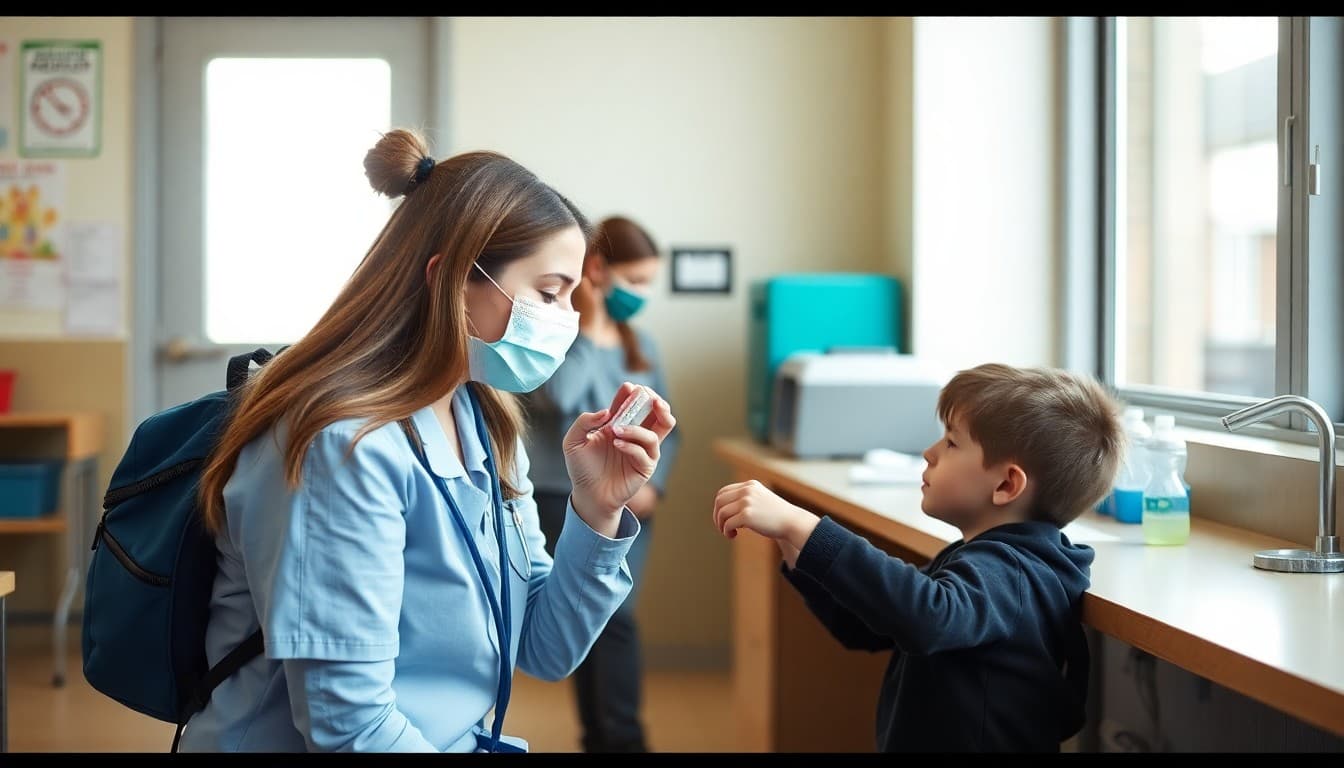
School Nurse ADHD Medication Newsletter: School Procedures

ADHD stimulant medications are the most commonly administered controlled substances in school health offices across the country. Despite their frequency, the paperwork and handling requirements are often a source of confusion and last-minute scrambling at the start of each school year. A clear newsletter sent before school starts prevents the three most common problems: missing physician orders, insufficient medication supply, and authorization forms from last year that are no longer valid.
Explain the Controlled Substance Classification
Stimulant medications used for ADHD, including methylphenidate, dextroamphetamine, and amphetamine salt combinations, are classified as Schedule II controlled substances under the federal Controlled Substances Act. This is the same category as morphine and oxycodone. The classification means the nurse must follow specific protocols that do not apply to other medications: double-locked storage, daily dose counts, a written physician order (no verbal orders permitted), and a 30-day supply maximum at school. These requirements apply regardless of the student's age or how long the family has used the medication.
State the Required Documentation
For stimulant medications, the nurse requires: a written physician order that specifies the medication name, dose, frequency, and prescribing physician's contact information; a signed parent authorization form permitting the school to administer the medication; and the medication in its original pharmacy-labeled container with the student's name, medication name, dose, and prescribing physician printed on the label. Physician orders from the previous school year cannot be used without a new signature; every authorization expires at the end of each school year.
Describe the Delivery and Supply Process
A parent or authorized guardian must physically deliver stimulant medication to the nurse's office. Students cannot carry stimulant medications in their backpack under any circumstances, even with parent permission. The maximum supply at school is 30 days. When the medication is delivered, the nurse counts the pills in the presence of the parent and records the count in the controlled substance log. Families should deliver a new supply when approximately one week remains, not when the bottle is empty.
Explain the Dose Administration and Documentation Protocol
The nurse records every dose administered: the date, the time, the dose, the student's name, and the nurse's signature. If the student does not come for their medication as scheduled, the nurse notes the missed dose. Parents can review the dose log at any time. If a student is persistently missing their scheduled dose because they are avoiding the nurse's office or forgetting to come, the nurse contacts the family to discuss whether a different timing or delivery method would work better.
Template Excerpt: ADHD Medication Start-of-Year Checklist
Here is a checklist you can include in the newsletter:
"If your student takes stimulant ADHD medication at school, please complete the following before the first day: (1) Schedule a physician visit if the written medication order is more than 12 months old. (2) Request a school medication authorization form from our website and have it signed by both the physician and yourself. (3) Deliver the first supply (maximum 30 doses) to the nurse's office in the original pharmacy bottle. Students cannot carry stimulant medications. Contact Nurse Davis at nurse@school.edu or (555) 313-4100 to schedule a medication drop-off appointment."
Address End-of-Year Medication Pickup
Controlled substances left at school cannot be disposed of by the nurse. Families must retrieve remaining medication before the last day of school each year. Medication not retrieved by the last day will be held for a limited period and then turned over to law enforcement for proper disposal. Notify families of the pickup deadline in the spring newsletter as well as in this start-of-year communication. Include the nurse's contact for scheduling a pickup appointment.
Cover Medication Holidays and Summer Prescription Management
Some students take ADHD medication during the school year only and stop during summer. Others maintain year-round dosing. The school's involvement ends when the school year ends, but families managing medication over the summer should confirm with their physician whether the prescription needs any adjustment. Note that the physician's written order for school must be updated if the dose or medication changes over the summer, and families should bring the new order when they deliver the first supply in the fall.
Close With the Nurse's Contact and Appointment Process
End with the nurse's name, email, phone, and the process for dropping off medication and forms. Note that the nurse asks families to call ahead before bringing medication so a count can be conducted with the parent present. A family who knows to call ahead arrives prepared, the handoff takes five minutes, and the nurse's documentation is complete from day one.
Get one newsletter idea every week.
Free. For teachers. No spam.
Frequently asked questions
What should a school nurse ADHD medication newsletter cover?
Cover the legal classification of stimulant ADHD medications, the authorization requirements for administering them at school, the storage and dose-counting requirements, the maximum supply quantity that can be kept at school, how the nurse notifies families when supplies are running low, what happens if a student misses a dose or refuses medication, and the end-of-year medication pickup process. This information affects a large percentage of school families and should be part of the standard back to school nurse communication.
Why are stimulant ADHD medications handled differently from other medications?
Stimulant medications like methylphenidate (Ritalin, Concerta) and amphetamine salts (Adderall, Vyvanse) are Schedule II controlled substances under federal law. This classification means schools must follow strict protocols: secure storage in a double-locked cabinet, daily dose counting and documentation, monthly supply limits, delivery by a parent or guardian rather than by the student, and a written physician order that cannot be called in verbally. These requirements exist regardless of how long the family has been using the medication.
What is the maximum supply of stimulant medication that can be kept at school?
Most district policies follow state pharmacy law, which typically limits controlled substance quantities stored at school to a 30-day supply. Families should not send a full prescription bottle at once if it contains more than 30 doses. The nurse counts the medication when it is delivered and counts it again at each administration. Any discrepancy in the count requires an incident report. Remind families to deliver new supplies before the current one runs out rather than waiting until the nurse calls.
What does the school nurse do if a student refuses their ADHD medication?
The nurse documents the refusal and calls the parent that day. Medication is never forced on a student. If a student consistently refuses, the nurse communicates this to the family and the treating physician so the medication schedule or formulation can be reviewed. In the meantime, the teacher is notified without disclosing the medication situation specifically, so they can provide additional support on days the student did not receive medication.
Can Daystage help school nurses send ADHD medication policy reminders before school starts?
Yes. Daystage lets nurses send targeted newsletters to families of students with controlled substances on file. A pre-school reminder about expiring physician orders, empty supply bottles, and authorization form renewals can be sent two weeks before school starts, giving families enough time to schedule a prescription refill and physician office visit before the first day.

Adi Ackerman
Author
Adi Ackerman is a former classroom teacher and curriculum writer with 8 years in K-8 schools. She writes about school communication, parent engagement, and what actually works in real classrooms.
More for School Nurses
School Nurse Back-to-School Health Newsletter: Everything to Cover in August
School Nurses · 7 min read
Chronic Condition Management Newsletter: Communicating Asthma, Diabetes, and Epilepsy Protocols
School Nurses · 6 min read
Allergy Awareness Newsletter: How to Communicate Food and Environmental Allergies to School Families
School Nurses · 6 min read
Ready to send your first newsletter?
3 newsletters free. No credit card. First one ready in under 5 minutes.
Get started free