
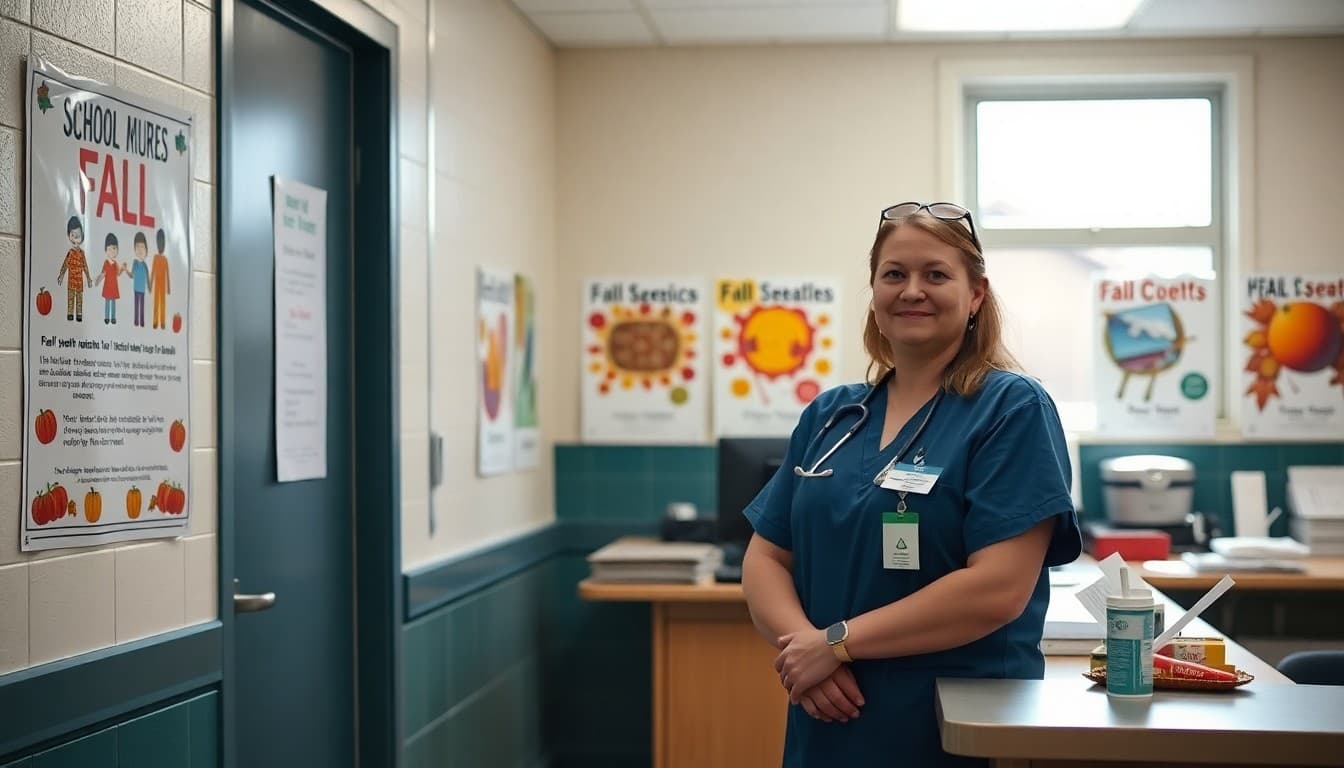
October School Nurse Newsletter: Fall Health Topics for Families

October marks the real start of illness season in most schools. The first absence spike hits, families start asking about flu shots, and Halloween candy raises allergy questions from parents who planned ahead. Your October newsletter is the right place to get ahead of all three.
Lead with flu shot timing
October is peak flu shot season. Most families mean to get them and then forget. Your newsletter is a useful nudge. Include the current recommendation from the CDC, note that flu shots take about two weeks to provide protection, and mention any local pharmacy or clinic availability you are aware of. You do not need to organize a school flu clinic to make this useful.
Refresh the illness exclusion policy
Most parents do not remember your school's fever policy from the August back-to-school packet. October is the right time to restate it. A clear statement such as "Students must be fever-free for 24 hours without medication before returning to school" saves you multiple phone calls and prevents the spread of illness. Put this in plain language, not policy language.
Explain cold versus flu symptoms
Parents ask this question every year. A simple two-column comparison in your newsletter answers it once, for everyone. Cold symptoms: gradual onset, runny nose, mild fatigue. Flu symptoms: sudden onset, body aches, high fever, significant fatigue. One actionable line at the end: "If your child woke up feeling fine and now has a 102-degree fever and body aches, that is more consistent with flu. Keep them home and call your doctor."
Address Halloween candy and allergies
For families managing food allergies, Halloween is genuinely stressful. A brief note in your October newsletter acknowledging this, naming the most common allergens found in popular Halloween candy (peanuts, tree nuts, milk, wheat), and reminding families of your classroom party policy covers the ground they need. You can also mention the Teal Pumpkin Project if your school participates, which signals that allergy-safe options are available in your community.
Remind families about medication authorization forms
October is a good time to audit your medication authorization files and send a reminder to families whose forms expired or were never returned. A short paragraph in your newsletter asking families to check that you have current forms for any daily medication, EpiPen, or inhaler will prompt more responses than a separate form letter. Keep it low-pressure and specific: "If your child carries an EpiPen or takes daily medication at school, please confirm I have a signed authorization on file."
Include one handwashing or respiratory hygiene reminder
You have said this before. Say it again. Families need the reminder in October more than they needed it in September. Keep it to two sentences: what works and what does not. "Hand sanitizer helps but does not replace soap and water after using the bathroom. Twenty seconds is the minimum, which is roughly the time it takes to hum 'Happy Birthday' twice."
Make it easy to reach you
End every nurse newsletter with your contact information and a note about when families should call versus when they should wait. Many parents are unsure whether a symptom is worth a call. A single line, such as "If you are ever uncertain whether your child is well enough to come to school, email me and I will help you decide," reduces anxiety and builds trust before a health crisis happens.
Building your October newsletter from the same template each year saves you real time. Daystage lets you save your nurse newsletter layout, update the seasonal content, and send to your school community in one step.
Get one newsletter idea every week.
Free. For teachers. No spam.
Frequently asked questions
What health topics should a school nurse cover in an October newsletter?
Flu shot timing, handwashing reminders, cold versus flu symptom comparison, Halloween candy safety for students with allergies, and the school's illness-exclusion policy. October is when families need a reminder about when to keep a sick child home, especially as the first wave of respiratory illness hits.
How do I write an October nurse newsletter that families actually read?
Open with something happening right now, such as the first absence spike of the year or flu shot availability in your community. Avoid generic wellness advice. Specific, timely information gets opened. A subject line like 'Flu shots are available now, here is what to know' outperforms 'October Health Update.'
Should I include Halloween candy allergy information in my October newsletter?
Yes, especially at the elementary level. A brief list of the most common allergens found in popular Halloween candy, plus a reminder about your school's allergy policy during any classroom parties, helps families prepare and prevents trips to your office during the holiday week.
How often should a school nurse send a newsletter?
Monthly is a sustainable pace. Some nurses send targeted messages during specific outbreaks or before high-illness periods, which is appropriate. A predictable monthly newsletter builds the habit for families to look for your communication, so they see your urgent messages when they arrive.
What tool helps school nurses send health newsletters to families?
Daystage is built for school communicators who need to reach families quickly without IT involvement. You can build your health newsletter template once, update it monthly, and track which families opened it. That last part matters when you need documentation that families received health information.

Adi Ackerman
Author
Adi Ackerman is a former classroom teacher and curriculum writer with 8 years in K-8 schools. She writes about school communication, parent engagement, and what actually works in real classrooms.
More for School Nurses
AED and Emergency Equipment Newsletter: Communicating School Emergency Readiness to Families
School Nurses · 5 min read
Allergy Awareness Newsletter: How to Communicate Food and Environmental Allergies to School Families
School Nurses · 6 min read
School Nurse Back-to-School Health Newsletter: Everything to Cover in August
School Nurses · 7 min read
Ready to send your first newsletter?
3 newsletters free. No credit card. First one ready in under 5 minutes.
Get started free