
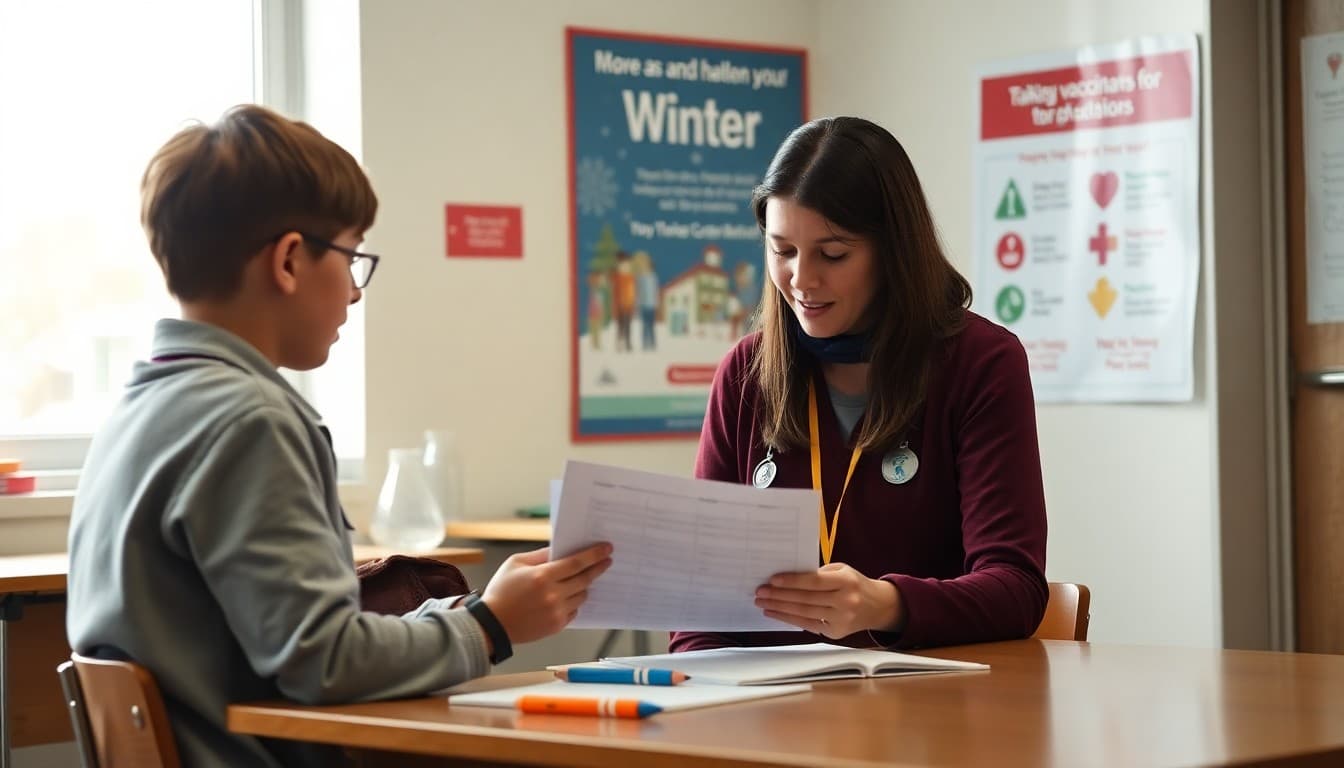
January School Nurse Newsletter: Peak Flu Season Health Guidance

January is peak illness season in most schools. Students who spent two weeks in holiday gatherings return carrying a variety of respiratory viruses, and the close quarters of classroom life spread them fast. Your January nurse newsletter is prevention communication at its most necessary.
State the current illness landscape plainly
Families respond better to specific information than general alerts. If influenza A is circulating heavily in your region in January, say so. If your office has already seen an uptick in absences since return from break, mention it. Real, current information motivates behavior changes in a way that general wellness reminders do not. One sentence is enough: "We have seen a significant increase in flu-like symptoms this week. Please review the illness criteria below before sending your child to school if they are feeling unwell."
Restate illness exclusion criteria for the new year
January is a natural time to repeat what families heard in September. Not everyone retained it. State your school's fever threshold, when students can return, and what to do if a child develops symptoms during the school day. Plain language, no clinical hedging: "Keep your child home if they have a temperature of 100.4 or higher, are vomiting or have diarrhea, or are too ill to participate. Students may return 24 hours after fever breaks without medication."
Address flu and respiratory virus prevention
January is when prevention messaging has the highest return. Give families three specific actions: wash hands with soap for 20 seconds before eating and after using the bathroom, avoid touching eyes and nose, and cover coughs and sneezes with an elbow rather than a hand. Flu shots are still beneficial if families have not gotten them. One sentence: "If your family has not had flu shots yet, they are still worth getting. It takes about two weeks for full protection but peak season runs through February."
Remind families about immunization record requirements
New students enrolling in January after holiday moves need immunization records on file. Existing families may have had records lapse. A brief paragraph inviting families to submit updated records and noting your office's process prevents a compliance scramble in February.
Address asthma and cold weather
Cold air is a documented asthma trigger. January is when outdoor recess and walking to school create the most risk for students with respiratory conditions. A brief note for families with asthmatic students: "If your child has asthma, cold air can trigger symptoms even if they are otherwise well. Make sure their rescue inhaler is in their school bag daily in January, not stored at home." That specific reminder is immediately useful.
Note the dry air and hydration connection
January indoor air is dry, which irritates mucous membranes and makes students more susceptible to respiratory illness. A practical note: "Encourage your child to drink water consistently through the school day. Dry winter air increases the importance of staying hydrated." Also mention that if students have nosebleeds, a brief note of what to do helps families who call your office panicking about a small amount of blood.
Connect winter wellness to mental health briefly
Physical and mental health interact in January. Less sunlight, less outdoor time, and post-holiday letdown all affect immune function and energy. A brief note connecting routine, sleep, and outdoor time to physical wellness stays within your scope and is genuinely useful: "Regular sleep and outdoor time, even briefly, supports both mood and immune function in January."
Daystage makes sending your January nurse newsletter fast. Your template is already set up, you update the seasonal content, and open-rate tracking confirms which families received your peak-season health guidance.
Get one newsletter idea every week.
Free. For teachers. No spam.
Frequently asked questions
What health topics should a school nurse cover in a January newsletter?
Peak flu and respiratory virus season, illness exclusion policy reminders, immunization record updates for new enrollments, cold weather safety for outdoor activities, dry air and respiratory irritant considerations for students with asthma, and mental health connections to winter wellness.
Why is January the most important month for a school nurse newsletter?
January is typically peak flu season, combined with students returning from holiday gatherings where they were exposed to more people. Illness spreads quickly in the first weeks back. Your newsletter is the most efficient way to reinforce prevention behaviors and illness reporting before the first big outbreak of the new year.
How do I handle the post-holiday illness surge in a nurse newsletter?
Address it directly. 'January is one of the highest illness months of the school year. If your child is showing symptoms of flu or respiratory illness, please keep them home.' Then restate your illness exclusion criteria. Families who get this reminder before the outbreak is underway respond better than families who receive a frantic message after ten students are already absent.
Should I address immunization updates in a January school nurse newsletter?
Yes. New enrollments come in January after holiday moves. Immunization records may have lapsed. A brief reminder that your office needs current immunization records for all students, and how to submit them, catches families before a compliance issue arises.
What newsletter platform do school nurses use?
Daystage is a school-specific newsletter platform that many school nurses use to send monthly health updates. You build your template once and update the content each month. Open-rate tracking helps you document which families received your health communications, which matters for school compliance and public health reporting.

Adi Ackerman
Author
Adi Ackerman is a former classroom teacher and curriculum writer with 8 years in K-8 schools. She writes about school communication, parent engagement, and what actually works in real classrooms.
More for School Nurses
AED and Emergency Equipment Newsletter: Communicating School Emergency Readiness to Families
School Nurses · 5 min read
Allergy Awareness Newsletter: How to Communicate Food and Environmental Allergies to School Families
School Nurses · 6 min read
School Nurse Back-to-School Health Newsletter: Everything to Cover in August
School Nurses · 7 min read
Ready to send your first newsletter?
3 newsletters free. No credit card. First one ready in under 5 minutes.
Get started free