

December School Nurse Newsletter: Winter Illness and Holiday Health
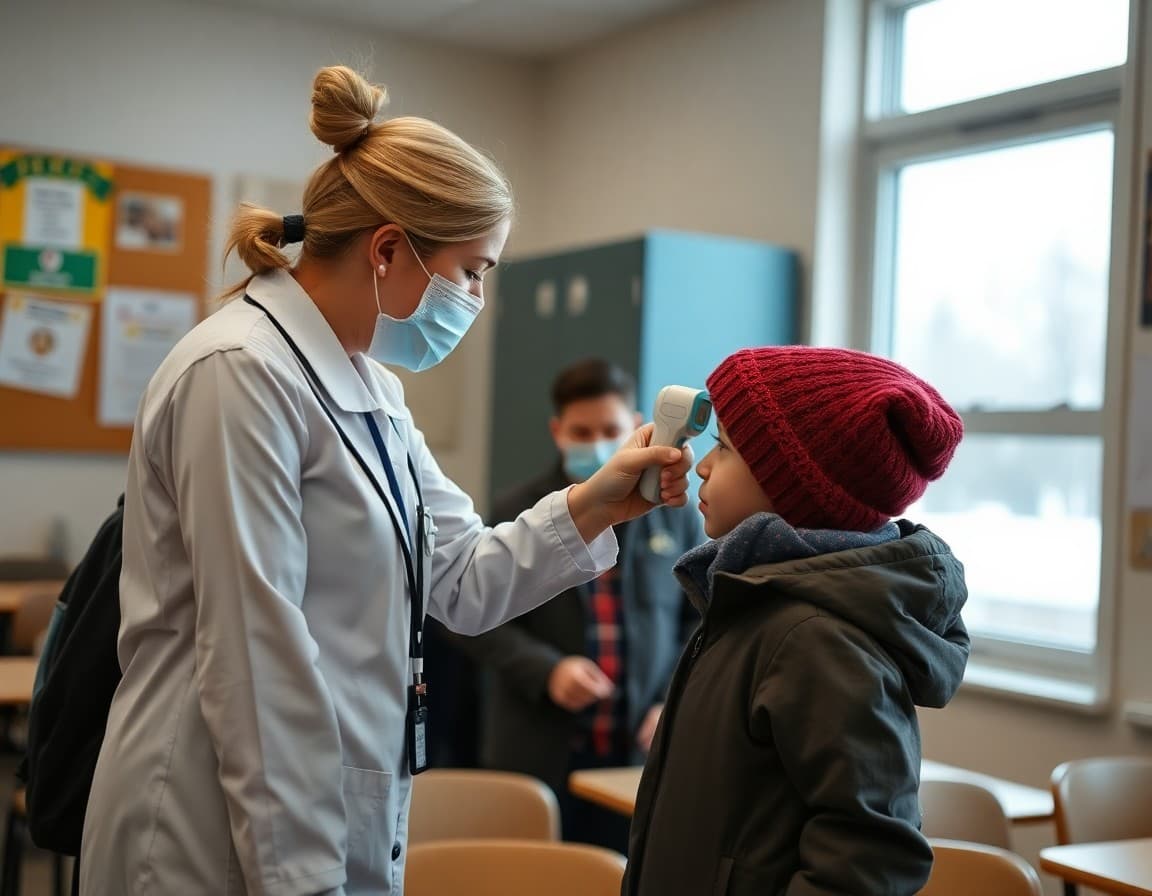
December is peak illness season. Flu, RSV, strep, and the common cold are all circulating, classroom holiday parties introduce allergen risks, and cold weather adds an outdoor safety layer. Your December nurse newsletter addresses all of it before the holiday break and sets up a healthy return in January.
Update families on current illness trends in your school
If you are seeing a notable uptick in a specific illness, tell families. You do not need to name students or give case counts. "We have seen an increase in flu-like symptoms this week. Please review the illness exclusion criteria below before sending your child to school if they are unwell" is specific enough to be useful without being alarming.
Restate your illness exclusion criteria clearly
December is not the time to assume families remember your September guidance. State it again: "Keep your child home if they have a fever of 100.4 or higher, are vomiting or have diarrhea, or are too ill to participate in class activity. Students may return 24 hours after fever breaks without medication." Plain language, no exceptions.
Remind families about classroom holiday party food safety
Holiday parties are a genuine allergen risk. A brief reminder before December class parties prevents most problems. Tell families: all food brought for a classroom event must have a visible ingredient label. Families whose children have documented food allergies should contact the teacher and your office before the party. Homemade items without labels should not be distributed. One reminder in the newsletter cuts your day-of-party calls in half.
Address cold weather safety for outdoor time
Students in cold climates face hypothermia and frostbite risk during outdoor recess and bus wait times. Tell families specifically what to send their child to school with: a warm coat, gloves, and a hat for temperatures below 40 degrees Fahrenheit. For students with asthma, remind families that cold air is a common trigger and to ensure inhalers are accessible. One practical line: "If your child has asthma, they should have their rescue inhaler in their school bag, not stored at home."
Connect sleep and routine to immune health
December disrupts sleep for most students. Holiday excitement, later bedtimes, and travel create conditions where immune function drops. A brief, factual note: "Sleep deprivation reduces immune response by measurable amounts. Keeping your child's bedtime within 30 to 45 minutes of their school-year time during the holiday, even on weekends, supports a healthier return in January." This is the kind of specific, evidence-based note parents trust from a school nurse.
Remind families to check and refill medications before the break
Students who take daily medication should have enough to cover the break and return smoothly in January. A brief reminder to check prescription quantities, refill as needed, and update your office if medications change over the break saves a chaotic first week of January.
Share your office schedule and emergency contacts for the break
Tell families when your office is open, when it closes for break, and who to contact for health emergencies when school is not in session. Families with medically complex students need this information in advance.
Sending your December nurse newsletter through Daystage takes minutes. Your template is already built, you update the seasonal content, and open-rate tracking gives you a record that families received the holiday health guidance.
Get one newsletter idea every week.
Free. For teachers. No spam.
Frequently asked questions
What health topics should a school nurse address in a December newsletter?
Peak flu and RSV season, classroom party allergen reminders, cold weather safety for students who walk or wait outside, medication authorization reminders before winter break, mental health and sleep hygiene during the holiday season, and your illness exclusion policy for students returning from holiday gatherings.
How do I manage classroom holiday party allergies in a nurse newsletter?
Send a clear reminder before any classroom party: all food brought into class must have an ingredient label. If a student has a severe allergy documented in your office, remind the teacher directly as well. In the newsletter, tell families what allergens are most common in holiday treats and remind them to check with their child's teacher before sending food.
What cold weather safety tips should a school nurse share in December?
Dress in layers for outdoor recess and waiting at bus stops, keep wet clothing dry to prevent hypothermia risk, recognize the signs of frostbite in extremities for students who wait outside, and know that cold air can trigger asthma symptoms in students with respiratory conditions.
Should I address mental health in a December nurse newsletter?
Yes, briefly. Sleep disruption, holiday excitement and stress, and changes in routine all affect physical health. A two-sentence note about the connection between sleep, routine, and immune function gives the mental health message without stepping outside the nursing scope.
What tool helps school nurses send monthly health newsletters?
Daystage is designed for school communicators and works well for nurse newsletters. You build your template once and update the seasonal health content each month. Open-rate tracking helps you document that families received critical health communications.

Adi Ackerman
Author
Adi Ackerman is a former classroom teacher and curriculum writer with 8 years in K-8 schools. She writes about school communication, parent engagement, and what actually works in real classrooms.
More for School Nurses
AED and Emergency Equipment Newsletter: Communicating School Emergency Readiness to Families
School Nurses · 5 min read
Allergy Awareness Newsletter: How to Communicate Food and Environmental Allergies to School Families
School Nurses · 6 min read
School Nurse Back-to-School Health Newsletter: Everything to Cover in August
School Nurses · 7 min read
Ready to send your first newsletter?
3 newsletters free. No credit card. First one ready in under 5 minutes.
Get started free