

School Social Worker Monthly Newsletter Template Guide
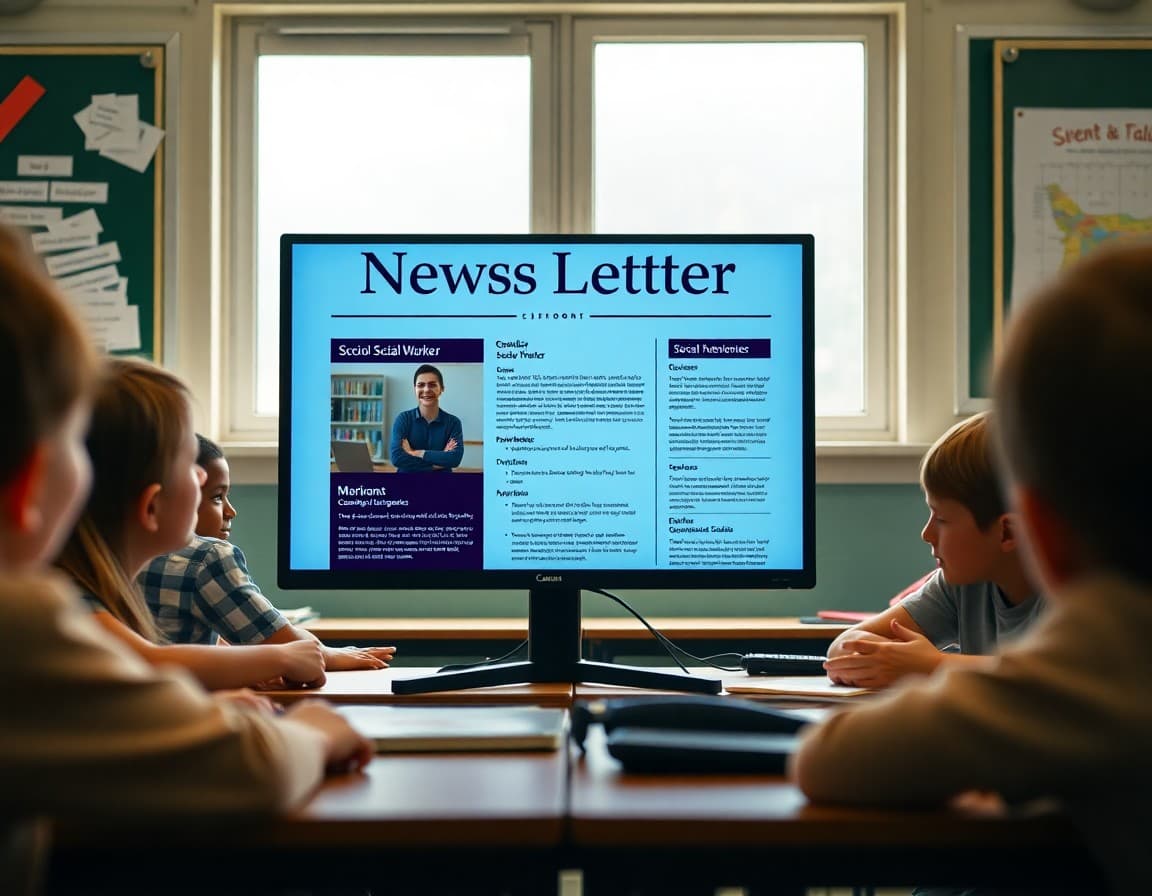
A school social worker who sends a consistent monthly newsletter builds the kind of family trust that makes every part of the job easier. Families who know your name, understand your role, and have your contact information in their inbox before a crisis are far more likely to reach out early, refer neighbors who need help, and engage with the support programs you offer. Here is a complete monthly template framework that works across the entire school year.
Section One: The Social Worker's Note
Every issue begins with three to five sentences from you. Not a lengthy introduction, just a brief, personal acknowledgment of what the month looks like and one thing you want families to know. In September: "I'm looking forward to the school year and to meeting many of you. My door is open for any family navigating a hard situation, big or small." In March: "We're in the busiest stretch of the year. Here are the supports available right now." Keep it specific to the month and to your actual experience. Families can tell the difference between a form letter and a genuine voice.
Section Two: The Featured Topic
One topic per month, covered in 150 words or less. Choose something timely: food insecurity resources in November, homework help programs in October, mental health awareness content in May. The featured topic section should answer one question: what do families need to know about this topic right now, and what can they do with that information? End with a specific action: a phone number, a link, or an instruction. The action step is what separates useful information from content that is read and forgotten.
Section Three: Community Resources Block
This is the section families return to. Include three to five resources per month, presented in a consistent format: resource name, phone number or website, one-sentence eligibility description, and any relevant deadline. Resources should rotate across the year to cover different family needs: housing assistance, food support, mental health referrals, domestic violence resources, childcare subsidies, and legal aid. A family who sees a new resource in this section every month builds, over time, a mental library of community support that they access both for themselves and pass on to others.
Section Four: Events and Group Announcements
Brief and bulleted. If you are running a parent support group, an attendance intervention program, or a family workshop this month, list it here with the date, time, location, and how to register. If you are not running any specific program this month, use this section for community events offered by partner organizations. Families who attend one workshop offered through your newsletter are more likely to engage with your services directly when they need them.
Section Five: How to Reach Me
Every issue ends with your name, your email, your phone number, and a brief sentence of invitation. "If your family is navigating something hard, I want to know. No situation is too complicated and no question is too small." This section is not optional. It is the entire point. Every resource you shared, every topic you covered, every connection you made in the previous four sections leads to this invitation. Make it warm, direct, and impossible to miss.
Building Your Annual Content Calendar
Set aside two hours at the start of each school year to map your twelve-month content calendar. Assign a featured topic to each month based on the school calendar, community needs, and seasonal patterns you have observed over previous years. Build your community resources list in advance so you are not searching for phone numbers under deadline each month. With a calendar and a resource list already prepared, each monthly newsletter takes under an hour to write and schedule.
Daystage as Your Template Platform
Daystage lets you build your monthly newsletter template once, with your school branding and five-section structure, and update only the content each month. The format stays consistent, which builds reading habits and reduces production time. You can schedule each issue weeks in advance, so December's newsletter goes out automatically during the week when you are managing holiday-related family crises and would never find time to write it from scratch. That kind of reliability is what makes a newsletter program sustainable over an entire school year, not just the first few months.
Measuring Monthly Engagement
Check your open rates and click-throughs each month. A good school newsletter achieves 25 to 40 percent open rates with an engaged family list. If you are below 20 percent, audit your subject lines first: they should name the month and a specific benefit. If specific resource sections get consistently high click-throughs, that tells you what your community needs most and should guide how much space you dedicate to those topics in future issues.
Get one newsletter idea every week.
Free. For teachers. No spam.
Frequently asked questions
What sections should a school social worker monthly newsletter include?
A strong monthly template has five sections: a brief intro from the social worker, a featured topic with practical guidance, a community resources block with specific contact information, upcoming events or group announcements, and a contact section with the social worker's name and how to reach them.
How long should a school social worker newsletter be?
Short enough to read in two to three minutes. Four to six sections, each under 150 words. Families with high-need circumstances often have limited time and limited cognitive bandwidth for long communications. A focused, scannable newsletter reaches them better than a comprehensive one.
How should social workers handle monthly theme selection?
Build a twelve-month content calendar at the start of the year. Align themes with the school calendar: back to school in August/September, holiday stress in November/December, standardized testing anxiety in March, and year-end transitions in May/June. This approach ensures timely, relevant content without reinventing the calendar each month.
What is the best way to present community resources in a social worker newsletter?
Use a consistent format for every resource: name, phone number, eligibility in one sentence, and any important deadline. Families do not read paragraphs about resources. They scan for the one piece of information they need. Bullet points with consistent structure produce far more resource uptake than narrative descriptions.
What tool helps school social workers build and manage monthly newsletters?
Daystage is built for exactly this use case: a school-based professional who needs to send professional-looking monthly newsletters to a large group of families without a communications department, graphic design skills, or significant time investment per issue.

Adi Ackerman
Author
Adi Ackerman is a former classroom teacher and curriculum writer with 8 years in K-8 schools. She writes about school communication, parent engagement, and what actually works in real classrooms.
More for School Counselors
Ready to send your first newsletter?
3 newsletters free. No credit card. First one ready in under 5 minutes.
Get started free