
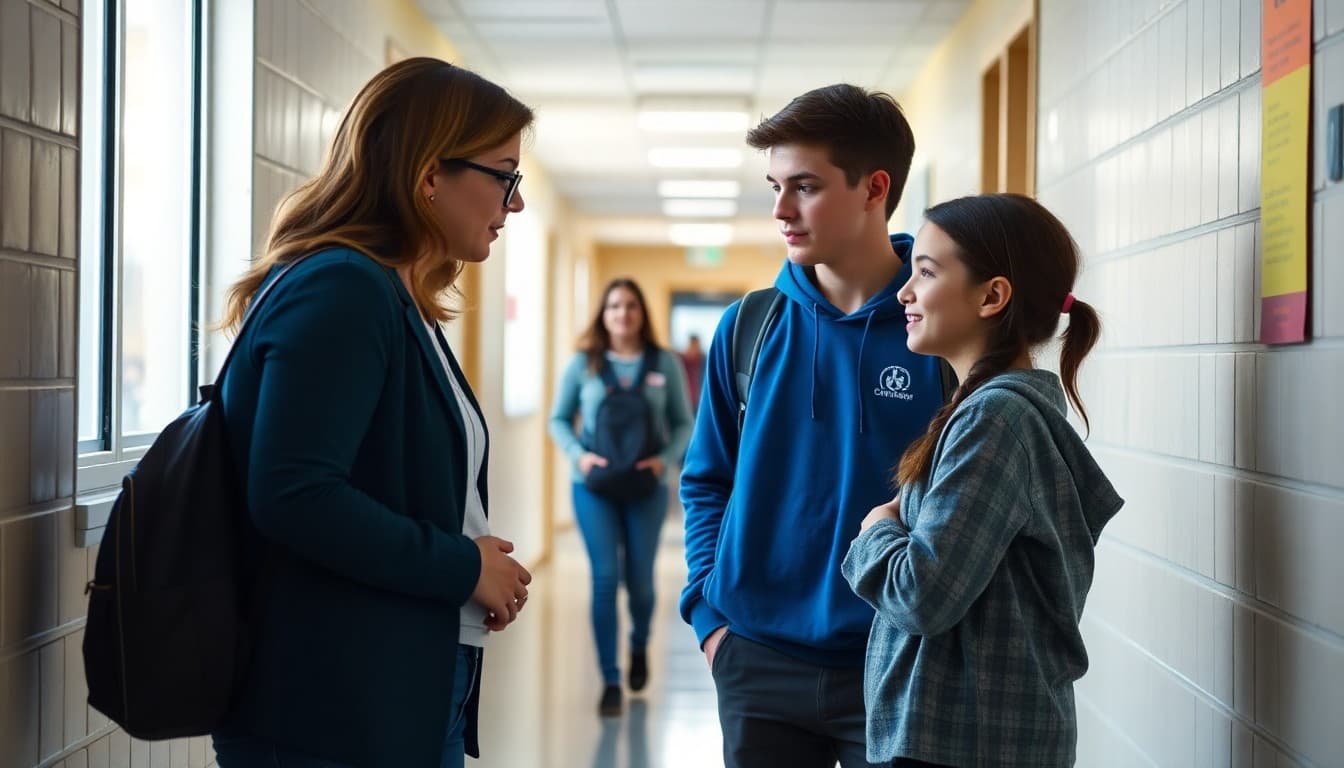
School Counselor Conflict Resolution Newsletter: Solving Problems
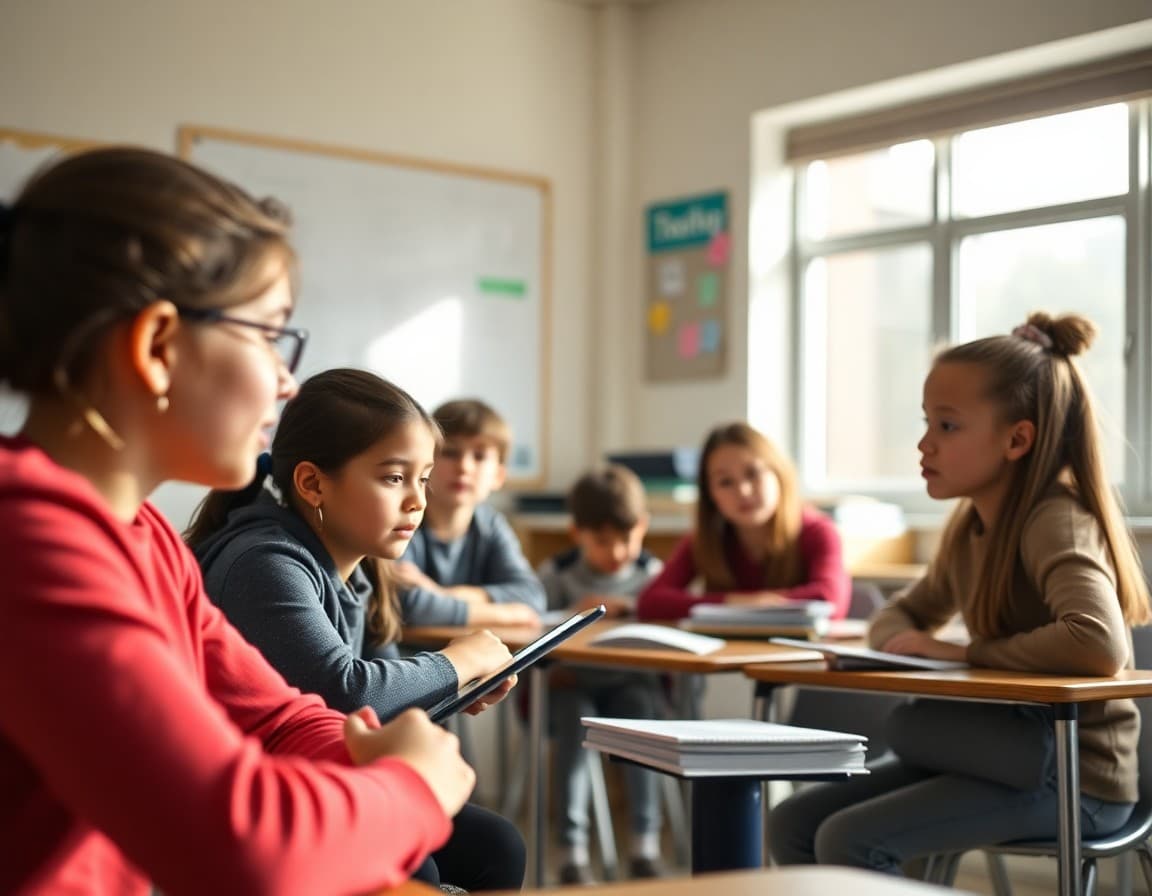
Conflict resolution skills are among the most transferable things a school counselor can teach. The ability to identify what you need, understand what another person needs, and find a solution that addresses both is a skill that pays off in the classroom, in friendships, in workplaces, and in families. The counselor's newsletter is one of the most effective tools for building those skills across the whole community, not just the students who get pulled for individual counseling.
Why Conflict Resolution Needs the Newsletter Treatment
Skills taught in a 30-minute classroom guidance lesson are retained at a fraction of the rate of skills that are reinforced across multiple contexts. A student who learns the STOP-THINK-ACT process on Wednesday but comes home to a household where conflicts are resolved through yelling, withdrawal, or parental intervention has had an interesting lesson but not a durable skill. The newsletter is the mechanism for bringing home the language and process the student learned at school so families can recognize it, reference it, and reinforce it in real moments of conflict.
The Six Steps of the Conflict Resolution Process
This version of the conflict resolution process is appropriate for students in grades 3 through 8 and can be adapted for older or younger students. Step one: Cool down. No productive problem-solving happens when either person is flooded with emotion. Name the feeling, take a breath, wait until you can speak in a normal volume. Step two: Define the problem. Each person states what they want, without blame. "I want to use the computer for my homework" rather than "you always take the computer." Step three: Listen. Each person repeats back what they heard the other person say before responding. Step four: Brainstorm solutions. Name as many options as possible without evaluating them. Step five: Evaluate and choose. Pick the solution that best addresses what both people need. Step six: Try it and review. Agree to try the solution for a defined period and check back in.
What Peer Mediation Looks Like in Practice
In a functioning peer mediation program, trained student mediators are available at lunch, at recess, and between periods to help peers work through interpersonal conflicts. A typical session runs 15-30 minutes and follows a structured protocol. The mediators do not judge the conflict or impose a solution. Their job is to help each party be heard and to facilitate the brainstorming process toward a mutually acceptable outcome.
The selection and training of mediators matters enormously. Effective peer mediators are students who are respected by peers, can remain neutral under social pressure, and have genuine interest in helping others. They should not all be high-achieving students from dominant social groups. Mediators from diverse backgrounds produce more trust in the program across the whole student body.
A Template for the Conflict Resolution Newsletter Section
This section can be sent monthly with a different skill or scenario each time:
"This month in classroom guidance, we practiced step 3 of the conflict resolution process: listening to understand rather than listening to respond. Here is how to try it at home: the next time there is a conflict in your family, have each person state what they want in one sentence. Before the next person speaks, they must repeat back what they heard the other person say. This sounds simple. It is surprisingly difficult. Children who practice this skill at home in low-stakes moments are much better at using it in high-stakes moments at school."
Conflict Resolution Versus Bullying: A Critical Distinction
One of the most important things the counselor's newsletter can communicate to families is that conflict resolution is not the right tool for every negative interpersonal situation. Peer conflict is a disagreement between people of roughly equal power who both contribute to the situation. Bullying is a repeated pattern of intentional harm from a person or group with social power toward a person with less social power. Bullying requires a different response than conflict resolution, and applying mediation to a bullying situation can make the harm worse by putting the target in the position of having to compromise with their bully.
Families who understand this distinction are better equipped to report the right kind of situation to the school and to advocate appropriately for their child's needs.
Building a Conflict Resolution Culture School-Wide
The most effective conflict resolution programs are school-wide, not confined to the counselor's office. When teachers use the same language and process in the classroom, when administrators reference the same steps when addressing discipline, and when coaches use conflict resolution frameworks on teams, students experience a consistent message that builds deeply into their behavioral repertoire. The counselor's newsletter is the communication vehicle that synchronizes those messages across home and school and keeps the shared language alive between formal teaching moments.
When to Refer to the Counselor Versus Handle It at Home
Families sometimes are uncertain whether to try to resolve a conflict situation themselves or contact the school. A practical guideline: handle it at home when the conflict is interpersonal, is not physical, and does not involve a pattern of repeated harm. Contact the counselor when the conflict has a physical component, has been happening repeatedly without resolution, involves a student with significantly less social power, or is affecting the child's willingness to attend school or engage in social activities. When in doubt, reach out. A brief email to the counselor costs nothing and provides information that may prevent a situation from escalating.
Get one newsletter idea every week.
Free. For teachers. No spam.
Frequently asked questions
What is the most effective conflict resolution framework for school-age children?
The most widely used and well-researched framework for school-age children is the STOP-THINK-ACT model or its variations: stop and calm down before responding, think about what you want and what the other person wants, and act using a strategy that addresses both. For elementary students, concrete visual tools like a peace corner with problem-solving cards are more effective than verbal-only instruction. For middle and high school students, interest-based negotiation, where students identify underlying needs rather than fixed positions, produces more durable resolution.
How can families practice conflict resolution skills at home?
The most effective home practice happens during actual family conflicts rather than hypothetical scenarios. When siblings argue over screen time or a toy, resist solving the problem for them. Instead, help them name what each person wants, brainstorm options together, and pick one to try. The adult role is facilitator, not judge. Families that consistently model and coach this process produce children who internalize conflict resolution as a natural response to disagreement rather than escalating to adult intervention for every conflict.
What is peer mediation and does it work in schools?
Peer mediation programs train students to facilitate conflict resolution conversations between their peers. Research on peer mediation shows consistent reductions in the frequency and severity of school conflicts in schools that implement structured programs with adequate training and adult supervision. The key elements of effective peer mediation are: rigorous mediator training (typically 12-20 hours), a structured process with clear steps, a visible referral system, and ongoing supervision by the counselor. Schools that implement peer mediation informally without adequate training see fewer benefits.
How should counselors handle conflicts that involve power imbalances?
Standard conflict resolution assumes relatively equal power between parties. When conflicts involve bullying, harassment, or significant social power differences, mediation is not appropriate because it places an equal burden on both parties to compromise when the harm has been one-directional. Counselors need to distinguish between peer conflict (where mediation is appropriate) and bullying (where it is not) and communicate that distinction clearly to students, families, and staff. The newsletter is an effective tool for helping families understand this difference.
How can the school counselor newsletter reinforce conflict resolution skills taught in class?
A monthly newsletter section that recaps the conflict resolution step taught in classroom guidance, provides a family activity to practice at home, and includes a scenario families can discuss builds the home-school connection that makes skill transfer more likely. Daystage lets counselors send these newsletters to specific grade levels so elementary families receive age-appropriate scenarios and high school families receive ones calibrated to adolescent social dynamics. Targeted communication increases relevance and engagement significantly.

Adi Ackerman
Author
Adi Ackerman is a former classroom teacher and curriculum writer with 8 years in K-8 schools. She writes about school communication, parent engagement, and what actually works in real classrooms.
More for School Counselors
Ready to send your first newsletter?
3 newsletters free. No credit card. First one ready in under 5 minutes.
Get started free