
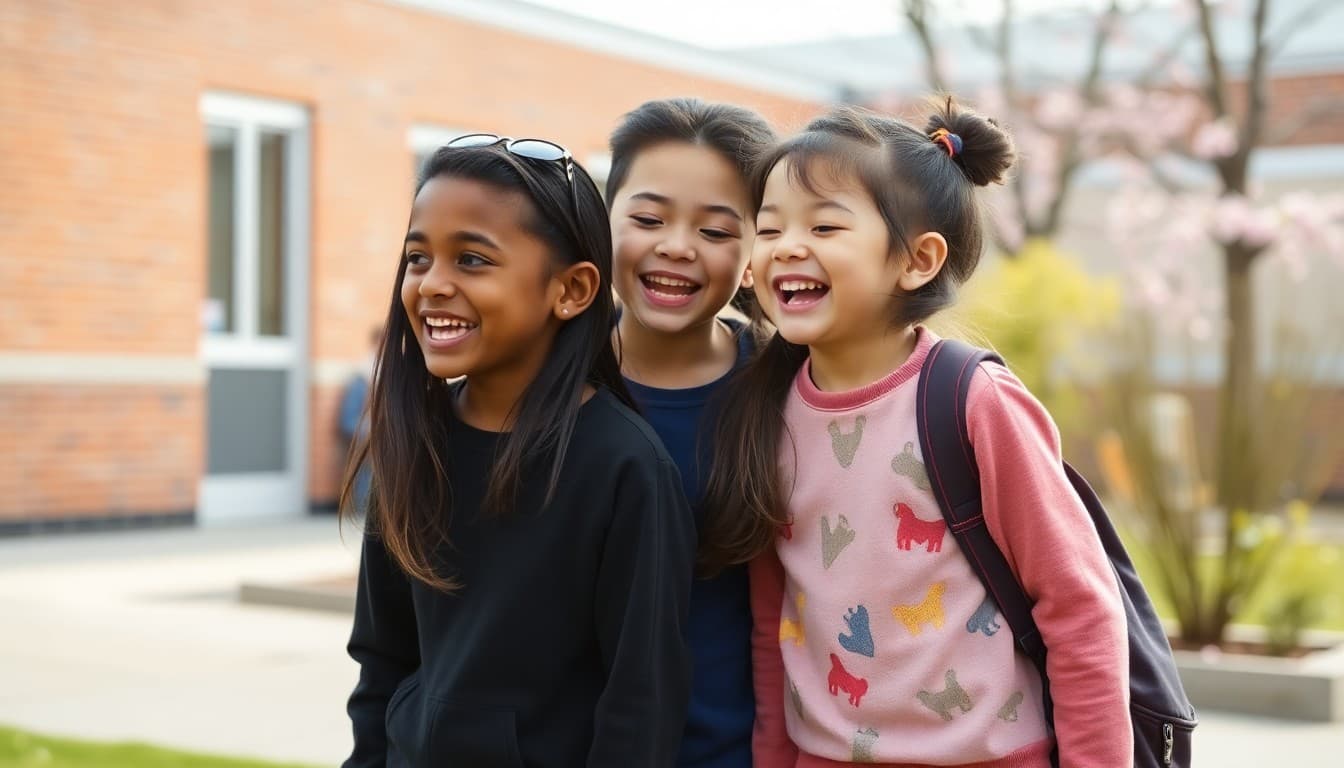
April Friendship Skills Newsletter for School Families

April marks the last two months of the school year, and with that comes a particular kind of social awareness: the friendships students have built are about to be tested by summer, grade transitions, and in some cases permanent school changes. Your April newsletter helps families approach this transition with intention rather than just letting it happen.
Year-End Transition Anxiety Is Real
By April, many students are already thinking about what next year will look like. Fifth graders heading to middle school are wondering whether their friends will be in the same classes. Eighth graders transitioning to high school are anxious about social status resets. Seniors are managing the mix of excitement and grief that comes with leaving a place they have known for four years. Each of these students carries a social weight that your April newsletter can acknowledge and help families respond to.
Appreciating the Friendships You Have Right Now
The end of the year is an opportunity for students to express genuine appreciation for the people who made this school year meaningful. This is not a forced sentimental exercise. It is a practical social skill: the ability to recognize and name what you value in a relationship is one of the most important things students can practice. A student who tells a friend specifically what they appreciated about them this year strengthens that friendship and builds a habit that will serve them for the rest of their life.
Managing the Social Drift of Late Spring
In April and May, some students begin to socially disengage from school as the end approaches. They stop maintaining friendships as actively, get distracted by summer plans, or begin orienting toward next year's social environment rather than the current one. Help families encourage their children to stay present in their current friendships through the end of the year. A friendship that is allowed to drift in April is harder to maintain over summer than one that was actively tended right up to the last day.
Grief and Goodbyes for Students Leaving
Some students are leaving the school entirely: moving to a new district, graduating, or transitioning to a school that splits their current friend group. Grief about these departures is real and deserves acknowledgment rather than being dismissed with "You'll make new friends." Help families give their children permission to feel sad about an ending and to express that sadness directly to the friends they are losing. That honest farewell is often what allows both students to move forward with the ending processed rather than left unfinished.
Summer Plans and Social Equity
April is when summer plans start to become public, and as with spring break, visible differences in family resources can create social friction. Students going to expensive summer camps or traveling internationally may not realize that sharing those plans exhaustively with friends who cannot afford similar experiences creates social distance. Help families teach their children social awareness around the topic of summer plans: enthusiasm is fine but exclusivity is not.
What Classroom Guidance Covers in April
If your April guidance lessons address transition skills, coping with endings, or expressing appreciation, tell families what to expect. A student who has just had a classroom guidance lesson on how to handle a school transition and then comes home to a parent who asks about it and reinforces the message is getting the kind of dual-channel reinforcement that actually changes behavior. That connection between school lesson and home conversation is what your newsletter exists to facilitate.
Small Groups for Year-End Social Support
April is a good time to offer a brief small group for students who are particularly anxious about year-end transitions: the student with separation anxiety who cannot imagine leaving their elementary school, the student who has had a difficult year socially and is dreading the prospect of carrying those dynamics into middle school, and the student who is simply sad about endings in a way that goes beyond what is typical. These students benefit from a space to process with peers who understand the experience from the inside.
Staying Consistent Through the Year's Final Months
If you have been using Daystage all year, April should feel like the easiest newsletter of the year to send: the format is established, your readership is built, and families already expect your monthly communication. A counselor who maintains their newsletter through May and June finishes the year with a stronger relationship with families than one who fades out in the spring, and starts the following September with a readership already in place.
Get one newsletter idea every week.
Free. For teachers. No spam.
Frequently asked questions
What friendship issues are most common in April?
End-of-year anxiety about grade transitions, school moves, and changing friend groups becomes real in April. Students who are changing schools next year begin grieving their current friendships. Students who are staying feel the social dynamics shift as some peers mentally check out for the summer.
How should families help a child who is anxious about losing friends at the end of the year?
Acknowledge that the transition is real and that some friendships will change. Then focus forward: how can you stay in touch over summer? Are there activities or camps where you might both be? What new friendships might you find at the next school? The goal is to hold both the loss and the possibility simultaneously.
How can students strengthen friendships in the last months of school?
Deliberate gestures in the final months, a note of appreciation, a specific invitation to spend time together, or a shared activity, deepen friendships more than months of routine proximity. Help families encourage their children to be intentional rather than passive as the year winds down.
What should families say to a child who is mourning a friendship that ended mid-year?
Validate the grief without minimizing it. A friendship ending at any age is a genuine loss. Help your child understand what they valued in the friendship, what they have learned about what they need from relationships, and where they might find those things in new connections next year.
How does Daystage help counselors send April newsletters during the busy spring stretch?
Counselors who pre-scheduled their spring newsletters in Daystage during February have their April issue already queued and ready, allowing them to focus on year-end counseling demands without losing their communication cadence.

Adi Ackerman
Author
Adi Ackerman is a former classroom teacher and curriculum writer with 8 years in K-8 schools. She writes about school communication, parent engagement, and what actually works in real classrooms.
More for School Counselors
Ready to send your first newsletter?
3 newsletters free. No credit card. First one ready in under 5 minutes.
Get started free